Think about the office of a government agency. You’re probably picturing rows of cubicles occupied by people in suits, their fingers flying over keyboards as the sound of typing fills the air.
But go into the office of Singapore’s Government Technology Agency (GovTech) and you’re more likely to see people scattered across the space, working on their laptops.
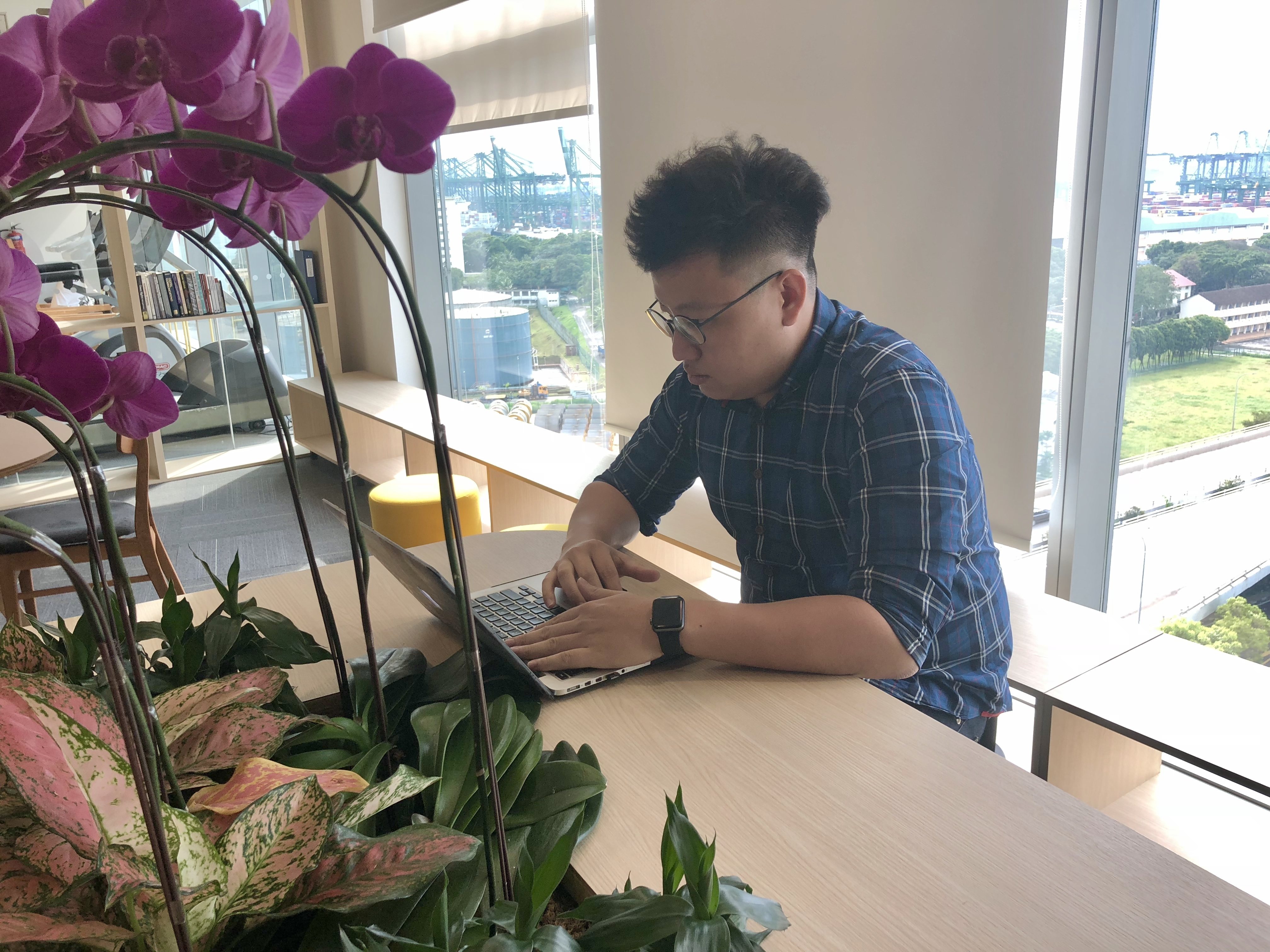
Photo credit: Tech in Asia
“We work quite agile here,” says Andrew Sng, an engineering project manager in the Sensors and Internet of Things (IoT) team at GovTech. “I usually just bring my laptop wherever I want and work from there unless I need something from my desk.”
Sng is part of the agency’s Technology Associate Programme, a two-year leadership program designed to develop the technical competencies and skills of Singaporean graduates and groom them into becoming leaders of the country’s digital transformation. His drive to learn was one of the reasons why he joined the program.
“It’s very interesting to see how technology advances and evolves constantly,” Sng says. “Because of that, I’ve always been interested in becoming a technologist while incorporating the use of design thinking, which is what I’m doing at GovTech now.”
Developing projects
By 8.45 am on most weekday mornings, Sng is already at his desk in the office checking for emails from the day before. But he says that he doesn’t actually need to be there so early.
“We’re pretty flexible in the office. Most people come in by 9.30 am,” says Sng. “I come in early because I take an express bus to work, which comes in around that time every day.”
After making sure his inbox is cleared, Sng goes into developing the projects he’s assigned to. Currently, he’s working on a personal alert button that gives elderly citizens a way to call for help when they’re alone at home during an emergency. The button can be placed in bedrooms, kitchens, or toilets, depending on which parts of the home users spend the most time in.
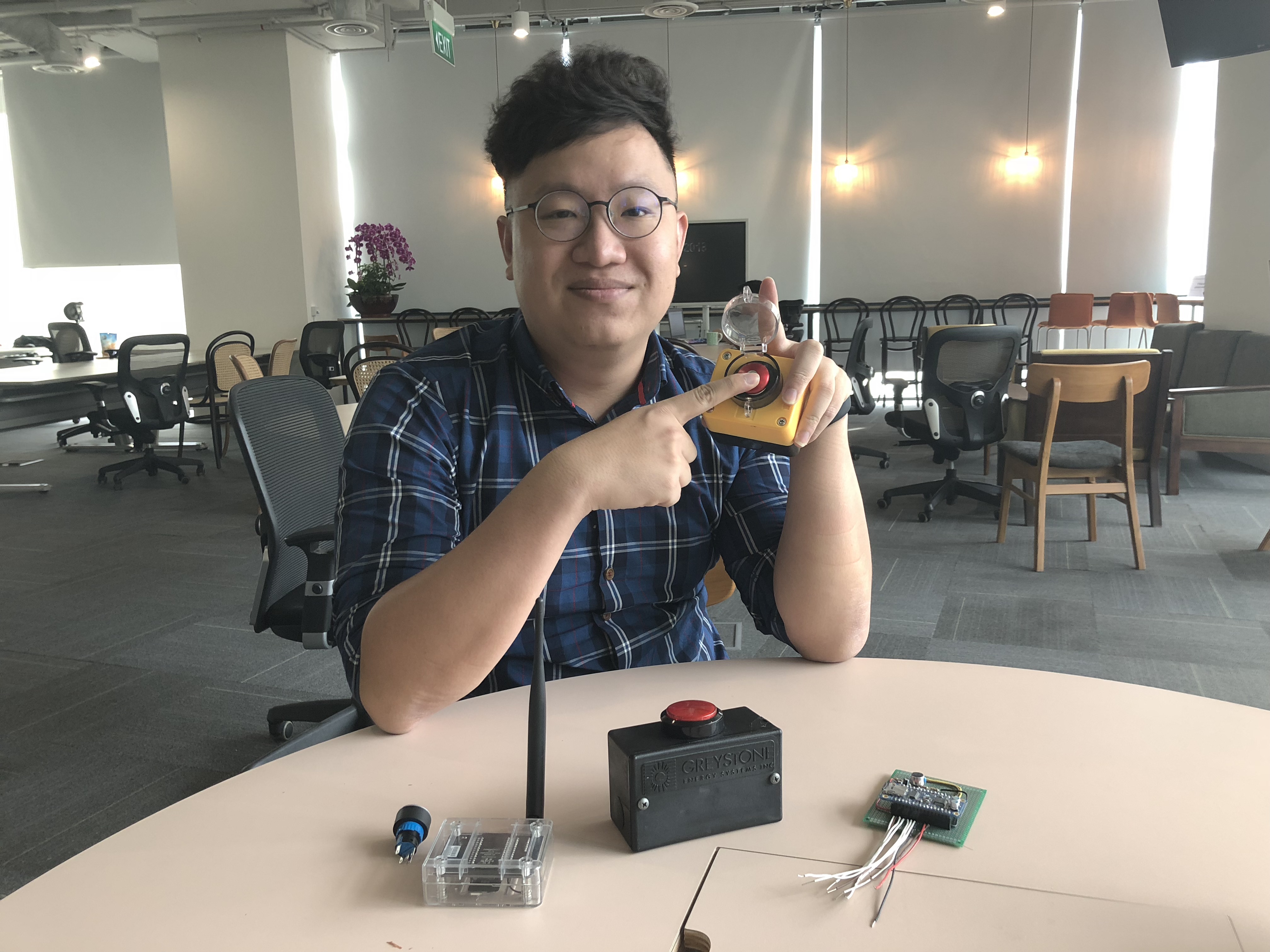
Sng showcasing prototypes of the personal alert button. / Photo credit: Tech in Asia
Sng and his team presented a prototype of the button to the Ministry of Health, which he said was “very interested” in the device “because current solutions are a bit too expensive.” Now that a few iterations have been prototyped, a lot of his time is spent meeting elderly users to gather feedback on the project.
“It’s quite interesting what people say,” says Sng. “For example, some users tell us that they wouldn’t use the device if it was white because it might get dirty easily and they would just keep it to one side.”
Brainstorming for innovative solutions
Creating devices like the personal alert button involves a lot of collaboration with other teams in GovTech. In developing the prototypes for his project, Sng works closely with in-house user experience designers and software developers, tapping into each other’s skills to help the teams understand their projects better.
For existing projects like the personal alert button, collaborative work means a lot of brainstorming sessions where Sng and his colleagues discuss how to optimize their products.
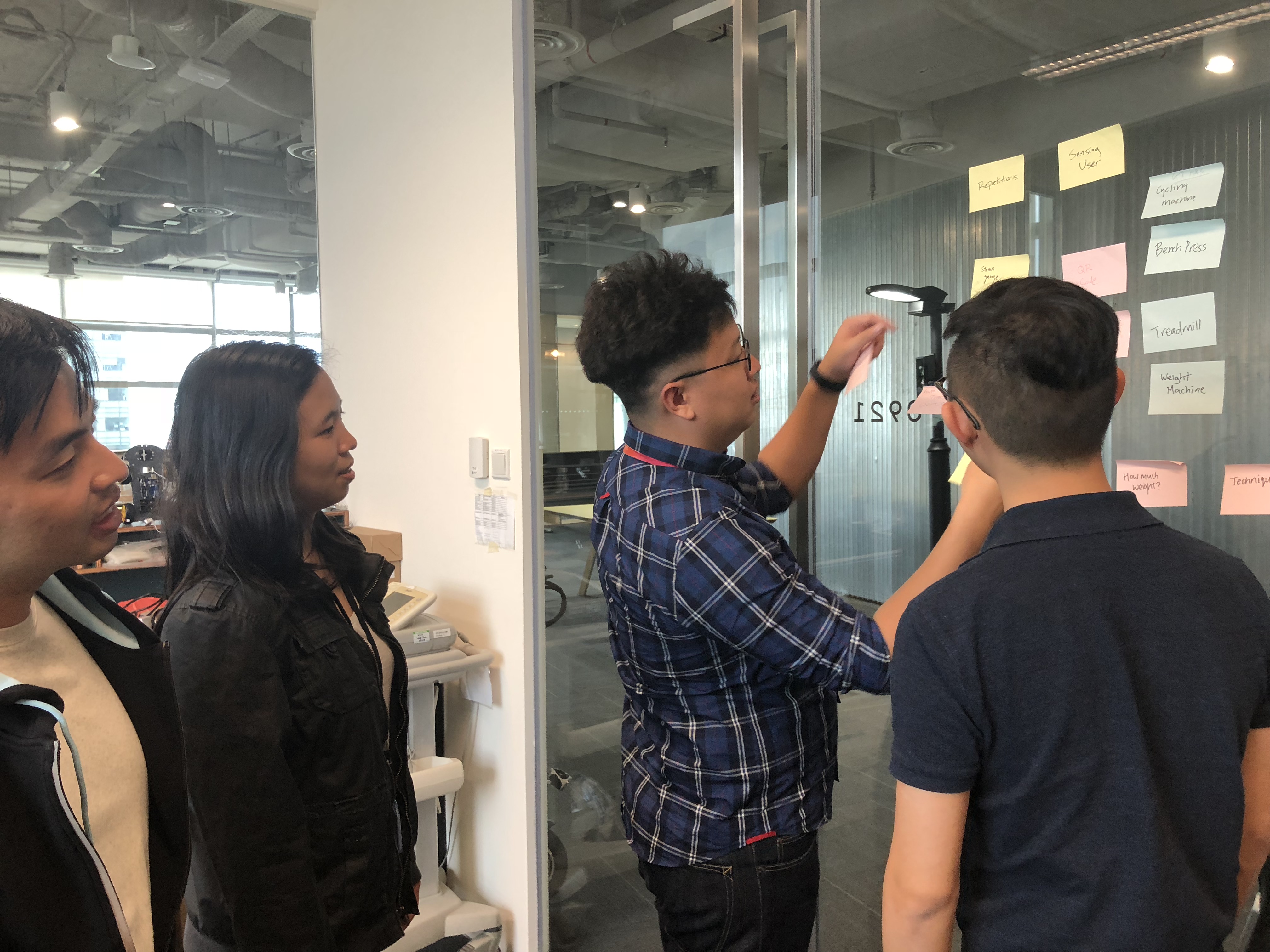
Photo credit: Tech in Asia
“We’re thinking of adding different types of sensors to the button,” he says. “Maybe an infrared sensor so that you can detect whether it’s an actual hand pressing it and not just a mop touching it. That’s the kind of thing we brainstorm on.”
Once in a while, Sng is also involved in training workshops that bring GovTech teams up to speed with everyone’s projects so that they can learn how to integrate solutions into each others’ systems.
“The next workshop will be on how to ensure our devices are safe. With IoT, a major issue is security, so we need to know how to tamper-proof the devices,” observes Sng.
Learning and growing
Having only graduated last year, Sng still has a lot to learn about being an engineer. Whenever finding a solution for a project leaves him stumped, he turns to the person he considers his mentor: Steven Teo, senior manager of GovTech’s Sensors and IoT team.
“He’s in charge of all the engineering project managers,” explains Sng. “He was previously an engineering project manager at Apple, so he shares a lot of his experience working on technologies that you never thought could actually happen.”
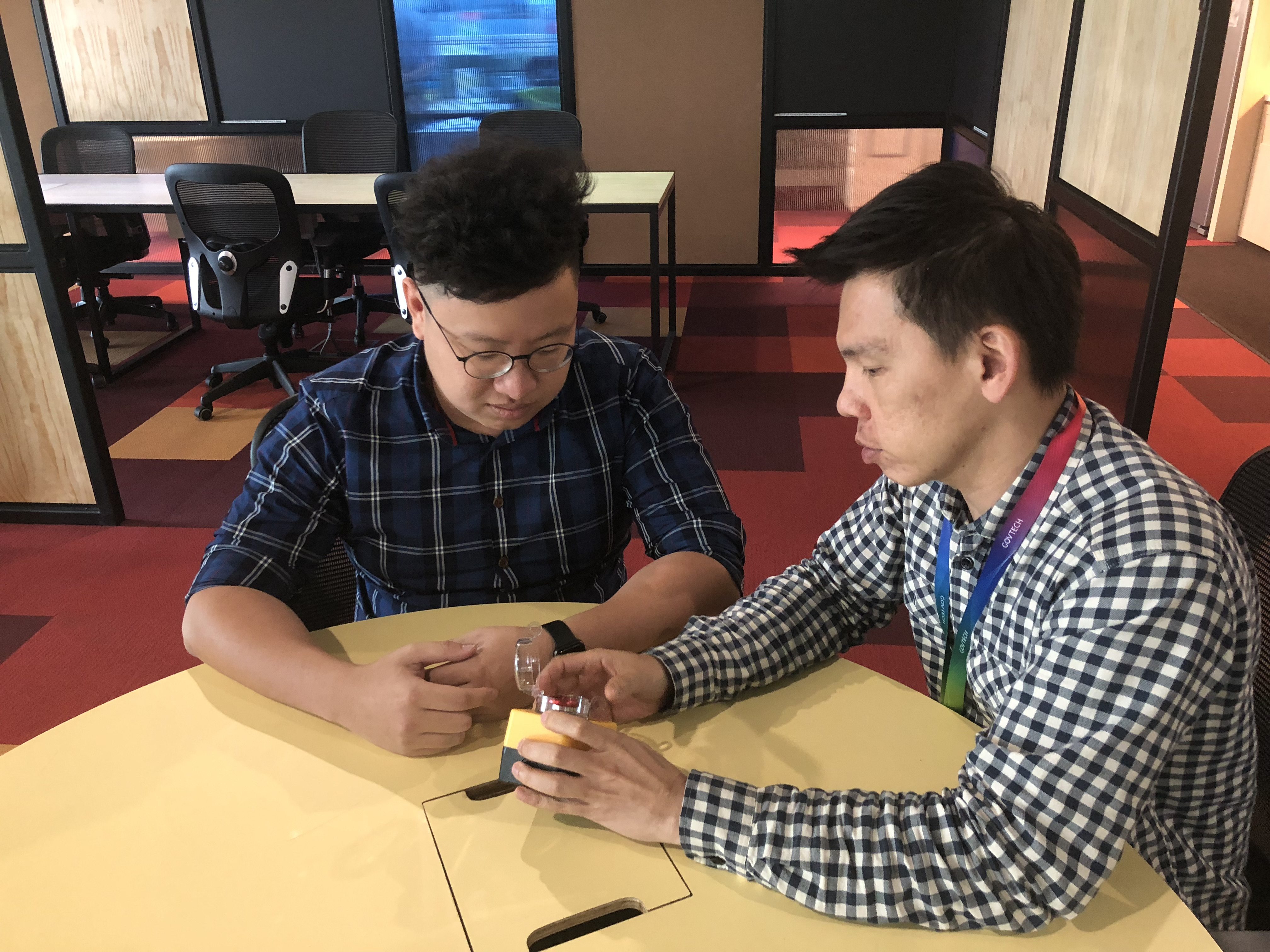
Sng discusses how to upgrade the personal alert button with his mentor. / Photo credit: Tech in Asia
Aside from Teo, Sng adds that GovTech has a diverse team with experienced engineers from the likes of household appliance manufacturer Dyson, local integrated engineering group Singapore Technologies, and Singapore’s Agency for Science, Technology, and Research. Interacting with colleagues from different backgrounds helps Sng pick up a lot of workplace skills and knowledge.
“They had very different working styles when they came in, so I learn a lot from their different expertise and working together with them,” he notes.
After he completes his stint with the Technology Associate Programme next year, Sng is planning to stay in GovTech as an engineer to see the personal alert button project through to completion.
“I think this project has a lot of meaning to it, and I don’t want to leave it hanging,” he says.
The Government Technology Agency is looking for fresh graduates to be a part of its Technology Associate Programme, which focuses on the development of technical competencies and skills through specialist training and mentorship from industry experts.
To learn more about becoming a technology associate, visit GovTech’s website here.
Stay updated on the go with our mobile app.
Get latest insights with smoother, more personalized experience through TIA mobile app.
Recommended reads
 Life’s a game, and AI agents are Animoca’s new play
 Indonesian AI startup goes global
 Forrest Li on scaling Sea, building smarter bots, and founder grit
 An AI assistant that joins sales calls and scores team skills
 Beyond the check: Why VCs need more than capital
 SGX’s CEO says it doesn’t need a unicorn to win
 SMEs want AI too, but not the kind Big Tech is selling
 Oatside’s alt-milk rise hits a profitable gear
 Alibaba’s financial health in 12 charts
 Asia’s telcos bundle AI into mobile plans. Will it pay off?





Editing by Eileen C. Ang and Steven Millward
(And yes, we’re serious about ethics and transparency. More information here.)