- Premium Content It takes our newsroom weeks - if not months - to investigate and produce stories for our premium content. You can’t find them anywhere else.
 Jofie Yordan · · 7 min read
QRIS, BI Fast propel banks’ fight against e-wallets in Indonesia
In Indonesia, e-wallet players GoPay, Ovo, and Dana first popularized digital payments, but new systems like QRIS and BI Fast are leveling the playing field for traditional banks.
Since its introduction by Bank Indonesia in January 2020, QRIS is now widely used in MSME stores as well as cafes, restaurants, entertainment outlets, and amusement parks. Interoperable across various e-wallets and banking apps, QRIS replaces the unique QR codes used by different e-wallet operators.
Meanwhile, BI Fast, the equivalent of Singapore’s PayNow or Thailand’s PromptPay, allows funds transfers from one bank to another using the recipient’s account details, mobile number, or email address. It is now available for mobile banking services from 77 participating banks.
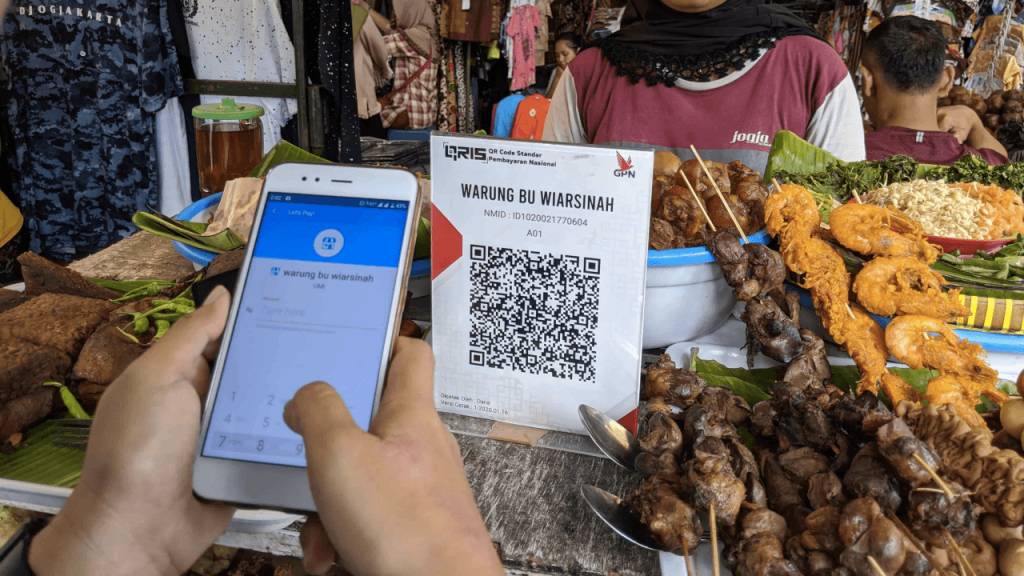
QRIS payment with e-wallet Dana / Photo credit: Dana
With QRIS and BI Fast, conventional banks now have an opportunity to play in a space previously dominated by e-wallet operators. Already, traditional banks are seeing QRIS and BI Fast transactions grow rapidly.
PermataBank, for instance, saw its volume of QRIS transactions increase 239% year on year in September, while transaction value rose 146%. Bank Central Asia, the country’s largest lender, also saw its QRIS transaction volume soar 436% in September compared to the year before.
BI Fast has had a similar effect since it was launched in December last year. PermataBank says the service has facilitated a 45% year-on-year jump in bank transfer activities on its app in September.
Bhima Yudhistira, director at Indonesian research firm Center of Economic and Law Studies (Celios), believes both systems increase the attractiveness of conventional bank apps over e-wallets, especially since the two services work on those apps.
“QRIS and BI Fast will be a serious threat for e-wallet players because people will use mobile banking apps more actively,” Yudhistira tells Tech in Asia. That’s because “people don’t need to download e-wallet apps or other digital platforms – they can just use mobile banking for QRIS payments or money transfers,” he explains.
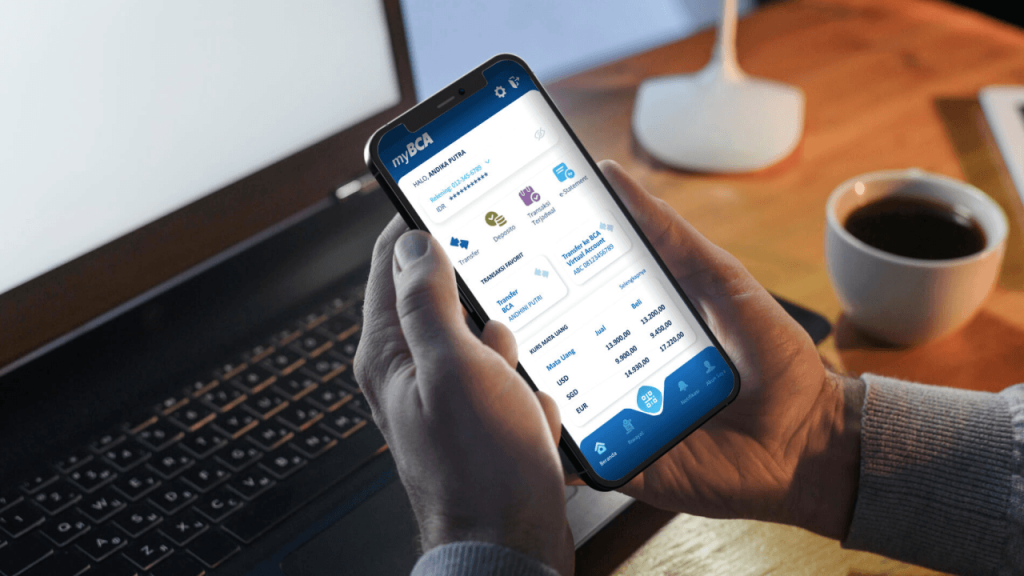
Bank Central Asia mobile banking app / Photo credit: Bank Central Asia
Even so, there have been reports of mobile banking apps that frequently encounter errors and undergo maintenance, suggesting that reliability may still be an issue.
Despite the surge of mobile banking apps, the usage of e-wallets has not shown signs of slowing down. The differentiator for these services is being deeply embedded into digital platforms, although that may change in the long term.
Playing catch up
Currently, most mobile banking apps are compatible with QRIS and BI Fast. To remain relevant, many traditional banks have improved their apps with more digital features and a user-friendly interface, Yudhistira notes.
Battle in lower-tier cities
Revenue streams under threat
What next?
Stay ahead in Asia’s tech landscape
This is premium content. Subscribe to read the full story.
While e-wallets first popularized digital payments in the country, the new payment systems are spurring on demand for bank apps.
We know this is not ideal. ⌛ Sign up in 20 seconds. Cancel anytime.
Our subscriber community includes professionals from these companies:





Stay updated on the go with our mobile app.
Get latest insights with smoother, more personalized experience through TIA mobile app.








📅 Upcoming Events
22 October 2026
Payoneer x CSPN Summit 2026