- Premium Content It takes our newsroom weeks - if not months - to investigate and produce stories for our premium content. You can’t find them anywhere else.
 Bonar Silalahi · · 6 min read
Can Southeast Asia really pull off an EV revolution?
Justin Lim also co-authored this report.
As Southeast Asian countries navigate the complex terrain of electric vehicle (EV) adoption, many are now discussing ways to transition away from internal combustion engine (ICE) vehicles and setting ambitious targets.
However, the critical question remains: Are these targets enough to achieve the region’s long-term sustainability goals?
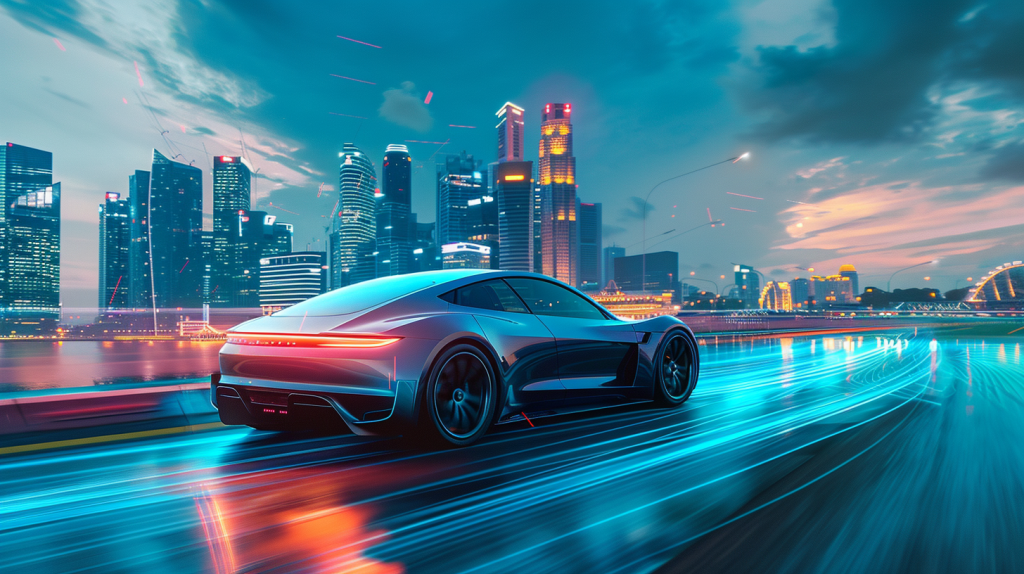
Image credit: Made by Tech in Asia using Midjourney
Some nations in the region have set objectives, including a minimum penetration rate for EVs, while Singapore and Thailand have announced a date to phase out the sale of ICE vehicles completely.
The two countries in particular have set out bold commitments. Singapore is aiming for all new car sales and taxis to be of “cleaner-energy models” by 2030, with no more ICE vehicles on the roads by 2040. Thailand wants all its new cars to have zero emissions by 2035.
Indonesia has no target date for when it will stop selling ICE vehicles, but it intends to turn its automotive fleet fully electric by 2050. Similarly, Malaysia wants 50% of its cars to be fully electric by 2040, and 80% by 2050.
These goals, while ambitious, face significant challenges.
The nascent state of the EV sector means adoption rates will inevitably shift with technological, regulatory, and social developments. But for Southeast Asia to achieve its EV goals, further investments in infrastructure and affordable alternatives are essential.
Cost is a major hurdle
In Singapore, where the government offers attractive EV incentives such as the Early EV Adoption Incentive and the Enhanced Vehicular Emissions Scheme, insurance and road tax costs for EVs remain high.
Unlike Thailand and Indonesia, which are positioning themselves as regional EV manufacturing hubs, Singapore has a minimal domestic manufacturing capacity for EVs, further driving up costs.
Insurance premiums for EVs are also higher than those for ICE vehicles, as insurers are still evaluating the risks associated with this new technology. Additionally, the steep purchase price of EVs – mostly due to pricier components – directly influences insurance costs.
While EVs may offer benefits such as reduced wear and tear, these must be weighed against the higher expenses of replacing key components.
Policies and batteries
Gradual shift
Stay ahead in Asia’s tech landscape
This is premium content. Subscribe to read the full story.
Purchase prices and insurance costs remain a major hurdle for adoption.
We know this is not ideal. ⌛ Sign up in 20 seconds. Cancel anytime.
Our subscriber community includes professionals from these companies:





Stay updated on the go with our mobile app.
Get latest insights with smoother, more personalized experience through TIA mobile app.