Meghna Rao · · 5 min read
These logistics startups are changing India’s ecommerce supply chain
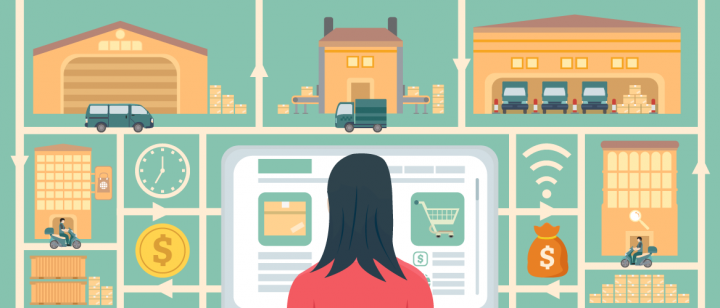
According to consulting firm Technopak, India’s ecommerce startups spend as much as 30 percent of their net income on logistics. It’s a big reason why India’s ecommerce giants, Flipkart and Snapdeal, still aren’t profitable – and partially the reason why the country’s logistics industry is worth a staggering US$300 billion.
See: 15 top funded ecommerce startups in India this year – with a few surprises
Less than two months ago, Flipkart re-acquired its own logistics arm, Instakart, and rival ecommerce site Snapdeal invested heavily in its partner logistics startup Gojavas.
Whether it’s large logistics firms like DHL, Gati, or Ecom Express providing one-stop-shops or startups reinventing the supply chain, it’s a sector ripe with fodder for disruption.
First mile and last mile
The first mile – picking up a package – and the last mile – dropping it off – share some similarities. The path between a buyer or seller’s location and storage units (think of them as nodes) is as unique as each customer and requires specific transportation. How can this journey be as affordable, quick, and efficient as possible?
Startups like Roadrunnr have turned the last-mile delivery service into lucrative businesses. Roadrunnr has been known to use electric scooters in order to help minimize costs from INR300 to INR10 (US$4.50 to US$0.15) a day.
Opinio, a hyperlocal logistics startup, helps make deliveries within a radius of five to seven kilometers and recent entrant Jugnoo takes advantage of India’s massive fleet of auto rickshaws to conduct deliveries.
Photo credit: Robert Donovan
On the other end, Parcelled comes to a seller’s doorstep, brings along packaging materials, and helps properly prepare a product for its journey.
Storage solutions
Once a product reaches a node – maybe a warehouse or a fulfillment center – the way it’s stocked is crucial. Stocking it right can save precious time when shipping, reduce electricity usage, and make the most of storage space.
Some startups work on making these processes easier.
Grey Orange helps organize and automate warehouses. It has two main products, the Butler and the Sorter. The Butler organizes storage and product picking. Its features include customized stocking – moving products that are likely to be ordered closer to “picking stations” – and organizing packages in a way that improves the use of space. The Sorter is used to scan and sort packages and claims a pace of up to 6,000 per hour.
Inter-city and intra-city shipping
Back-end technology
One stop shops





Stay updated on the go with our mobile app.
Get latest insights with smoother, more personalized experience through TIA mobile app.