- Premium Content It takes our newsroom weeks - if not months - to investigate and produce stories for our premium content. You can’t find them anywhere else.
 Shadine Taufik · · 4 min read
Neuron Mobility’s revenue doubles, but losses widen
Neuron Mobility, a Singapore-based e-scooter startup, saw its revenue rise by more than 2.3x in 2021 to US$20.1 million, as per its ACRA filings.
The company attributes this growth to its expansion to 22 cities in 2021 from seven cities a year earlier. It expects to post “robust” revenue growth in 2022, focusing on profitability, a company spokesperson tells Tech in Asia, without providing details.
However, the company’s operating loss nearly doubled in 2021 to US$13.6 million – much larger than the rise of just over 50% it saw a year earlier. The widening of losses in 2021 are likely because its expenses doubled from a year earlier.
Revenue analysis
While the company has seen its revenue more than double in 2021, it is not nearly as large as the over 6x revenue growth it saw in 2020. That said, the revenue in 2019 was a much smaller base for comparison. The company has only one major source of operating revenue: renting e-scooters and e-bikes.
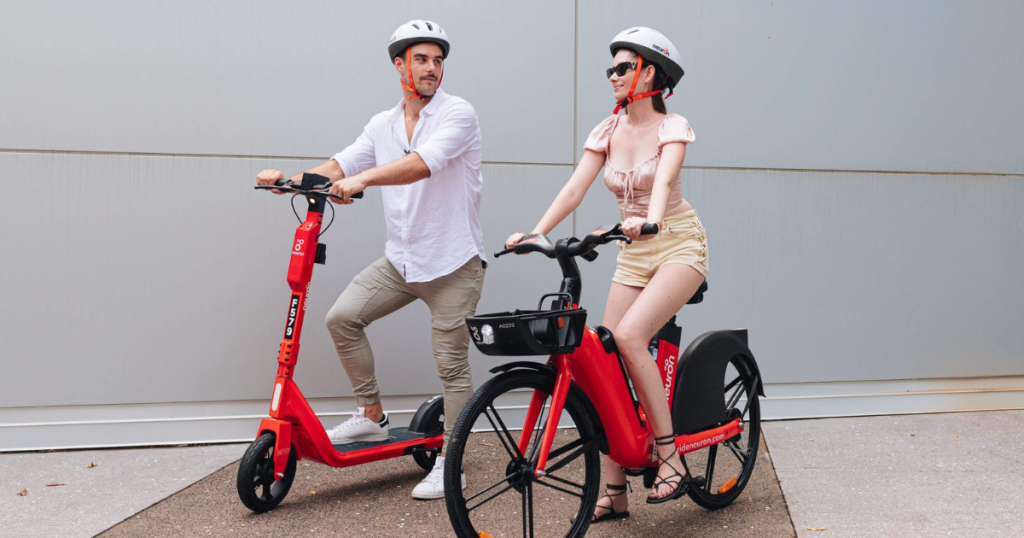
Photo credit: Neuron Mobility
Neuron Mobility’s plans to grow its revenue by expanding into markets with high barriers to entry, partnering with cities to operate services on a more predictable and long-term basis. This year the firm has added seven more cities – five in Australia and two in Canada – to make its services available in 26 cities across regulated markets such as Australia, Canada, the UK, and New Zealand.
This meant exiting free-for-all markets such as South Korea – which it did at the end of last year, just a few months after it launched there. “Although the country is becoming more regulated, many cities are some way off from running tenders to select the best e-scooter operators,” says the spokesperson.
The exit from South Korea didn’t have much of an impact on the firm’s revenue, as it was its smallest market. In comparison, Canada, which it also ventured into last year, has generated much higher revenue to even become the e-scooter firm’s second-largest market.
This focus on catering only to tender-based markets means that the company will have to deal with less competition, ensuring higher growth expectations and lower customer acquisition costs. “These types of markets also deliver higher vehicle utilization rates,” says the spokesperson.
On the flip side, it also means that its expansion will be slower, as tender processes take longer and the approvals needed will delay its launch in new markets.
Expenses analysis
Neuron Mobility’s expenses grew more than 2x to US$33.4 million in 2021 largely due to administrative expenses nearly doubling. Meanwhile, cost of sales jumped by over 2.5x in 2021.
Employee expenses, which make up 90% of administrative costs, rose by over 3x. The company has increased its headcount by 130% from the start of 2021 to 230 full-time staff members currently.
Market-wise revenue breakdown
Cash balance
Stay ahead in Asia’s tech landscape
This is premium content. Subscribe to read the full story.
The e-scooter firm exited South Korea in less than a year to focus on markets with high barriers to entry and low competition.
We know this is not ideal. ⌛ Sign up in 20 seconds. Cancel anytime.
Our subscriber community includes professionals from these companies:





Stay updated on the go with our mobile app.
Get latest insights with smoother, more personalized experience through TIA mobile app.












📅 Upcoming Events
22 October 2026
Payoneer x CSPN Summit 2026