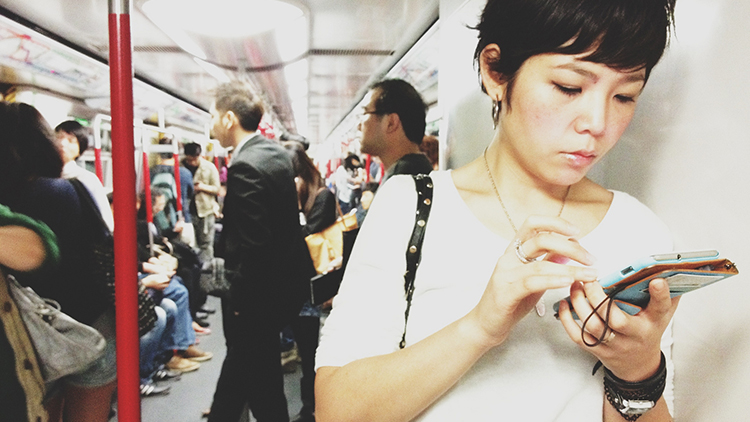
Image credit: Wang Wong.
Mainland China is one of the world’s most exciting places for financial technologies. The country feels like it leapt straight from cash to smartphone-based payments, spending only a short time in the era of plastic. But the same can’t be said for other regions – and not everyone is ready to toss their cards in the garbage and embrace QR codes, NFC payments, and app-based money transfers.
Hong Kong is a prime example of a place that fell victim to its own success. The city’s financial services were miles ahead of mainland China’s in the age of the credit card. But now that payments are moving into the cloud, Hong Kongers are reluctant to give up on their debit and credit cards.
What was cutting edge in 2001 is now a bit stale.
Neat is a startup that aims to bridge Hong Konger’s card-happy past with its inevitable digital payments future. But the company’s approach is different from the giants like Alipay and WeChat’s mobile wallet, which are ubiquitous across mainland China.
“I moved to Hong Kong fifteen years ago from London. At the time London felt backwards and inefficient compared to Hong Kong, especially in terms of financial technology,” says Neat co-founder David Rosa. When he flew over to work at Citi Group, David was blown away by Hong Kong’s Octopus Card, the contactless payments card that can be used everywhere from fast food joints to public transit. But that was then.
“Now in 2016, it’s the other way around. Hong Kong has fallen behind not only London but also the mainland.”
What was cutting edge in 2001 is now a bit stale. The Octopus Card is still around, but it’s so… analog. There’s no app, no “smart” way to track your balance or spending habits.
Neat tries to modernize Hong Kong’s payments infrastructure without leaping too far into the future and alienating users.
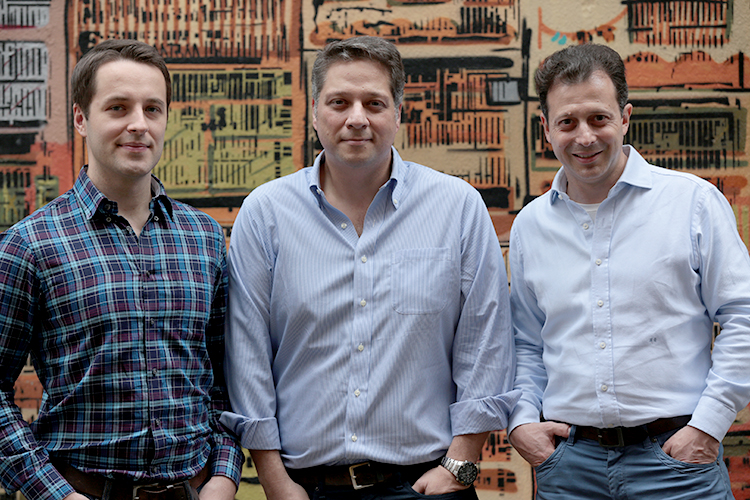
The Neat team. L-R: Igor Wos, CTO; George Cotsikis, Chief Data Officer; David Rosa, CEO.
“To gain the trust of the average consumer, we needed to dial back the innovation,” David says. “So we went with something they trust, which is plastic.”
Making a payment in a store by scanning a QR code has become widespread in mainland China, but that hasn’t caught on in Hong Kong. Even Alipay and WeChat Wallet, despite their hundreds-of-millions-strong user bases just a few miles away, have struggled to gain adoption in the city.
“We would rather not use plastic,” David adds, noting that it added an extra expense to building the company. “But you have to get the product-market fit.”
Rules, regulations, and rewards
Breaking out





Stay updated on the go with our mobile app.
Get latest insights with smoother, more personalized experience through TIA mobile app.