Benjamin Cher · · 3 min read
Grab’s Trans-cab buy would significantly reduce competition, watchdog says
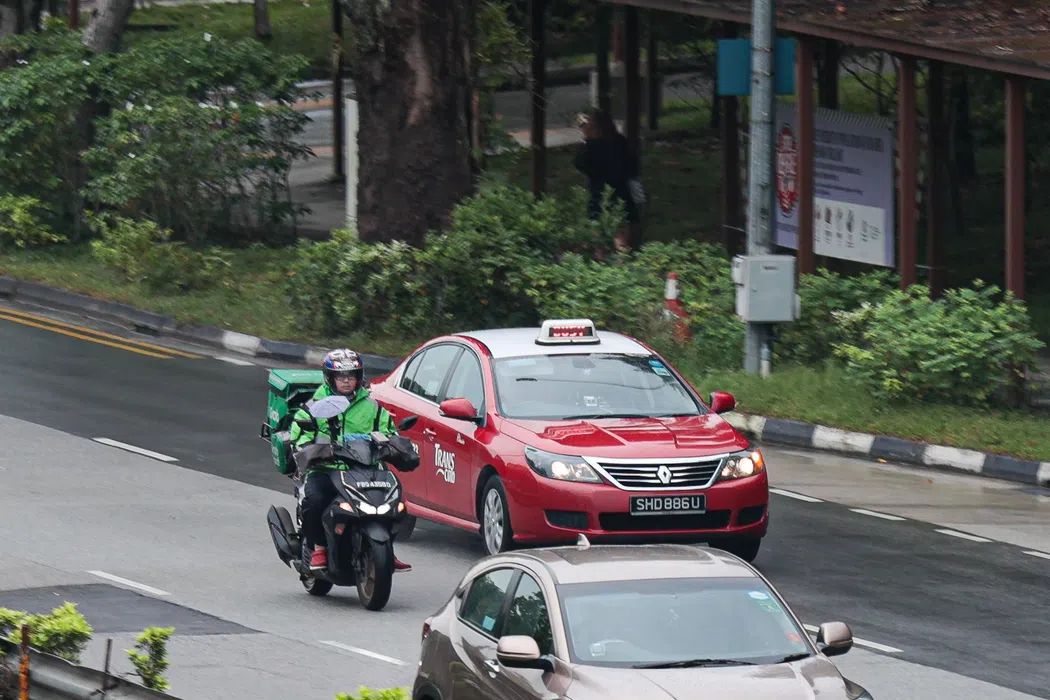
With the competition watchdog’s provisional decision out, Grab and Trans-cab (one of its taxis, above) have 10 working days to respond to the concerns raised. / Photo credit: The Business Times
The Competition and Consumer Commission of Singapore (CCCS) has issued a provisional decision saying that Grab’s acquisition of taxi operator Trans-cab, if given the go-ahead, would significantly reduce competition.
In a statement on July 11, the competition watchdog noted Grab’s already dominant position among ride-hailing platforms and said the acquisition would likely entrench and strengthen its position.
The CCCS pointed out that Trans-cab has one of the largest taxi fleets not owned by, or in partnership with, any ride-hailing platform in the country. This means its drivers are free to use any platform in the market and pick up street-hailing passengers.
In contrast, other taxi fleets are either affiliated with or have signed partnerships with a platform. For example, ComfortDelGro’s fleet is affiliated with Zig, its ride-hailing platform, and also in partnership with Gojek. Meanwhile, SMRT has been in partnership with Grab since September 2020.
With Trans-cab’s fleet getting on board Grab’s ride-hailing platform under the proposed acquisition, Grab’s rival platforms would have much fewer drivers to draw from – and there is already a driver shortage in Singapore, the CCCS noted.
Data that the commission analyzed shows that drivers who rent from fleets owned by ride-hailing platforms tend to use more of that platform than those who do not.
“There are also various strategies which may be employed by Grab to induce Trans-cab drivers to increase their usage of Grab’s ride-hailing platform,” the CCCS added.
It noted the shortage of drivers and the lack of other major non-affiliated taxi or private-hire car fleets that Grab’s rival ride-hailing platforms can partner with.
The CCCS also pointed out the high barriers to entry and what it takes for these platforms to stay in business, given the high cost of fleet ownership, expansion, and incentives.
With fewer competition constraints on Grab, drivers and passengers could face higher prices and fewer choices for ride-hailing platforms, said the CCCS.
“Grab has also recognized that through the proposed acquisition, it will likely be able to significantly save on the incentives that it would have to pay to drivers, as compared to if it employed alternative means to increase driver supply,” said the commission.
Yee Wee Tang, managing director at Grab Singapore, said in a statement that Grab’s move to acquire Trans-cab is part of a drive to support the latter in its digital transformation and to improve its drivers’ livelihoods.
He emphasized the use of technology to help drivers improve earnings, which is important in maintaining a pool of good drivers.





Stay updated on the go with our mobile app.
Get latest insights with smoother, more personalized experience through TIA mobile app.