- Insights This article was written by a TIA community member. Insights pieces undergo the same rigorous editorial process that newsroom-produced articles have.
 Adam Au · · 7 min read
National interests trump AI transparency in Asia
When philosopher Michael Polanyi coined his famous paradox “We can know more than we can tell,” he could hardly imagine its prescience almost 60 years later. Yet, his maxim predicted the complexity of the AI tech that is rapidly changing the world.
Today’s developers, drawing predictive insights from vast data pools, have created systems that resist straightforward explanations. Polanyi’s paradox has new significance as society grapples with building trust in AI technologies we cannot fully understand.
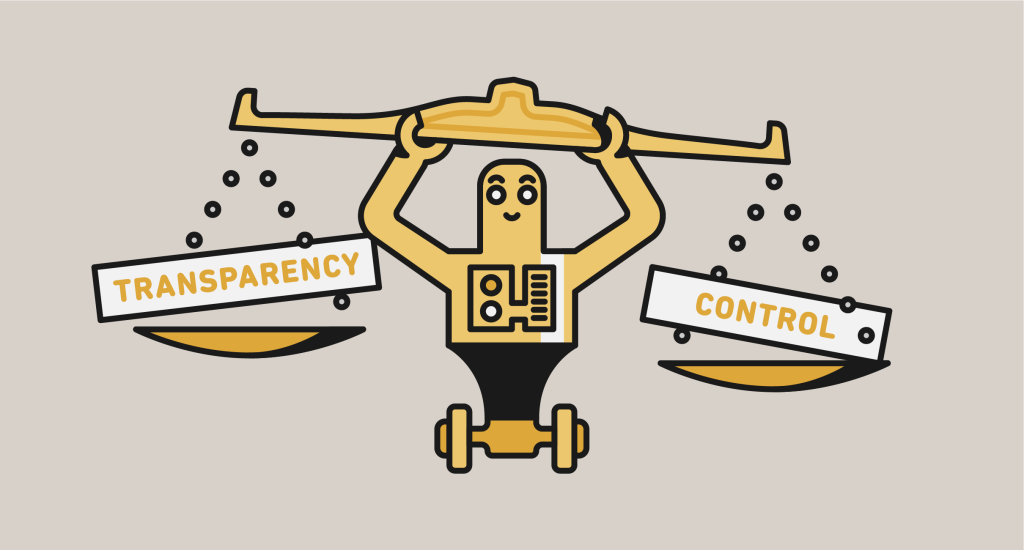
Image credit: Timmy Loen
In Asia, this paradox deepens further. Singapore and China are rapidly improving their AI prowess to match Western standards, yet they face the challenges of aligning these developments with their unique cultural and political mores. The recent passage of the European Union’s AI Act has intensified pressure on Asian nations to either align with the act’s provisions or develop their own regulatory frameworks.
As Asia lacks a regional governance structure like the EU, consistent rules and oversight are difficult. Individual nations will develop their own approaches to AI governance, which will vary widely due to differences in economic development, infrastructure, education levels, and digital literacy.
These individual approaches could lead to a world where Asian nations control AI strictly and prioritize national interests over universal principles like transparency.
Double-edged sword
Taming AI’s far-reaching implications is tricky. Precedents like the EU’s General Data Protection Regulation (GDPR) establish universal ground rules around privacy, but such precedents can’t be easily applied to AI.
At its core, privacy revolves around two central tenets: non-disclosure and non-interference. Essentially, non-disclosure is about protecting information, while non-interference is about protecting freedom and autonomy.
In contrast, AI presents interconnected issues like accountability, transparency, bias, and security, which are not easily solved.
While countries are on the same page on the need to regulate AI, they conflict on how to put rules in place. This divergence reflects the intricate tapestry of ideological nuances and cultural contexts.
Take Singapore, for example. The city-state has unleashed Sea-Lion, a large language model steeped in the linguistic spice of Southeast Asia. Meanwhile, China has also unveiled its own AI platform infused with President Xi Jinping’s thoughts and other themes championed by the ruling party.

Image credit: Timmy Loen
While localized AI models tailored to domestic perspectives could inadvertently introduce bias or inaccurate information, this risk applies broadly. If several Asian countries create insular, opaque AI systems that cement internal storylines, it could strain the notion of objective truth.
To be or not to be transparent?
Trade-offs
An existential issue
Tale of two approaches
Stay ahead in Asia’s tech landscape
This is premium content. Subscribe to read the full story.
Building transparent AI models is difficult, costly, and may compromise accuracy, but it’s a key ethical issue.
We know this is not ideal. ⌛ Sign up in 20 seconds. Cancel anytime.
Our subscriber community includes professionals from these companies:





Stay updated on the go with our mobile app.
Get latest insights with smoother, more personalized experience through TIA mobile app.