- Premium Content It takes our newsroom weeks - if not months - to investigate and produce stories for our premium content. You can’t find them anywhere else.
 Elyssa Lopez · · 7 min read
A Mythos quest? SEA fighting AI threats with obsolete security
A face ID, a password, and a one-time code. Despite these being the only ways you can open your banking app, you find your bank account empty one day.
Not only did the hackers know your password, they found another way into your savings – one that even your own bank didn’t know about.
That scenario, no matter how ridiculous it sounds, may no longer be far-fetched.
Claude Mythos Preview, Anthropic’s new frontier model, can identify and exploit zero-day vulnerabilities – or unknown security flaws – of systems across the internet, unearthing hidden issues in even decades-old code.
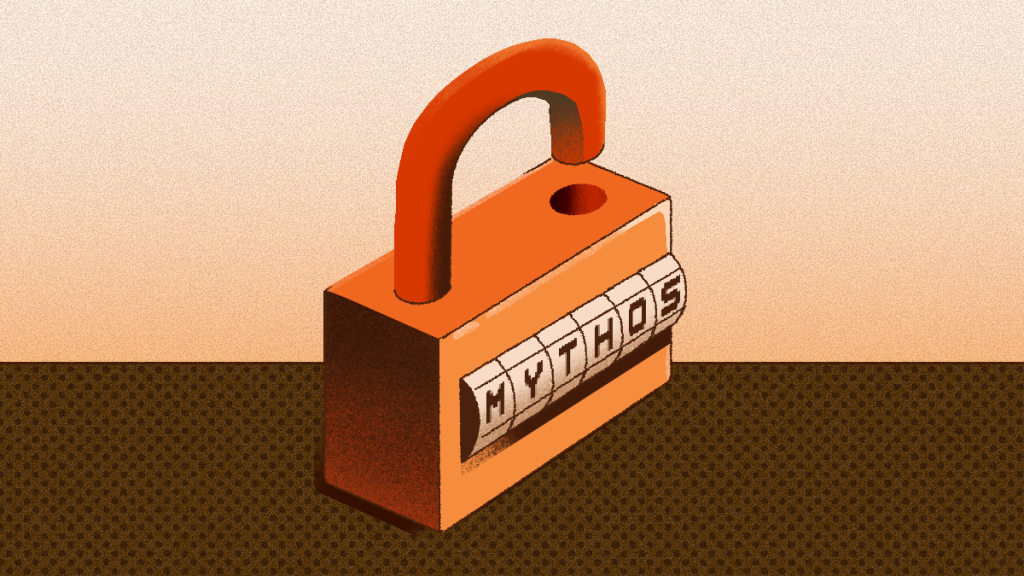
Image credit: Ulla
Regulators across Asia wasted no time in sounding the alarm about the new frontier AI model. Central banks from South Korea to Hong Kong spurred their member banks to review and strengthen their cybersecurity systems.
The Cyber Security Agency of Singapore called out the C-suite executives of the city-state’s enterprise organizations to get the fundamentals of their cybersecurity operations “right, and quickly.”
For enterprises that have long relied on legacy systems, Mythos is a rude awakening to the new world order of cyberattacks.
“The traditional way of running cybersecurity and governance oversight is obsolete,” Wai Kit Cheah, APAC chief security officer of network, cloud, and security services provider Lumen Technologies, tells Tech in Asia.
Cybersecurity operations have long relied on tracking known patterns of malicious behavior to identify and block attacks. But these days, bad actors now use AI to mimic legitimate user behavior. What does that mean?
“We won’t be able to know whether or not an IP address that is good today is still good tomorrow,” Cheah says. “Any packet or IP address that comes in potentially could be from a proxy device that is operated by a bad actor.”
See also: ‘Not how humans act’: how agentic AI is changing cyberattacks
Thanks to AI, attackers can also use multiple proxy devices like local servers and attack a platform at speeds that humans alone won’t be able to counter.
This escalation will force the topic of cybersecurity into company boardrooms, says Rinki Sethi, chief security officer at cloud security platform Upwind.
Is the concern on Mythos justified?
What can enterprises do?
Banking is vulnerable
Stay ahead in Asia’s tech landscape
This is premium content. Subscribe to read the full story.
For cybersecurity experts, Mythos demands a rethink among enterprises on how to best protect their systems. The model will not be the last of its kind.
We know this is not ideal. ⌛ Sign up in 20 seconds. Cancel anytime.
Our subscriber community includes professionals from these companies:





Stay updated on the go with our mobile app.
Get latest insights with smoother, more personalized experience through TIA mobile app.













📅 Upcoming Events
22 October 2026
Payoneer x CSPN Summit 2026