 Malavika Velayanikal · · 5 min read
Startup dies after nearly topping Product Hunt charts. Founder shares hard lessons learned.
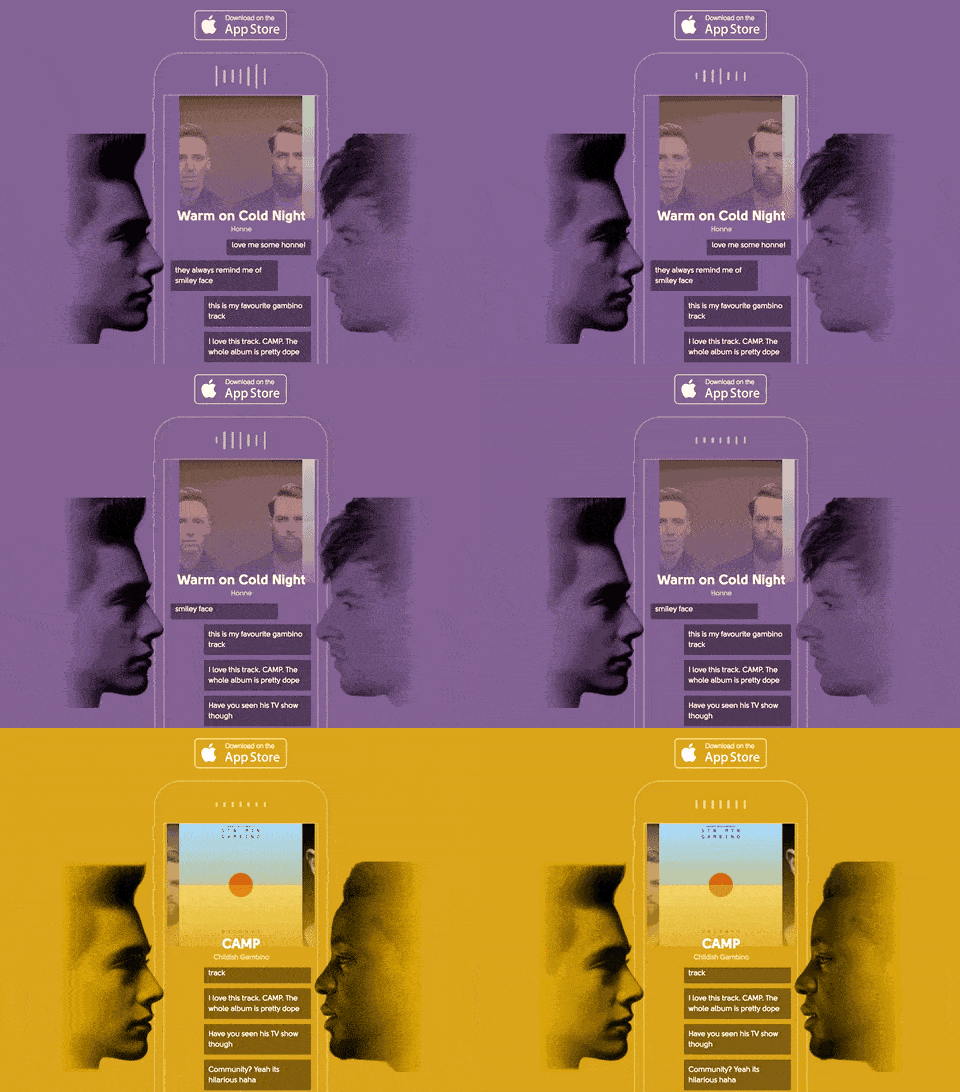
Music is sweeter savoured in company. Friends Abheyraj Singh, Vibhas Jain, Abhinav Chhikara, and Bhargav Sosale knew this well. And that’s why they built Lisn, an app that would let you listen to music with a friend and chat about it within the app. You could stream and share songs on SoundCloud and Spotify, which would sync real-time when your friend tunes in. You then listen to it together, as if you were in the same room or sharing earphones.
But not anymore. Lisn will shut down at the end of this month. This is after a year of playing music to over 10,000 people, who shared and listened to over 120,000 songs.
I could never have anticipated how insanely fun it would be to feel like a DJ for your friend.
The four friends first built it as a hackathon project in October 2015. Chhikara, Jain, and Singh had worked together at real estate portal Housing’s mobile team. Jain had moved on to being the lead designer for digital wallet Paytm, and Singh moved to Airtel’s Wynk Music, a streaming app. Sosale was their friend from school days.
“Couple hours into the design and development, we had a working prototype that used the Spotify API and had chat… After spending about 45 minutes playing music for a friend on the app, I realized what a huge impact prototyping the core experience of the app can have. I could never have anticipated how insanely fun it would be to feel like a DJ for your friend,” Chhikara recalls.
Buoyed by their experience at the hackathon, they began working on the app full-time, and launched it in August 2016. In weeks, it was number 2 on Product Hunt and stole media limelight.
Lisn was free to download on iOS and charged no subscription fee. It was also ad-free, focusing on great user experience. The plan was to think about making money after it built sufficient traction.
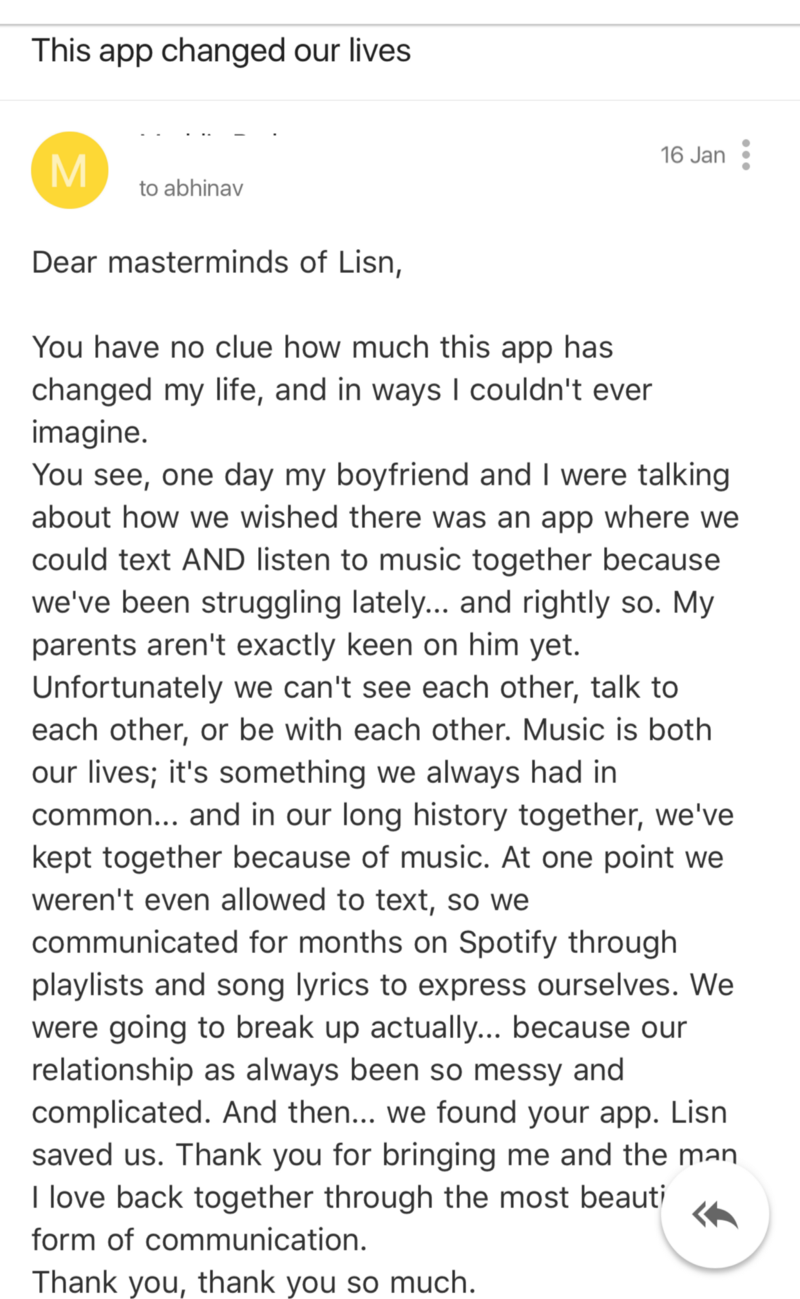
“The app spread via word of mouth in college campuses and offices. Friends used it to recommend music to each other, long distance couples used it to stay connected, and musicians used it to collaborate,” Chhikara says.
A few months later Android developer Tejas N.A. joined the team. Glowing feedback from users (like the one below) kept them going.
But it all came to nought in a year’s time. Here are the lessons they learned from their failure:
1. Lacked conviction in retaining users
The app was getting around 100 downloads a week, and users were making requests for new features. This suggested good traction but the weekly active users stayed constant around 200 for months.
2. Lacked experience on scaling a product
3. Too small a problem
4. Founders emerge more rounded out





Stay updated on the go with our mobile app.
Get latest insights with smoother, more personalized experience through TIA mobile app.








📅 Upcoming Events
22 October 2026
Payoneer x CSPN Summit 2026