- Insights This article was written by a TIA community member. Insights pieces undergo the same rigorous editorial process that newsroom-produced articles have.
 Ashley Dudarenok · · 5 min read
Rethinking business and consumer roles in the era of new retail
The following is an edited excerpt from the book New Retail Born in China Going Global: How Chinese Tech Giants are Changing Global Commerce by Ashley Galina Dudarenok and Michael Zakkour. You can buy a copy of the book here.
This excerpt includes additional research by Maureen Lea.
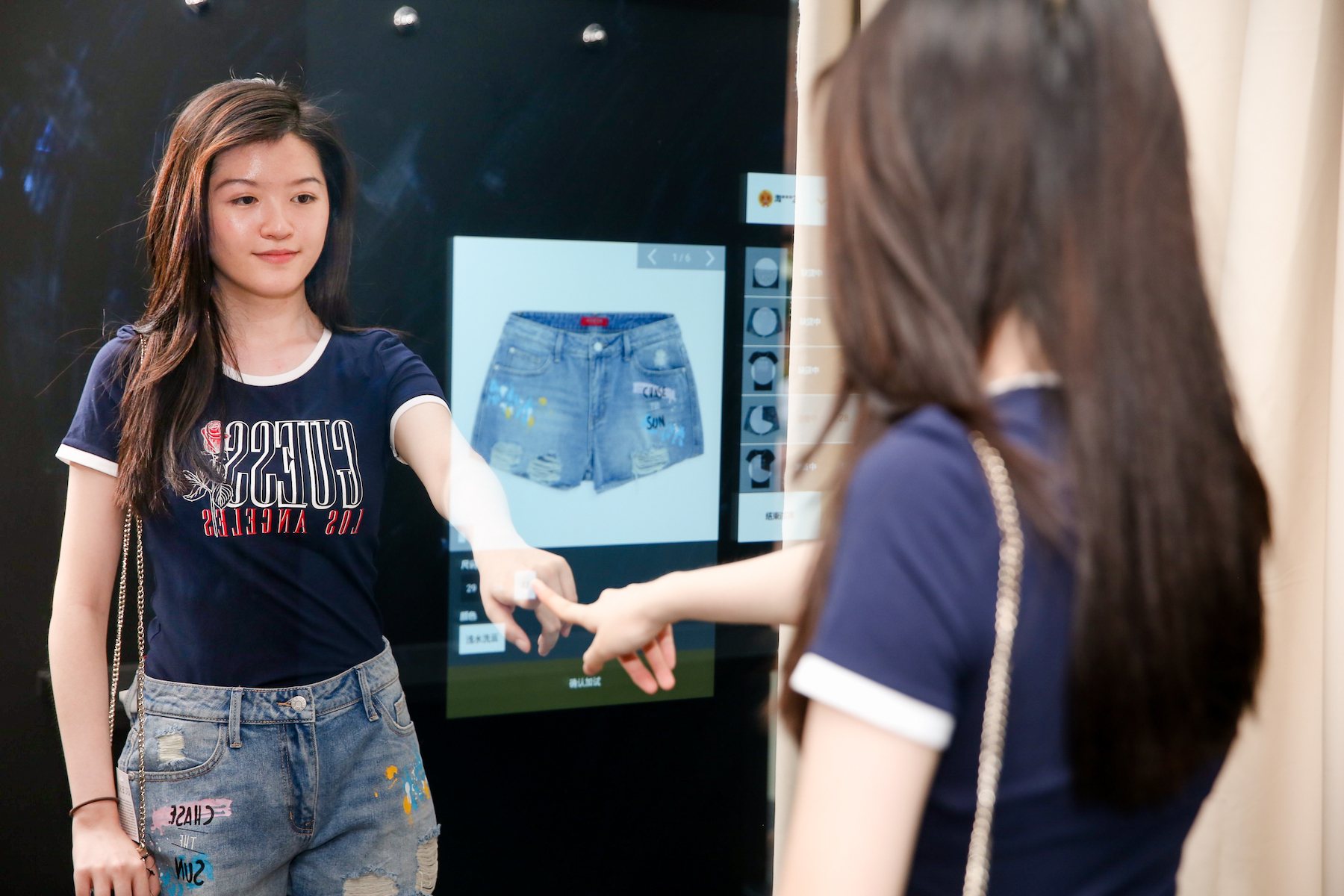
Alibaba’s Fashion AI concept store / Photo credit: Alibaba
New approaches to buying and selling products that incorporate experiential retail and merge online and offline experiences – including Alibaba’s “new retail,” JD.com’s “boundaryless retail,” and Tencent’s “smart retail” – have consumers doing business in new ways that are more intuitive and convenient for them.
These companies have adjusted to their new roles with ease, but some businesses – too trapped in traditional mindsets and business processes – may have some adjustment issues.
Trend-sensitive brands have already realized that consumers need to be at the center, not just in terms of the final purchasing transaction, but also production, delivery, and promotion.
The old role of product purchaser is being replaced by new roles – like co-producer and mini-influencer – as people take an active role in the creation of their products and the marketing efforts surrounding them.
Brands and merchants that want to do well as these changes take hold understand that control now lies with consumers, and they need to play on the consumers’ terms.
Here are some of the changing roles that are emerging.
1. From brick-and-mortar store to data collection site
Previously, when companies wanted to cut costs, they closed stores and relocated goods and services online. With the emergence of big data, market players realized that brick-and-mortar stores are more than just retail outlets: they’re data collection sites.
Alibaba is a prime example of a company that understands this. It continues to invest in brick-and-mortar retailing to test algorithms and collect data about customers, products, and shopping behavior. Companies that do this can build databases covering membership, purchasing activity, and customer preferences, and adjust their product offerings in real time. They can also design creative marketing campaigns with a higher rate of audience engagement.
A good illustration of this process is Chinese department store chain Intime, which has taken on a digital transformation since joining forces with Alibaba in 2014. There are 62 Intime stores in 33 cities, where customers can use the company’s mobile app, Miaojie, to exercise membership privileges, scan products to get information, find their way around the stores, or get product recommendations and discounts. When consumers aren’t in the store, the app notifies them about new products, discounts, and promotional events based on their preferences.
Alibaba can place itself at the center of the shopping cycle by using data to create an optimal product mix and spot new consumption trends as they emerge. Cameras in the store detect hot spots and hot shelves, which in turn affects future store designs. Alibaba simplifies purchases for consumers while gathering data.
However, this must be done both strategically and sensitively. As Michael Norris, research and strategy manager at AgencyChina puts it: “More personalized communications and products necessitate a strong customer relationship management system that captures relevant data and turns it into something meaningful for the consumer. How to do this empathetically and with purpose will determine how brands in high-competition, low-differentiation categories stay relevant to consumers.”
2. From consumer to content creator and co-producer
3. From tech company to financial institution
4. Brands are retailers, retailers are brands





Stay updated on the go with our mobile app.
Get latest insights with smoother, more personalized experience through TIA mobile app.