 J.T. Quigley · · 6 min read
Moneytree broke business barriers in Japan by speaking the language of fintech

Moneytree’s co-founders (L to R): Makdad, Chapman, and Sharrott.
Starting a new business is hard. Starting a new business in a different country can be even harder. Starting a new business in a different country that requires the vast majority of domestic financial institutions to support it is damn near impossible.
For some expat entrepreneurs in Japan, language and culture barriers are the least of their worries. Convincing local venture capitalists to back their idea, in a country known for its corporate conservatism and a general propensity toward risk aversion, is far more likely to keep a startup founder awake at night. Especially when, as is the case with many growth-stage startups, external funding pays the bills.
For Moneytree, founded in Tokyo in 2012, just being recognized as a Japanese startup when its co-founders aren’t Japanese has been an uphill battle – even after landmark fundraising from the country’s top-three megabanks: Mitsubishi UFJ, Mizuho, and Sumitomo Mitsui. No startup, Japanese or otherwise, had ever brought the trio of direct rivals together for the same financing round. At least not that the banks are willing to talk about.
“It’s very hard to convince Japanese institutional investors to invest in a startup run by foreigners,” Paul Chapman, Moneytree co-founder and CEO, tells Tech in Asia. “Even post-raise, people still ask us where our headquarters is, ‘Where is Moneytree originally from?’”
Breaking the language barrier
Chapman, an Australian, has resided in Japan off and on for more than a decade. While an undergraduate at Monash University in Melbourne – where he studied Japanese, business, and finance – Chapman co-founded and served as CTO of e-recruitment startup cvMail. It focused on a similarly conservative client base as his current venture: legal professionals in Australia and the UK. Chapman saw it through to acquisition by Thomson Reuters in 2007. He later became an IT director and sales manager at EnWorld, a recruitment company based in Tokyo.
Along with American co-founders Mark Makdad and Ross Sharrott, the trio established a boutique iOS and Android app development studio called Long Weekend in 2009. Makdad and Sharrott are also long-term Japan residents, and all three are fluent Japanese speakers.
“It took about four years to be able to read a newspaper; including one and half years living in Japan as a full-time student,” Chapman says. “Conducting business meetings and investor presentations requires specialized language, and an understanding of Japanese business rituals. Let’s put it this way – we’re still learning.”
In 2012, Moneytree was born. Chapman took the role of CEO, Sharrott became CTO, and Makdad dove into product and business development. SoftBank had been the only iPhone carrier until AU began selling the 4S early that year, and investors were skeptical about iPhone development in a market that was stuck on feature-rich flip phones – affectionately referred to as “gara-kei” (Galapagos phones) for evolving independently from the rest of the world.
The few iOS developers in Japan were largely focused on gaming, and the group saw a chance to enter the domestic financial technology (fintech) vertical while the country’s online banking services were desktop-focused and fragmented.
Banking on trust
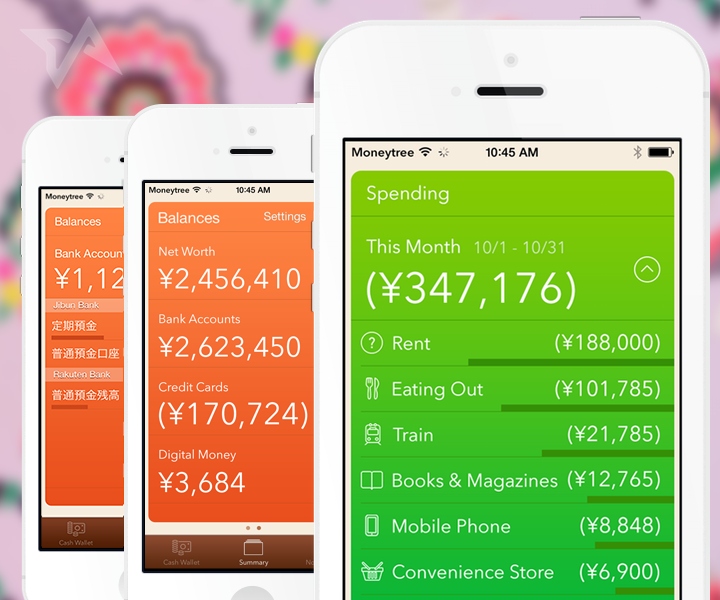
Put simply, Moneytree helps users to get a snapshot of their personal finances. They can input multiple bank accounts, credit cards, and even Japan’s ubiquitous loyalty cards into the app to visualize spending habits, account balances, and receive alerts when payments are due or points are set to expire.
A premium feature for businesspeople allows users to flag purchases in the app as work expenses, then export the data in a variety of formats to be sent to their employer. There’s also an enterprise version for aggregating corporate accounts, which the startup touts as a first for Japan.
Be local, think global





Stay updated on the go with our mobile app.
Get latest insights with smoother, more personalized experience through TIA mobile app.










📅 Upcoming Events
22 October 2026
Payoneer x CSPN Summit 2026