- Premium Content It takes our newsroom weeks - if not months - to investigate and produce stories for our premium content. You can’t find them anywhere else.
 Kenan Machado · · 4 min read
Asia’s richest man takes on world’s wealthiest to rule over India’s ecommerce scene
India is the world’s fastest-growing ecommerce market, making it a fertile battleground for two of the world’s wealthiest men: Jeff Bezos, founder and CEO of US tech giant Amazon, and Mukesh Ambani, chairman and managing director of homegrown conglomerate Reliance Industries.
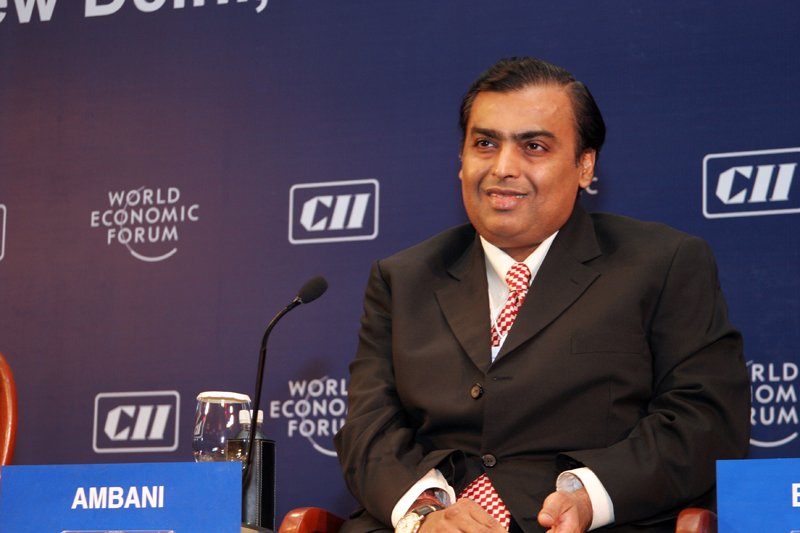
Reliance Industries chairman Mukesh Ambani
Ecommerce transactions are expected to hit US$150 billion by 2022 from an estimated US$84 billion this year, according to projections by PricewaterhouseCoopers and Nasscom, an Indian software industry body.
Ambani is betting on two subsidiaries – telecommunications-focused Reliance Jio and Reliance Retail – to underpin the ambitions of his company’s new ecommerce venture, JioMart. He plans to modernize kirana shops, or neighborhood mom and pop businesses that form the backbone of commerce in India.
The JioMart app allows consumers to buy groceries from kirana stores. To help kirana owners, Reliance plans to digitally connect their shops to producers, traders, small merchants, consumer brands, and shoppers via an internet-enabled, handheld point-of-sale device.
Telecom powerhouse
In a little over three years of commercial operations, Jio is India’s second-largest telco by number of users. It launched in beta mode in late December 2015 and now has over 360 million mobile users.
With most of India’s consumers using their mobile phones to buy online, this will likely give Reliance a leg up against Amazon, according to some analysts.
JioMart is expected to evolve into a pan-India, mobile-first rollout. It’s designed to complement the extensive reach of Reliance Retail. Touted as India’s biggest retailer in terms of revenue, Reliance has 10,901 brick-and-mortar stores in over 6,700 Indian cities, which collectively take up around 24.5 million square feet of space.
Amazon’s playbook
Reliance is essentially taking a leaf from Amazon’s playbook and scaling it up.
The US tech giant actually started tapping kirana businesses five years ago. It now works with around 23,000 of them to offer last-mile deliveries, Amazon India spokesperson Madhavi Kochar tells Tech in Asia.
The challenge from Reliance comes as Amazon steps up investments in the South Asian nation while its growth in key markets is slowing. Operating income in North America dropped 37% year-on-year despite a 24% jump in sales in the third quarter of 2019. The company’s international operations remained in the red even as sales climbed 21%.
But the Seattle-based tech giant isn’t taking this sitting down. Bezos visited India on January 14 and promised to spend US$1 billion over the next five years to help digitize small and medium-sized businesses across the country.
Just landed in India and spent a beautiful afternoon paying my respects to someone who truly changed the world. “Live as if you were to die tomorrow. Learn as if you were to live forever." – Mahatma Gandhi. pic.twitter.com/xDXAT9cBgf
Margin pressure
Big data
Stay ahead in Asia’s tech landscape
This is premium content. Subscribe to read the full story.
Amazon chief Jeff Bezos’ plan to control this emerging market faces a challenge: an army of small businesses backed by Reliance boss Mukesh Ambani.
We know this is not ideal. ⌛ Sign up in 20 seconds. Cancel anytime.
Our subscriber community includes professionals from these companies:





Stay updated on the go with our mobile app.
Get latest insights with smoother, more personalized experience through TIA mobile app.