Chua Kong Ho · · 5 min read
How AI, facial recognition are revolutionizing physical security in Asia
The elderly man inside the doorway of a residential building – tucked in a tiny corner with his cup of tea, crumpled newspaper, and transistor radio – is a common sight for residents in Hong Kong’s many high-rise flats.
Usually in his 60s or 70s, he is sometimes the doorman and is almost always gruff. Other times, he gives directions and is generally tasked with ensuring security for the building. But elderly guards are endangered species.
“Young people won’t want to sit there reading a newspaper all day or even play with their smartphone. They’ll be bored to death,” said Paul Chong, chief executive of Certis Group, the Singapore-based security company that started off as a division within the country’s police force.
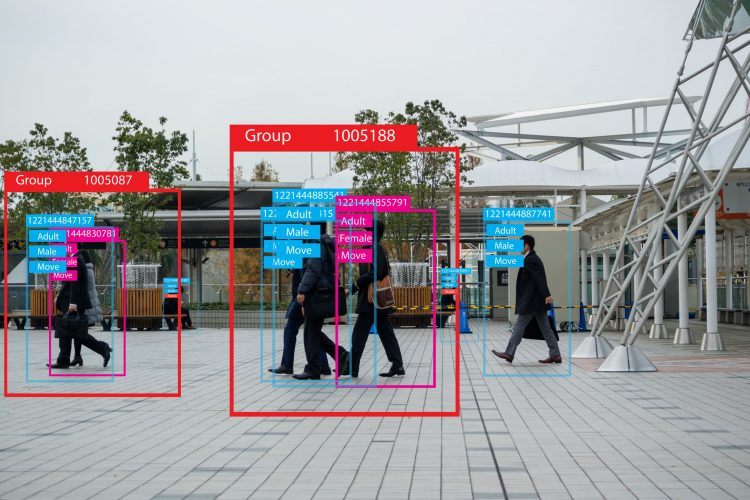
Photo credit: Ekkasit Keatsirikul / 123RF
With high-definition video surveillance cameras, facial recognition, and remote sensors feeding tons of data into AI algorithms to analyze in real time, technology has advanced to the point where the “old uncle” is no longer needed, according to Chong.
Like other sectors buffeted by the winds of technological change, the concept of physical security is also being redefined by the new tools being used to ensure safety and deter crime.
Certis began in 1958 as the Guard and Escort Unit of the Singapore Police Force. It later became a statutory board in the island state’s private armed security industry before incorporating in June 2005 as a wholly owned subsidiary of Temasek Holdings. The outfit recorded S$1.2 billion (US$887 million) in its 2018 financial year, crossing the billion-dollar mark for the first time.
Certis has grown its presence in the Greater China region in recent years to about 3,000 employees today, rising from under 1,500 in 2017. To spearhead its expansion, the company earlier this month appointed former Hong Kong Commissioner of Police Tang King-shing as its regional chairman.
On a sunny afternoon in January, the South China Morning Post visited the technology center of Certis, which is nestled in a quiet industrial neighborhood in Singapore. The facility is equipped with the latest advances in security technology and houses a command center that oversees security at some of its corporate customers, including a number of major shopping malls.
AI is now smart enough to detect if a person is acting out of the ordinary and flag these “exceptions” to the central command center, where human operators can decide on the course of action.
For low-level actions like a smoke detector being activated, AI can automatically tell personnel on the ground to check and report. Depending on the level of sophistication, high-definition cameras with thermal imaging can determine whether there is a fire, negating the need for human officers to visit the site and cutting down response time.
Ground sensors along perimeter fences mean that there is no need for human patrols because any movement would trigger an alert. The use of analytics also frees up human operators from having to constantly monitor banks of screens and dealing with cases flagged by the software.
All of these advances are a far cry from when Chong first joined Certis in 2004. Those were the days of pre-digital video, when the tapes of camera recordings from ATMs had to be changed daily. At that time, security companies also had to figure out how to store and archive the ATM camera footage.
The shift to digital video was like “a breath of fresh air.” And combined with the ubiquity of surveillance cameras, it fundamentally changed the direction of security, according to Chong.





Stay updated on the go with our mobile app.
Get latest insights with smoother, more personalized experience through TIA mobile app.