Terence Lee · · 3 min read
Entrepreneurs in Southeast Asia could be undone by overcrowded airports
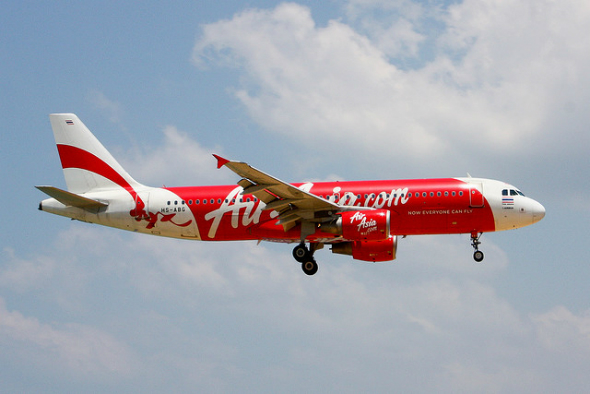
Countries in Southeast Asia like Singapore, Indonesia, and the Philippines may be up-and-coming entrepreneurial hubs, but their efforts may be undone by clogged airports.
An illuminating report by Reuters has revealed that Southeast Asia’s main airports are struggling to keep up with demand, resulting in delays, long lines, and planes being forced to circle overhead or wait at the tarmac.
The situation is likely to get worse.
A main reason for the spike is the emergence of low-cost carriers that have now enabled more people to visit other countries. This drastic increase in demand for budget travel was never foreseen by airport designers.
Jakarta’s Soekarno-Hatta International Airport now serves over 50 million passengers annually, more than twice of what it was designed for in the mid-1980s.
Immigration queues at Bangkok’s Suvarnabhumi Airport can last about two hours, as it is running over capacity. The same situation can be seen at Kuala Lumpur’s budget terminal, home to AirAsia.
As a result, Southeast Asian airlines may have to cancel or delay their orders of new planes, totalling about US$47 billion, causing further supply crunch. Travelers may eventually find it harder to book a flight to their desired location at an optimal time.
Even Singapore, noted for its efficiency, may not be able to keep up in the future. The Center for Asia Pacific Aviation has said that a third runway and fifth terminal may be needed for Singapore to maintain its status as a leading hub — and they need to be ready by 2020.
It is currently building a fourth air terminal, it will only be completed in 2017.
Even while airports are struggling, the startling fact is that Southeast Asia remains a market that is under served by airlines. Con Korfiatis, vice president of budget airline Citilink, says that in Indonesia, only 300 single-aisle jets serve the country’s 230 million people, compared to 3,000 in the United States, with a population of 310 million.
These problems could dampen the growth of Southeast Asian economies and their entrepreneurial ecosystems.
Airport congestion would drive up the costs of air travel due to higher operating costs resulting from wastage. Starting and doing business becomes more expensive, and startups would feel the brunt of the effects due to their limited cashflow.
Planning a trip would become as complicated as the job of a pilot. This takes time away from customer acquisition and product development.





Stay updated on the go with our mobile app.
Get latest insights with smoother, more personalized experience through TIA mobile app.