 C. Custer · · 5 min read
Why Ubisoft consultant's criticism of League of Legends is totally wrong
This piece in Gamasutra, a lengthy summary of Ubisoft Blue Byte’s Teut Weidemann on why other games shouldn’t monetize like League of Legends, is remarkable. No, Dota 2 fans, it’s not what you’re thinking; Weidemann is actually arguing that League of Legends is way too nice to its players. He argues Riot should be trying to get a lot more of its customers’ hard-earned cash.
(See: The true cost of League of Legends, compared by region (INFOGRAPHIC))
Looking at things from the perspective of the Asian market, though, I think Weidemann is missing the forest for the trees.
To begin with, Weidemann has issues with the way Riot releases champions:
“They release a new champion that is always, always overpowered. So the people who pay for the game buy the champion immediately… and then Riot will go in and slowly devalue the champion until he is ‘balanced.’ In addition to damaging the goods you just bought, they also lower the price of the previous champion they released,” Weidemann says. “I would feel cheated. How come LoL can actually get away with that?”
It’s no secret that Riot errs on the side of OP when releasing new champions, but players know that these champions will be balanced over time. Weidemann may consider that “devaluing” the player’s purchase, but the alternative—not balancing new champions—would quickly turn the game into a pay-to-win affair. The League of Legends eSports scene would be destroyed, and the player-base would collapse. So while keeping the newer champions OP might make paying players happier in the short-term, like Weidemann suggest, in the long term it would completely destroy the game.
And as for the prices of older champions being lowered, that happens to ensure that the game is reasonably affordable and that new players can build up a sizeable champion pool without having to grind for months on end or cough up a full week’s salary just to buy some new champions. Could Riot be squeezing gamers harder? Sure. But that doesn’t mean it should. The fact that LoL champions aren’t unlocked by default like in Dota is already a factor that turns some players away. If champion prices in RP and IP were never lowered, the game would require so much time for players to develop even a limited champion pool that it would essentially no longer be free-to-play at all.
And that, of course, would utterly decimate its playerbase in Asia, where League of Legends is the top game in many countries (including China and Korea).
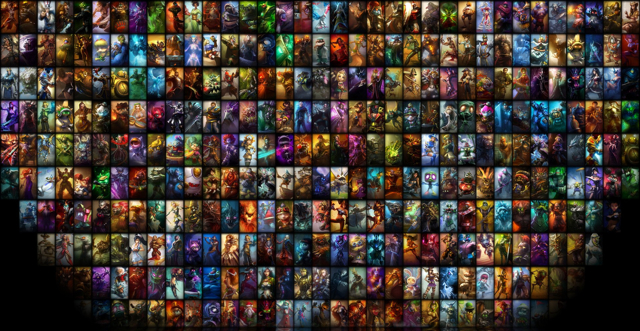
Imagine if they all still cost 6800 IP.
But Weidemann’s main problem with the game is it’s low conversion rate—the low percentage of users who actually pay for anything in the game. According to Weidemann, LoL‘s conversion rate is 3.75%, meaning that more than 96% of LoL players don’t spend actual money on the game.
“Usually, conversion rates for client-based games is between 15 and 25 percent,” Weidemann reveals. “World of Tanks has 30 percent. It could afford to have 1/3 of the customer base and have the same amount of money as League of Legends.”
LoL gives away too much for free, Weidemann suggests. The company could aggressively increase its revenues across even a smaller player base, and chooses not to.
wildfire





Stay updated on the go with our mobile app.
Get latest insights with smoother, more personalized experience through TIA mobile app.










📅 Upcoming Events
22 October 2026
Payoneer x CSPN Summit 2026