 Yingzhi Yang · · 8 min read
Asian cities are competing to woo tech startups with incentives
Asia is now home to many of the world’s most innovative and valuable technology startups.
Investors have continued to pour capital into these companies, thanks to the implementation of business-friendly policies to help nurture their growth in major Asian cities.
Last year, nine out of the 10 largest public venture capital deals involved startups in Asia – seven of which were based in China, according to capital market research firm Preqin.
Asian cities that have succeeded in attracting a steady stream of venture capital and startups have relatively strong economies, highly educated populations, major academic institutions, and well-developed infrastructure. To stay competitive, these places also offer a range of tax incentives, subsidies and related programs to support entrepreneurs.
Major cities in China, for example, have various government-backed funds on offer for startups. Government institutions and state-owned enterprises are the biggest source of venture capital funding in the world’s second-largest economy. In 2016, these entities accounted for 35.3 percent of all venture capital funding in the country, according to a report by Mitsui & Co Global Strategic Studies Institute.
China’s state-backed funding support for startups is reminiscent of how entrepreneurship in the United States received a big boost after the Small Business Investment Act of 1958 was passed into law. It helped create privately organized and managed investment firms, which provided new and established businesses with funding that consisted of money borrowed at favorable rates from the US government. Later on, the program helped foster the development of high-tech businesses at a vast, sprawling area in northern California – a place that’s now known as Silicon Valley.
Here are some of the most popular Asian cities where tech startups can establish and build up their operations:
Beijing
The capital of China is also home to the country’s most prominent technology hub, Zhongguancun, which was founded 30 years ago with a mission to “learn and replicate Silicon Valley.
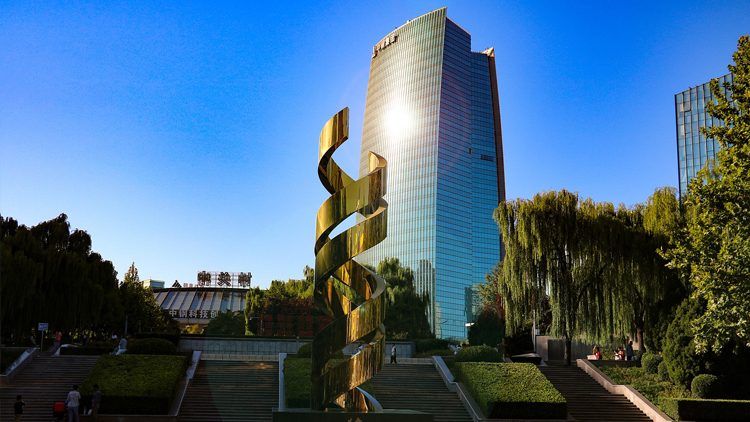
Zhongguancun, Beijing / Photo credit: Pixabay
There are about 9,000 technology companies located in Zhongguancun, a 488 square kilometer zone in northwestern Beijing’s Haidian district. These include some of China’s biggest high-tech firms, such as personal computer maker Lenovo Group, online search giant Baidu, and ecommerce services provider JD.com.
Close to some of China’s most prestigious universities and research institutes, Zhongguancun enjoys great advantages in access to talent. Its Haidian park has more than 40 universities, including the world-class Peking and Tsinghua Universities, as well as more than 200 research institutes and national-level laboratories.
Zhongguancun is a product of the central government’s efforts to foster high-tech development. Backed by the State Council, the area became China’s first high-tech pilot zone in 1998. It offers tax breaks, funding and other incentives for enterprises that move there.
Beijing ranked as the top destination for venture capital in China last year, when it received a total of 66.3 billion yuan (US$9.8 billion) in funding, according to private equity data tracker Zero2IPO. That was about 1.5 times more than the total received by second-ranked Shanghai.
With efficient access to funding and a highly educated workforce, Beijing has nurtured many unicorns, or startups valued at least US$1 billion. There were 79 such companies located in Beijing last year, according to the Hurun Greater China Unicorn Index 2018. These include ride-hailing services giant Didi Chuxing and internet technology firm Bytedance.
Shanghai
Hangzhou
Greater Bay Area
Singapore
Seoul





Stay updated on the go with our mobile app.
Get latest insights with smoother, more personalized experience through TIA mobile app.





📅 Upcoming Events
22 October 2026
Payoneer x CSPN Summit 2026