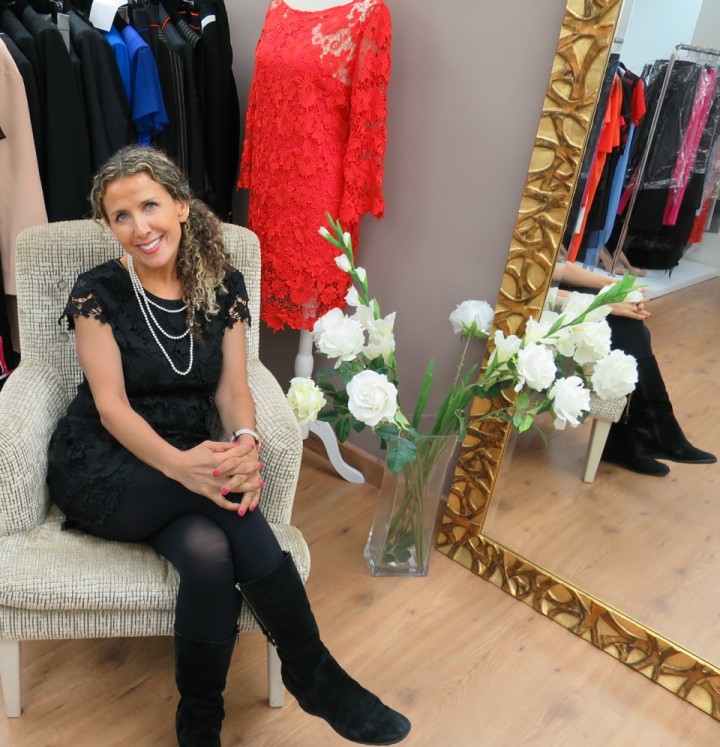
Sarah Chessis, the founder of Isabella Wren, had no real interest in technology when she started up her small fashion studio. But today, nearly every step of making a custom outfit for a client leverages tech that, five or 10 years ago, would have been beyond practicality.
Proportions are taken using a 3D camera instead of a tape measure. Mockups and patterns are fitted on virtual avatars to see what the clothes will look like before going into production. And much of her non-core design work is outsourced to freelancers on Elance. In short, her humble little business might well be Hong Kong’s most tech savvy fashion studio.
“As far as I am aware this is a first for Hong Kong,” Chessis says. “In addition, the technology is fully mobile and scans can be taken literally anywhere.”
Someone with enough money to shell out for a custom-tailored suit or dress expects it to fit perfectly. We might like to envision an elderly artisan painstakingly taking measurements, cutting the patterns, and hand-sewing each stitch together. But the fashion industry – even in the high-end custom apparel market – doesn’t work like that anymore.
A tailor takes the measurements. A designer chooses the materials and creates the overall look. A pattern cutter figures out the shape of each piece of fabric and how they should fit together. A workshop on the Chinese mainland puts all those pieces together into actual clothing. Then the tailor makes a few final adjustments. Going through the hands of so many people leaves a lot of room for error.
“Human error accounts for most fitting inaccuracies,” says Chessis. She quit her 15-year-long banking career to pursue her dream of making custom clothing. What she didn’t expect is that her entrance into the industry would coincide with a number of new technologies that would let her run her business like no studio in existence a decade ago.
Born of necessity
It began when her pattern cutter, a vital link in the manufacturing chain, suddenly quit just after she successfully negotiated the biggest task of her short career – creating a prototype staff uniform for Hong Kong’s fancy Mandarin Oriental hotel. Desperate for a fast replacement, she took to the internet.
That’s when she discovered a software developer from Singapore that makes a 3D fashion design software. It allows her drag and drop patterns onto a 3D model to see what a piece of clothing will look like much more accurately than a two-dimensional tool. Every stretch, fold, and drape shows up in detail, changing depending on the type of fabric and, of course, the avatar wearing it. The process is still “in beta” with a few kinks to work out, so Chessis requested the name of the software and its maker not be published.
Chessis herself doesn’t even need to learn more than the basic functions. She found a trove of freelancers on Elance who will fine tune the pattern designs for her. All she does is hand them the basic design and the customer’s measurements.
Even the mockup – when the customer wears a “rough draft” of his or her outfit before the clothing is actually made – could theoretically be done on a computer. But for now, Chessis still prefers to do that in person.
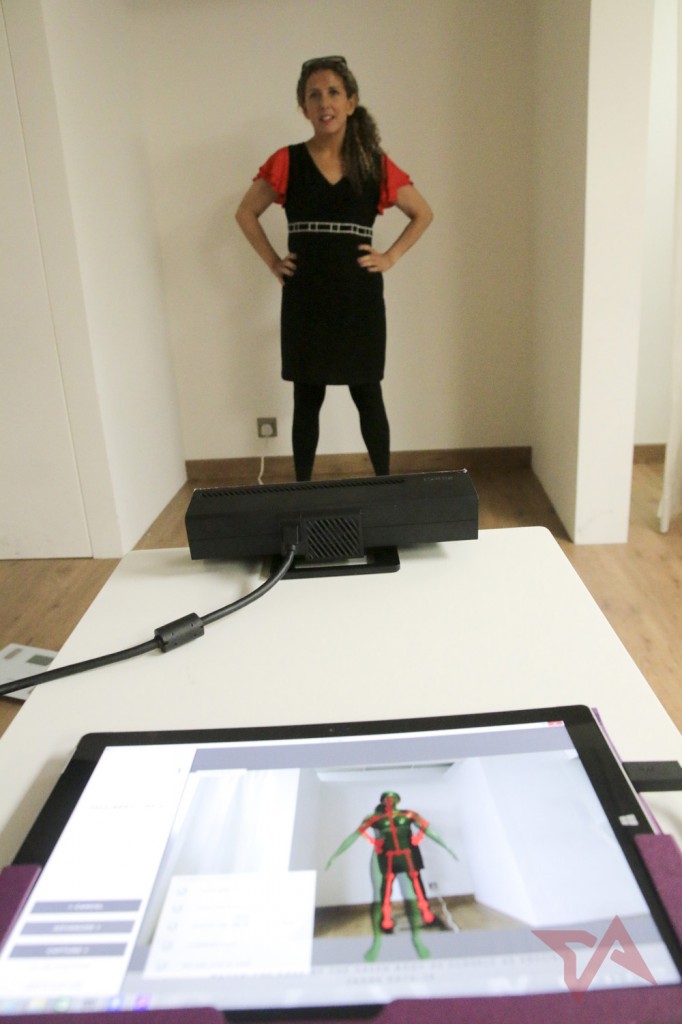
Taking measurements is another step in the process prone to error. Every tailor does it a bit differently, and customers often have to make repeated trips to the studio to get it just right. Now inspired about what technology could do for her, she adopted a new method. With proprietary software from an American startup (again, she asked that it not be named), she uses an Xbox Kinect and a Microsoft Surface tablet to take a person’s measurements within one centimeter of accuracy.
Tech is the new black





Stay updated on the go with our mobile app.
Get latest insights with smoother, more personalized experience through TIA mobile app.











📅 Upcoming Events
22 October 2026
Payoneer x CSPN Summit 2026