Jonathan Chew · · 6 min read
Meet the company that’s betting big on Asia’s thriving blockchain market

When Bitcoin first exploded into the public consciousness, the cryptocurrency was touted as a “mathematical framework that is free of politics and human error.” Cryptocurrencies – and blockchain technology as a whole – seemed to hold boundless possibilities.
But no technology is perfect, not even Bitcoin.
It is energy-intensive, cannot be upgraded in a sustainable way, and its base coding language is limited, with potential security issues to boot.

Photo credit: Pexels
In 2014, Arthur and Kathleen Breitman set out to solve some of the issues with blockchains like Bitcoin. That’s how the Tezos blockchain was born.
Not only is Tezos more energy-efficient than Bitcoin but it also upgrades in a more stable and unified way. Further, its base code is mathematically verifiable, which means that it can be checked to ensure that it runs as intended. This protects Tezos from bugs and exploits.
In 2017, the platform’s initial fundraising efforts were a success, raking in a whopping US$232 million. That same year, it set up a non-profit Swiss organization called the Tezos Foundation to manage the funds.
The foundation also promotes and supports the use of the blockchain in smart contracts, fintech, art, gaming, music, and other areas.
All of these use cases have seen a surge in demand, especially within Asia, where the blockchain market is set to pull in revenues of US$4.59 billion by 2023.
Looking to capitalize on the technology’s explosive growth in Asia, TZ APAC was established to support and develop blockchain strategies for businesses and creators in the region. Supported by the Tezos Foundation, it garners support for the Tezos ecosystem in Asia by deploying capital, aiding resource development, providing strategic advice, managing projects, and taking care of marketing for its community.
What can blockchain technology do beyond crypto?
One of the trends that TZ APAC wants to back is the recent craze over non-fungible tokens (NFT) all over the world. Within Asia, NFTs have proven to be an invaluable tool for people looking to earn additional income.
The Tezos blockchain has already seen promising results in the region when it comes to these decentralized tokens, especially in open marketplaces like Hic et Nunc (Latin for “here and now”).
Hic et Nunc, which uses Tezos’ blockchain technology, was launched in March this year. In terms of the number of daily active users, it currently rivals OpenSea, another major NFT marketplace. These marketplaces give small-scale creators a platform to showcase their work in a burgeoning NFT landscape, says Joe Hwang, head of APAC business development at TZ APAC.

Joe Hwang, head of APAC business development at TZ APAC / Photo credit: TZ APAC
While million-dollar NFTs might have grabbed all the headlines recently, marketplaces like Hic et Nunc have made possible the independent creator communities that TZ APAC wants to support. According to Hwang, the median price of a piece of art on the platform is a humble US$16.
But that’s not all. Formula One racing teams Red Bull Racing Honda and McLaren Racing recently chose Tezos to begin developing NFT-based fan experiences. Other platforms like OneOf, a recently-launched NFT marketplace for music, and Emergents, a digital trading card game, are also built on the blockchain.
Another promising area for TZ APAC is the use of enterprise NFTs as a service. Startups such as KoineArth have built platforms like marketsN on the Tezos platform.
As a business-to-business supply chain platform, marketsN uses the Tezos blockchain to enable enterprises to convert their assets into NFTs. Doing so passes on all the benefits of NFTs – such as greater transparency, traceability, and secure proof of ownership – to these assets, with notable use cases in supply chain and inventory management financing, as well as licensing.
Tezos’ wide range of applications has drawn major companies such as crypto exchange Coinbase, video game firm Ubisoft, and crypto wallet Ledger to join the Tezos network as “bakers,” which is a term for entities that help to validate new transactions, secure the network, and generate new tokens.
Promoting an environmentally conscious blockchain
TZ APAC hopes to set Tezos apart from the likes of Bitcoin and Ethereum in the Asian market. Tezos’ key differences, Hwang says, are its liquid proof-of-stake model and smart contracts.
By using liquid proof of stake to generate new tokens instead of the more common proof-of-work system, Tezos is up to 2 million times more energy efficient than Ethereum. This makes Tezos the greener option, according to Hwang.
Tezos’ smart contracts, on the other hand, use a proprietary programming language called Michelson, which can be mathematically tested and verified to ensure that it executes the way it’s intended to, cutting down on errors and bolstering security.
As Asia’s emerging economies grow more open to change and innovation, the Tezos ecosystem could allow the region to adopt blockchain in a more sustainable manner, says Marissa Trew, head of content at TZ APAC.
“We don’t want a region to adopt an emerging technology that could ultimately do more harm than good in terms of its carbon output, which is why we want to encourage the adoption of a more energy efficient blockchain,” she adds.
To this end, TZ APAC offers a host of resources and services to individual creators, developers, and enterprises looking to engage with or build on the Tezos blockchain.
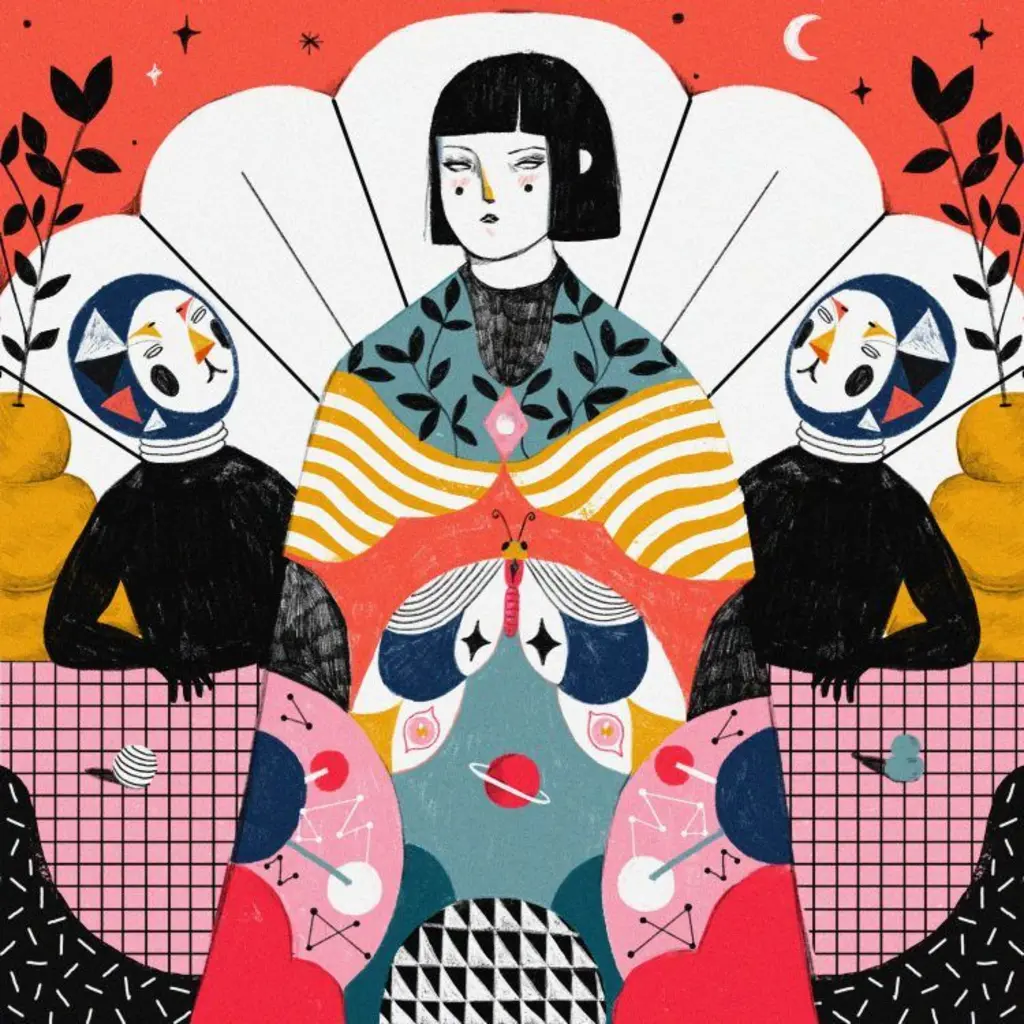
Artwork on hic et nunc / Photo credit: dielamaharanie
The platform recently launched multiple grant programs, including the Ecosystem Growth Grant (EGG). With the EGG, the firm hopes to cultivate new ideas through small-scale funding and direct capital support for creators and developers.
Beyond that, the company’s marketing efforts aim to help more people and businesses in Asia gain a better understanding of blockchain technology and its uses beyond cryptocurrency – in areas such as fintech, NFTs, supply chain management, and the creator economy.
By demonstrating the real-world value of these other use cases, TZ APAC hopes to bring blockchains like Tezos to a more mainstream audience and foster a more favorable regulatory environment.
Upgrades for the future
Hwang says that future upgrades to the Tezos blockchain protocol could help it become even more energy efficient and accessible. Its latest upgrade, Granada, was rolled out in August this year, and introduced several improvements.
The update halved the amount of time it took to generate new tokens to 30 seconds. It also slashed transaction costs – known as gas fees – which are needed to generate smart contracts on the Tezos network. On average, generating smart contracts now costs three to six times less than what it did before the latest update, with gas fees dropping from roughly 50,000 units to 10,000 units.
Hwang says TZ APAC’s end goal is to bridge the gap between the fragmented economies of Asia, with the Tezos technology being used to connect and empower different industries, businesses, and creator communities in the region.
Asian enterprises today are recognizing the “revolutionary power” of blockchain and are looking to use it in new ways to disrupt industries, he says.
“We want to play a key role in promoting sustainable development in Asia,” he adds, noting the promising growth of innovators and environmentally conscious creators in Tezos’ community.
TZ APAC is one of the leading adoption entities supporting the Tezos ecosystem in Asia. It designs value-added blockchain transformation strategies with a bottom-up approach for enterprises and creators, while working closely with blockchain experts and other stakeholders in the Tezos ecosystem.
TZ APAC is supported by the Tezos Foundation and is headquartered in Singapore. To learn more about TZ APAC, visit its website.
This content was produced by Tech in Asia Studios, which connects brands with Asia’s tech community. Learn more about partnering with Tech in Asia Studios.
Stay updated on the go with our mobile app.
Get latest insights with smoother, more personalized experience through TIA mobile app.
Recommended reads
 SG minister highlights AI adoption pitfalls in SEA
 ASEAN gets a tailored risk tracking tool
 Crypto exchange OKX looks to turn a new leaf
 Bank of Thailand partners with 2C2P, others to launch CBDC trial
 Indonesian regulator halts new crypto exchange registrations
 Post-Merge relief; Zilliqa co-founder’s new brainchild
 Is Dubai stealing Singapore’s thunder in crypto?
 For Binance, it’s sunny in stablecoin land
 SG crypto exchange Zipmex extends withdrawal freeze until today
 Australia to roll out trial program for CBDC





Editing by Nathaniel Fetalvero and Arpit Nayak
(And yes, we’re serious about ethics and transparency. More information here.)