- Premium Content It takes our newsroom weeks - if not months - to investigate and produce stories for our premium content. You can’t find them anywhere else.
 Melissa Goh · · 7 min read
Why some medtech products fail to take off, despite rising healthcare spending
There’s a chance you’ve never heard of Mirxes (pronounced Mi-rex-sis) before the Singapore-based medical technology startup started making test kits for Covid-19, the disease caused by the novel coronavirus.
The startup, when has been licensed by the city-state’s Agency for Science, Technology and Research (A*Star)’s commercialization arm to produce the Covid-19 test kits since February 14, is manufacturing enough kits for up to 100,000 tests weekly. These are sent to hospitals in its home market and China. But despite this recent foray, making such kits isn’t the company’s bread and butter.
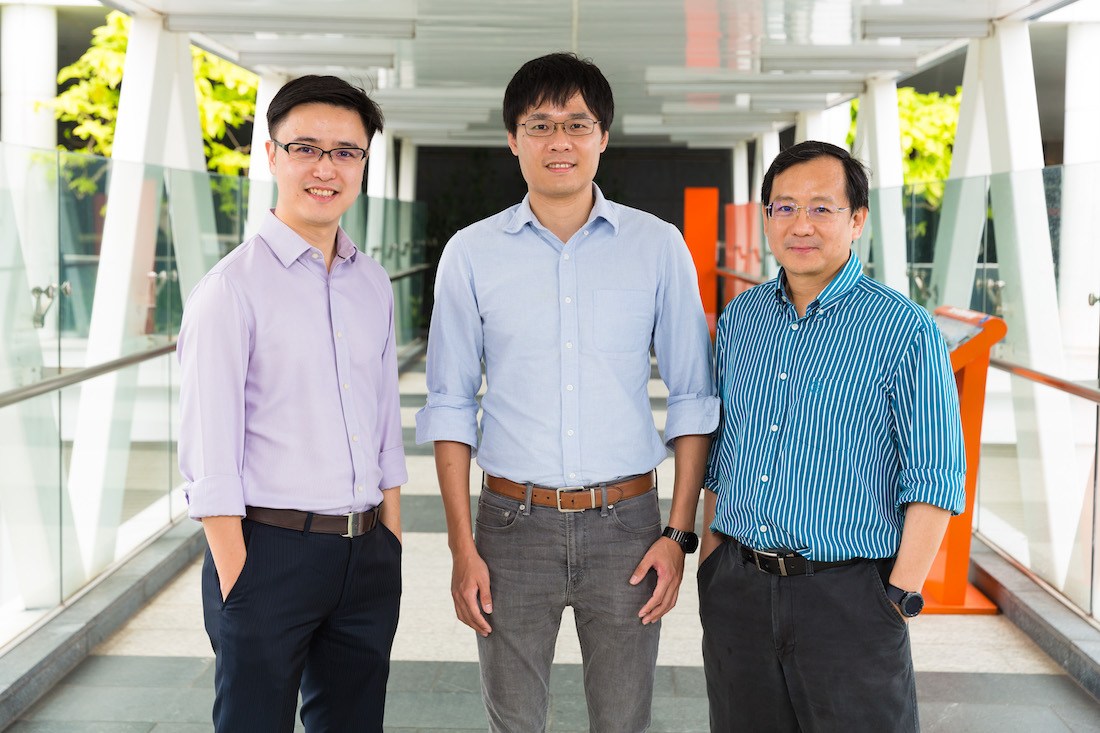
Mirxes co-founders, Zhou Lihan, Zou Ruiyang, Prof Too Heng Phon / Photo caption: Mirxes
The startup’s main business is creating blood-based diagnostic tests based on the analysis of microRNA (a type of nucleic acid) that’s secreted by tumor cells. Its flagship product is GastroClear, which was launched last October after eight years of development.
Singapore may have no shortage of technological infrastructure, talent, or governmental support, but a series of hurdles have hindered the widespread adoption of medtech products. Even if the technology is proven to be both effective and safe, setbacks such as the high cost of capital, distribution issues, or consumer perception tend to get in the way.
Mirxes is one of over 170 healthtech startups in Singapore. The company, which raised US$40 million in a series A round in 2018, is considered one of the better-funded medtech firms. For context, the total deal value in the healthtech sector was S$105 million (US$75 million) in the country that year. But the challenges in this space lie beyond obtaining funding.
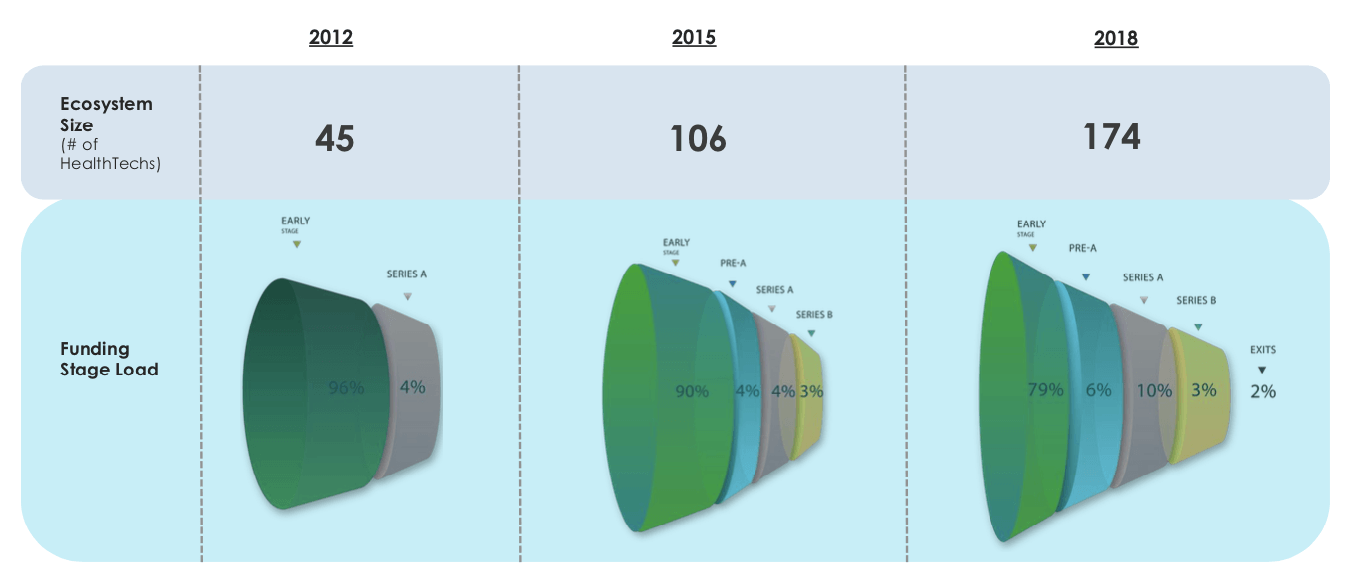
Singapore’s healthtech ecosystem / Photo credit: Economic Development Board (EDB)
Commercialization roadblocks
GastroClear is an early-stage stomach cancer detection test and serves an alternative to invasive endoscopic procedures.
Mirxes claims that while GastroClear displays “superior performance” compared to other modes of detection, it’s been difficult to bring it into the market and scale in terms of adoption, sales and revenue, CEO Zhou Lihan tells Tech in Asia.
He declined to disclose the adoption rates of GastroClear in Singapore, where it’s available in Tan Tock Seng hospital and selected private companies, but he says a more representative number of the product’s success is the pickup it’s seen in China.
Mirxes has established partnerships with almost a hundred health-screening clinics in Asia’s largest economy, where more and more tests are being conducted. “We have seen the number scaling from 20 to 30 a week initially to hundreds per week subsequently,” Zhou shares.
The reason for its success in China is multifold. A higher incidence of cancer in China translates to more awareness about disease prevention and willingness to spend for medical screening, he explains. And unlike in Singapore, where people are used to paying for medical expenses via a national program called MediSave, it’s typical for Chinese citizens to pay for such services out of their own pockets.
But structural barriers related to distribution and purchasing policies can be problematic. “In China, distribution costs can be as much as 70% to 80% of the final customer price,” Zhou says. “In the US, the percentage is a lot more attractive towards the innovator that developed the test.”
Lagging healthcare spending
Insourcing manufacturing
Stay ahead in Asia’s tech landscape
This is premium content. Subscribe to read the full story.
Commercializing medtech products remains a tough sell for startups like Mirxes, despite healthy investor interest and increased public health expenditure.
We know this is not ideal. ⌛ Sign up in 20 seconds. Cancel anytime.
Our subscriber community includes professionals from these companies:





Stay updated on the go with our mobile app.
Get latest insights with smoother, more personalized experience through TIA mobile app.