Paul Bischoff · · 4 min read
Startup connects Chinese medical tourists to overseas clinics for cosmetic surgery
China is the largest source of of medical tourists in the world. The country’s massive population and rising income make going abroad for medical procedures more accessible than ever. Hospitals and clinics around the world are happy to rake in the profits from their foreign patients.
While it’s difficult to pinpoint just how big this market is, multiple hospitals and clinics have cited a rapid increase in the number of Chinese patients, most commonly in the US, South Korea, and Singapore. A report by research firm Hurun and ILTM Asia says "a sizable chunk of the 98 million trips made by residents in 2013 were in search of better or more affordable medical care overseas."
"66 percent of China’s 1.18 million wealthy millionaires would consider medical tourism," the report goes on.
Prospective patients typically go through agents to find the right hospital and set up appointments. An agent can charge anywhere from RMB 10,000 to RMB 50,000 (US$1,600 to $8,000) as a commission to connect the patient to the clinic. But a new startup based in the southern Chinese city of Guangzhou wants to cut out the middleman, save medical tourists time and money, and give them more options.
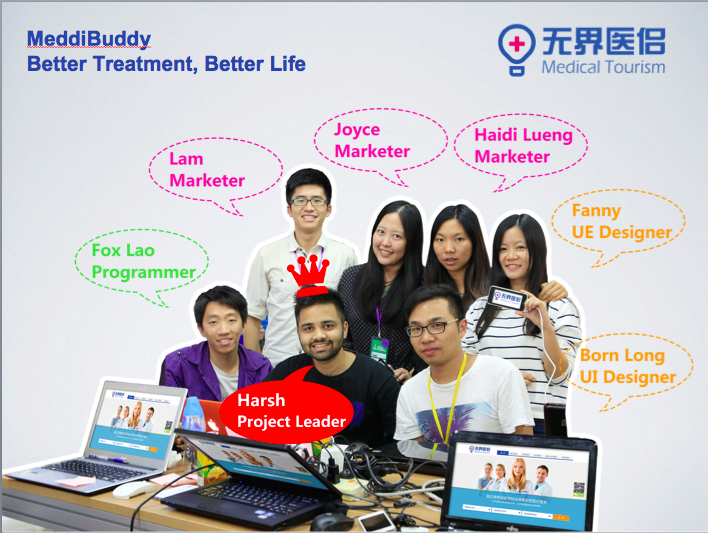
MeddiBuddy is a directory of overseas clinics that cater to Chinese medical tourists. "We wanted to build something for them so they can get directly in touch with these hospitals and not through agents," says founder Dr. Harsh Sethia, who hails from India. He graduated from Southern Medical University in Guangzhou, where he conducted research for his degree. MeddiBuddy was born out of a Startup Weekend Hackathon in Guangzhou.
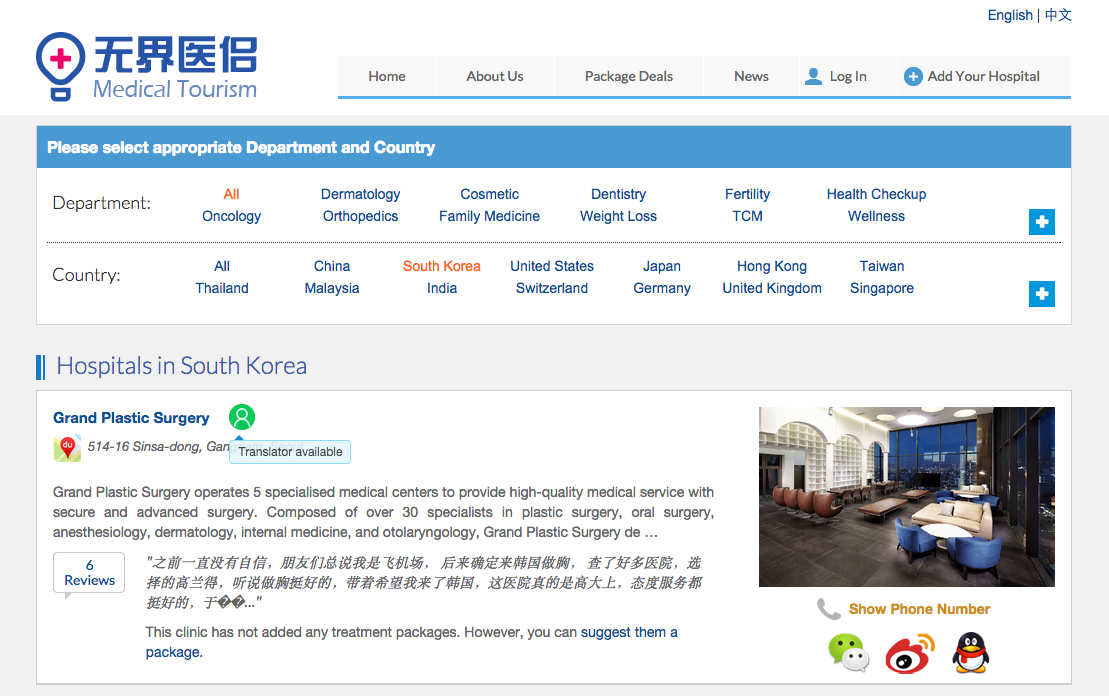
Users just need to select the type of procedure and which country they wish to go to. For each clinic listed, MeddiBuddy posts contact information, an address, a description of the facility, what types of procedures can be done there, social media accounts, photos, and reviews from previous patients. It also lets the user know if a translator is available. Many of the clinics that cater to Chinese patients have actually set up WeChat accounts to make correspondence easier, and MeddiBuddy displays the WeChat QR code for each.
Most popular procedures: cosmetic surgery, in vitro fertilization
Cosmetic surgery is the most common procedure for Chinese medical tourists, Sethia says, and South Korea is the most common destination for it. Last year, he says 200,000 Chinese visited the country for cosmetic surgery, such as rhinoplasty and double-eyelid surgery. That’s about half of all the medical tourists who visit Korea.
After cosmetic surgery, in vitro fertilization (IVF) is the most popular procedure. In some countries outside of China, parents can choose the sex of the child – a significant advantage in a society where parents still often prefer male children. Actually having the child in another country like the US is also in high demand because giving birth on American soil automatically makes the newborn a US citizen and evades China’s one-child policy. This is sometimes done through surrogate mothers.
"Among the Chinese, they are very open to the idea, and it’s a very common procedure," Sethia says. "They already have hospitals that cater to in vitro fertilization."
In fact, cosmetic surgery, IVF, cancer screenings, and other procedures that are commonly done overseas are already available and popular in China. Shanghai alone has five clinics that specialize in IVF, and outdoor advertisement for plastic surgery is a regular sight. But Sethia says Chinese patients often opt for overseas clinics for a few key reasons. Patients who go to Switzerland, the US, and South Korea are usually worried about the quality of healthcare in China. Some countries are perceived to be the best in the world at specific procedures, such as South Korea for cosmetic surgery and Japan for cancer screening. Those who travel to Thailand, Malaysia, Hong Kong, or Taiwan can often find better value for money. Some procedures have long wait periods in China, like newborn gender selection, cancer screening, and organ transplants.
Launched at the end of March, Sethia says MeddiBuddy has had over 2,000 visitors. MeddiBuddy plans to add insurance plans accepted by each hospital, as well as profiles for specific doctors in the coming months. While the site is currently free, Sethia says MeddiBuddy plans to charge hospitals a small per-click commission each time a WeChat QR code is scanned. The site could also charge clinics to be listed on MeddiBuddy’s home page.





Stay updated on the go with our mobile app.
Get latest insights with smoother, more personalized experience through TIA mobile app.