Stefanie Yeo · · 6 min read
Behind the success of Singapore’s healthcare and biomedical startups

Singapore has always been regarded as a hotspot for startup growth and innovation. The city-state is ranked #17 on Startup Genome’s 2020 list of top startup ecosystems in the world, and it has a significant support system for new companies in the tech sphere, ranging from startup accelerators and networks to government assistance.
One particular area where startups in Singapore have seen a lot of growth is in the healthcare and biomedical sciences (HBMS) sector. While Covid-19 has propelled companies in this space into the spotlight, startups in this sector have been active for years.
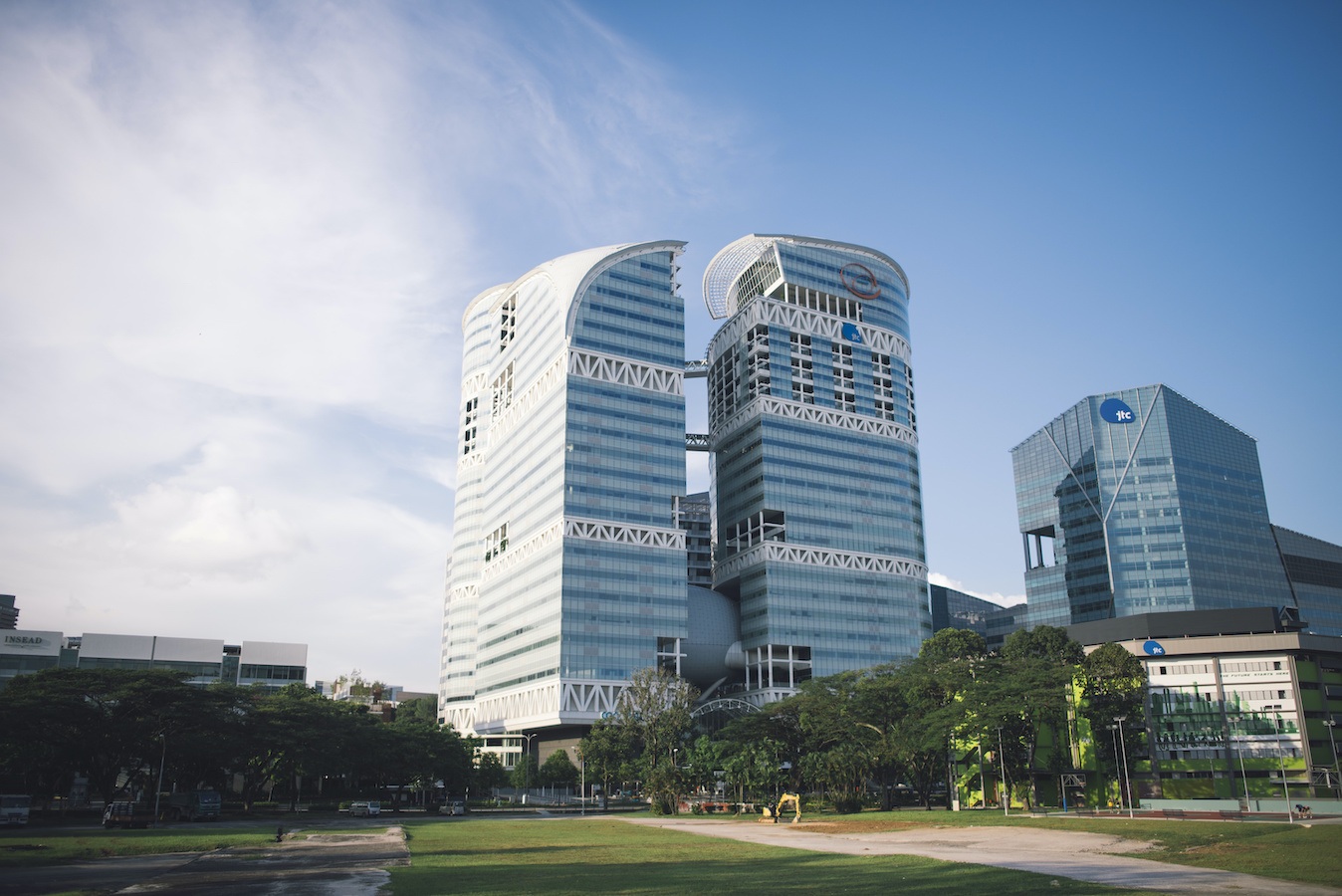
Fusionopolis / Photo credit: fruitjelly / 123RF
Healthtech funding in Southeast Asia has climbed at a rate of about 40% every year since 2014, and in 2019, healthtech startups in Singapore secured 54% of the US$266 million invested into the region’s healthtech firms.
A strong support system
A key reason why startups in the HBMS sector are on the rise in Singapore is because the country is home to numerous resources that startups can tap into to help them at all stages of their progress, from funding and talent development to and research and development (R&D).
Startups can work with Enterprise Singapore, which runs startup development initiatives such as Startup SG, to find support in developing and commercializing their products.
HBMS startups can also work with the numerous accelerators and incubators operating in the country, such as Trendlines, NSG Biolabs, and Galen Growth, among others.
Then there are the country’s tertiary institutions. Three of Singapore’s largest national universities, the National University of Singapore, Nanyang Technological University, and the Singapore University of Technology and Design, have partnered up to create a joint university medtech programme, JUMPstart, to help build sustainable and successful medtech ventures through training, mentorship and funding.
Another avenue is through institutions such as the Agency for Science, Technology and Research (ASTAR).
According to Tan Sze Wee, assistant chief executive at ASTAR’s enterprise division, the support available for startups is tremendous.
At ASTAR, it is present for biomedical and healthcare companies through four key areas: education and knowledge transfer, venture co-creation, business acceleration, and portfolio management.
“It takes a village to raise a successful startup. From ideation and innovation to commercialization to scaling up, we work closely with the ecosystem to inspire, train, and support startups through every step of their journey,” says Tan.

Tan Sze Wee, assistant chief executive at ASTAR’s enterprise division / Photo credit: ASTAR
ASTAR’s assistance ranges from enabling R&D by providing a startup access to cross-disciplinary research expertise, facilities, and equipment, to helping companies navigate the policies surrounding intellectual property, technology licensing, quality assurance, and regulatory approvals.
It also runs AStart Central, an open innovation platform for incubating and accelerating the growth of deep-tech startups, among other initiatives that support startup growth in the sector.
Tan adds that companies can also tap into national platforms such as the Experimental Drug Development Centre and Diagnostics Development (DxD) Hub to collaborate with research scientists and clinicians in the R&D of novel drugs and medical diagnostic devices, as well as to get help in taking these products to market.
Public hospitals also play a role. The National Health Innovation Centre Singapore, for one, helps to bridge industry with clinical expertise and resources through co-development, licensing and test-bedding opportunities.
Helping startups get off the ground
An example of a company that has benefited from Singapore’s strong support for HBMS startups is HistoIndex. Founded in 2010, it is a medtech firm that specializes in AI digital pathology that was spun off from ASTAR.
Using technology licenced from ASTAR, the company developed an AI-based digital pathology platform that digitizes tissue biopsy slides without the need for staining them. It then analyzes these biopsies in a fully quantifiable manner to provide a more accurate and objective assessment of significant disease features. HistoIndex currently focuses diagnoses on fibrotic liver diseases.
According to its co-founder Gideon Ho, getting the initial funding support from Enterprise Singapore – then known as Spring Singapore – played a crucial part in getting HistoIndex off the ground.
“Before you even make a product, you first need to have a prototype, a proof-of-concept to show that the idea even works,” he says.
Prototyping is arguably one of the biggest hurdles that startups face in this sector due to the high costs involved in production. In HistoIndex’s case, its prototypes each cost about S$500,000 (approximately US$370,500) to build, and the company had to go all the way to Europe in order to make them 10 years ago, as manufacturing and technology for medtech in Asia was still nascent at that time.

Gideon Ho, co-founder of HistoIndex / Photo credit: HistoIndex
Once prototyping was done, HistoIndex then had to go through clinical testing and validation. This is a crucial aspect of development for HBMS startups: Before a product can go to market, it has to be tested and its efficacy proven.
For HistoIndex, this process involved clinical trials, publishing the results in peer-reviewed medical journals, and amassing enough data and users to validate its AI digital pathology platform. After all, with HBMS products, lives could be at stake.
Only once this is done can startups begin looking into the commercialization of the product.
While HistoIndex ran initial trials outside of Singapore, support from Enterprise Singapore and ASTAR helped it test and deploy its technology within the country, especially through connecting with local hospitals.
In 2015, HistoIndex worked with ASTAR’s DxD Lab and the Pathology Academic Clinical Program at the Duke-NUS Medical School to develop a comprehensive platform for the diagnosis and treatment of liver diseases.
ASTAR also helped the company navigate the process of getting regulatory approval from the Health Sciences Authority (HSA), the national authority regulating health products in Singapore. The country has a strong set of standards and regulations governing the development of biomedical and healthcare technologies, serving as a tool and framework for startups to develop solutions that can compete on a global stage.
Growing bigger
According to Tan, the HBMS sector in Singapore is set for even further growth.
“Covid-19 has accelerated the global demand for innovations in healthcare,” he explains. “Singapore is now seeing increased investor willingness to support early-stage startups in the healthcare industry, and Covid-19 has presented unprecedented opportunities for developments in this sector.”
For example, Breathonix, which develops non-invasive breath tests for disease detection, recently announced that it had developed a breath test that can detect Covid-19 within a minute. There is also BioBot, a firm exploring robotic healthcare solutions, that has built a SwabBot to make swab tests safer, more comfortable and more consistent.
The pandemic aside, HBMS startups are leveraging new technologies to improve healthcare across the board. Respiree, for one, has developed a non-invasive sensor with built-in algorithms to monitor various vital parameters, enabling healthcare workers to monitor a patient’s health easily and respond quickly if necessary.
Additionally, the health and biotech sector in Singapore saw more funding come in within the first half of 2020 than it did the whole of 2019, going from over US$169 million last year to more than US$350 million in 2020. While this is partially attributable to the pandemic, it’s also an indicator of the potential investors see in the space.
In Ho’s view, Singapore is on track to being home to some of the top HBMS startups in the region that have the potential to go not just regional but also global.
“Singapore is a good place for medtech startups. It’s very efficient, it’s an intellectual property hub,” says Ho. “[Singapore] is no longer a novice in the medtech and healthcare space, and it can really guide companies on their journeys.”
The Singapore Week of Innovation and Technology (SWITCH) is one of Asia’s leading technology, innovation, and enterprise festivals, providing a one-stop platform where innovation meets enterprise, with access to global startups, investors, corporate offices, and the innovation community. It is organized by Enterprise Singapore, a government agency that champions enterprise development in Singapore.
Learn more about the healthcare and biomedical sciences sector from world-class industry experts and discover up-and-coming startups at its 2020 edition, which will take place from December 7 to 11. Find out more about it and how to attend on its website.
This content was produced by Tech in Asia Studios, which connects brands with Asia’s tech community. Learn more about partnering with Tech in Asia Studios.
Stay updated on the go with our mobile app.
Get latest insights with smoother, more personalized experience through TIA mobile app.
Recommended reads
 Indonesian AI startup goes global
 Forrest Li on scaling Sea, building smarter bots, and founder grit
 An AI assistant that joins sales calls and scores team skills
 SGX’s CEO says it doesn’t need a unicorn to win
 SMEs want AI too, but not the kind Big Tech is selling
 Oatside’s alt-milk rise hits a profitable gear
 Alibaba’s financial health in 12 charts
 Asia’s telcos bundle AI into mobile plans. Will it pay off?
 M-Daq chases bigger clients as revenue falls, losses grow
 VC tracker: Accel raises US$3.5b, including US$550m for India





Editing by Nathaniel Fetalvero and September Grace Mahino
(And yes, we’re serious about ethics and transparency. More information here.)