 Rebecca Liew · · 6 min read
These two Malaysian startups used alternative funding to grow amid the pandemic

Are alternative funding methods the way of the future for Southeast Asia’s small- and medium-sized enterprises (SMEs)? This might very well be the case.
Last year, Southeast Asian startups struggled to raise funding compared to 2019, and with urgent cash flow issues knocking at their door, more businesses in the region sought non-traditional financing via equity crowdfunding (ECF) or peer-to-peer lending.
One business that chose this route was Malaysia-based startup
Govicle, a smart mobility tech platform that faced financing issues amid the pandemic.
Pioneering change in Malaysia’s parking industry
Given Govicle’s focus on digitalizing Malaysia’s parking industry, it was no surprise that financing would be an uphill battle for the firm in 2020.
“The automotive market saw a 99% decline during this period, as the country was placed under Movement Control Order (MCO) restrictions,” shares Muhamad Nasir Habizar, Govicle’s founder and CEO.
JomParking, which pioneered the digitalization of smart parking in the country, is just one of four products by Govicle. The other three are digital payment solution GoPayy, portable e-ticketing system GoParky, and ticketing enforcement system JomForce. These services feed into the startup’s larger plan of building the first vehicle data exchange platform in Southeast Asia.
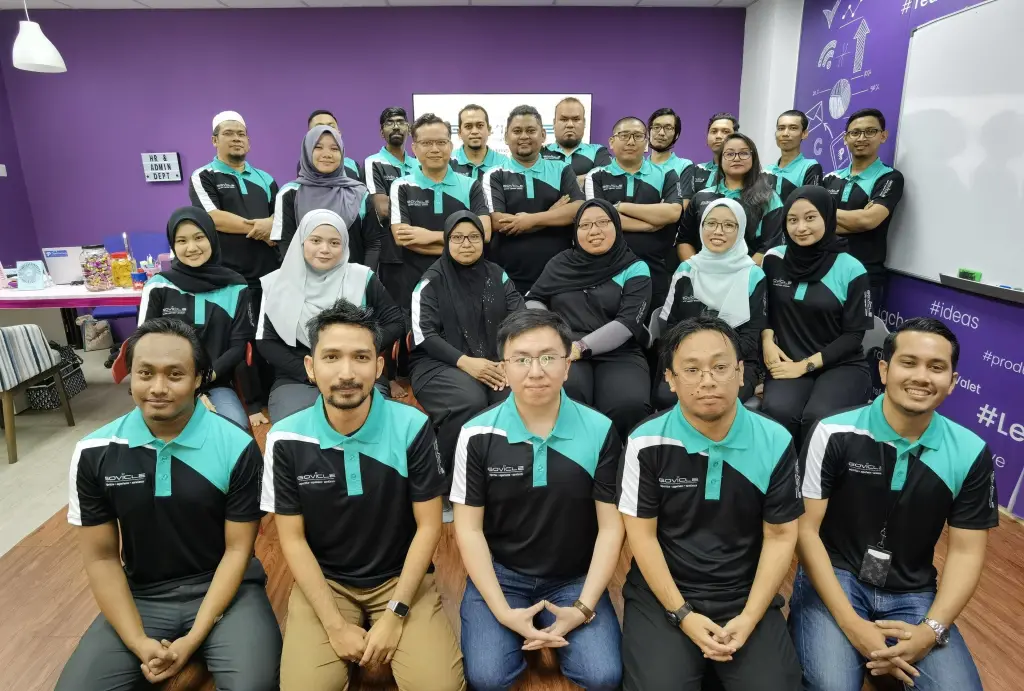
The Govicle team / Photo credit: Govicle
At present, however, Govicle is focused on building its user base in Malaysia – a years-long effort that was hampered by the pandemic.
“Malaysia’s parking landscape is not a centralized one, meaning we had to pitch our solutions to numerous councils and private entities over the years to convince them of our product,” Nasir explains. Persuading prospective users to go digital was also quite the task since many drivers were accustomed to traditional payment methods such as the use of coupon books and parking payment machines.
Shortly after Govicle’s launch in 2015, JomParking had less than 1,800 users , and by the end of 2016, it had only grown its user base 8x.
At the time, the app was the country’s sole digital parking provider. JomParking’s partner platform, Dewan Bandaraya Kuala Lumpur – a government body in the city that also manages Kuala Lumpur’s street parking machines – was one of several parking providers that accepted cashless payments.
As it turns out, it took the country’s MCO measures last year to really fuel the rise of mobile-first users in the industry. Between January and December 2020, Govicle’s user base grew some 55% – accounting for the over 500,000 registered users on the JomParking app today.
Uncovering new opportunities
In 2018, the startup had collectively raised a little over US$1 million from tech commercialization fund Cradle and venture capital firm Kairous Capital. But as the pandemic entered the scene, funding has slowed down – a trend reflected across the region.
To counteract this, Nasir looked to an alternative funding program by the Malaysia Digital Economy Corporation (MDEC), whose partnerships with 11 crowdfunding operators help build up the resilience of small businesses, particularly during times of economic uncertainty.
Launched in 2020, MDEC introduced the program to help tech companies that were severely affected by the pandemic. The government agency partnered with 11 ECF and P2P platforms to help entrepreneurs tide over the economic challenges and provide cash flow relief for SMEs. Last year, 98 startups participated in this program, with a total funding request of more than US$31 million. Due to the high demand, MDEC decided to reintroduce the program again this year.
One of MDEC’s ECF partners is pitchIn, which was the official online platform that Govicle used to raise over US$380,000 from the public this year. With the fresh funds, the startup was able to boost its manpower, expedite site launches, and move into a bigger office space.
These changes were enough to convince VC firm TheVentures of Govicle’s potential: Last September, the startup secured an undisclosed amount in its series A funding from the firm.
Grooming local talent
Like Govicle, factory automation company XTS Technologies saw a similar predicament last year. The startup, which offers robotic automation equipment and cloud platforms for production plants, enables factories to get more transparent updates on the logistics, shipping, and distribution processes. Its bigger plan: to build smart factories as part of the Industry 4.0 vision.
Given the specialized nature of XTS Technologies, however, two hurdles stood in the company’s way around the time of its inception in 2017, namely employing the right talent and convincing its target market of its automation solution in order to secure adequate funding.
“Many Malaysian fresh graduates lack adequate knowledge of Industry 4.0,” explains Xteven Teoh, founder and managing director of the homegrown company. “Developing local talent is crucial for the continued growth of the industry, which is why we hire experts to train them from scratch.”

XTS Technologies founder and managing director Xteven Teoh / Photo credit: XTS Technologies
With the research- and resource-heavy process that each automation testing project requires, XTS Technologies’ early days involved actively taking in interns to train them on the necessary knowledge of the industry and reinvesting its profits back into the company to further improve its platform.
Amid Malaysia’s MCO measures, however, projects were either put on pause or slowed down significantly as vendors were forced to halt production work – something that Teoh says inadvertently affected the company’s financial runway.
In August last year, the company chanced on an application page for pitchIn’s ECF platform via the MDEC website and – upon being accepted into the program – helped XTS Technologies achieve over 280% of its target funding – bringing the firm’s total raised to more than US$410,500.
With these funds, the startup was able to double down on growing its team and expanding its factory space, both of which have allowed XTS Technologies to better meet its customers’ needs.
It isn’t alone: of the 15 other startups that raised alternative funding via MDEC, insurtech firm PolicyStreet raised US$1.8 million, making it the largest fundraiser to date for an ECF platform in Malaysia.
On the other side of the coin, the onslaught of Covid-19 has in some ways been a blessing in disguise for XTS Technologies. Teoh says ongoing projects have doubled today as more businesses begin to see the benefits of factory automation in helping to minimize human contact and reduce their overhead and overall expenses.

Gopi Ganesalingam, vice president for MDEC’s Digitally Powered Businesses Division / Photo credit: MDEC
In addition to providing connections to alternative funding platforms, MDEC also provides startups with practical guidance and advice on the pitching decks. The government agency also helps to promote participating startups to the public and potential investors. All of this helps to increase the success rate for startups to obtain funds.
With mandated shutdowns and imposed movement control during the pandemic limiting avenues for startups to get connected with potential investors, alternative funding presents a crucial opportunity for them to raise funds. To ensure that “no one gets left behind,” MDEC is working to facilitate this avenue for funding and catalyze the development of startups of all growth stages.
“We have every faith that local startups are primed to become global champions and we urge them to leverage on our programs and global connections to make that leap forward,” says Gopi Ganesalingam, vice president of MDEC’s tech ecosystem and globalization division. “Together, we will embark on the journey towards Malaysia 5.0, a nation deeply integrated with technology, providing equitable digital opportunities to the people and businesses.”
Converted from Malaysian Ringgit. Rate: US$1 = MYR4.12
MDEC is an agency under the Malaysian administration that aims to lead Malaysia’s digital economy forward. Find out more about alternative funding opportunities on its website.
This content was produced by Tech in Asia Studios, which connects brands with Asia’s tech community. Learn more about partnering with Tech in Asia Studios.
Stay updated on the go with our mobile app.
Get latest insights with smoother, more personalized experience through TIA mobile app.
Recommended reads
 Navigating Malaysia’s drone tech landscape – The Executive Brief
 Flipkart co-founder’s startup banks $25m in series A money
 Woobiz co-founder backs Indonesian document lifecycle firm
 SG’s Spenmo joins 4 YC alums to help SEA startups scale
 Tin Men Capital hits first close of second fund, eyes B2B opportunities
 DeClout Ventures injects $4.5m into Indonesian EV startup
 Alibaba-backed fund bets on Hong Kong-based robotics firm
 Kasikorn X backs Thai blockchain firm’s $5m seed round
 India-based VC debuts seed fund with $100m corpus
 EY incubator opens applications for 5th cohort





Editing by Nathaniel Fetalvero and Jaclyn Tiu
(And yes, we’re serious about ethics and transparency. More information here.)





📅 Upcoming Events
22 October 2026
Payoneer x CSPN Summit 2026