 Zen Soo · · 6 min read
China takes road to tech self-sufficiency amid standoff with the US
This article is co-written by Jane Zhang.
For many of China’s technology companies, 2019 has been a rough year.
Following the arrest of Huawei chief financial officer Meng Wanzhou late last year over allegations of bank fraud and her ongoing US extradition proceedings in Canada, Huawei in May was put on a US trade blacklist that bans them from doing business with US companies.
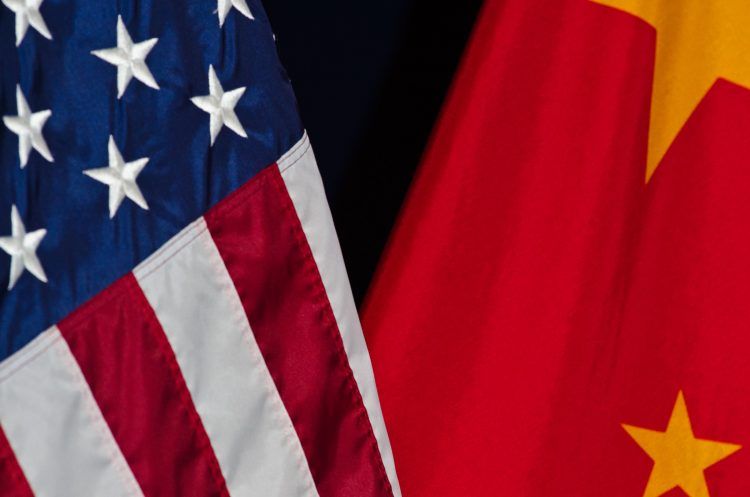
Photo credit: US Department of Agriculture
Months later, some of China’s largest AI firms such as SenseTime, Megvii, and Hikvision were also added to the same blacklist amid concern in Washington that their surveillance technology was being used by China to commit human rights abuses against the Uygur ethnic minority in Xinjiang.
To top it all, TikTok – the wildly popular short-video app operated by China’s Bytedance that has taken the world by storm – has recently come under US scrutiny over national security, privacy, and censorship concerns.
All of this has happened against the backdrop of the US-China trade war and increasing suspicion in the US over China’s ambitions to become a global leader in strategic technologies, such as AI and 5G.
“There’s a deep distrust [of China],” said James Lewis, director of the technology and public policy program at the Center for Strategic and International Studies, a research organization in Washington, DC. “People worry that China is spying on them, and many people in Washington DC are convinced that China steals Western intellectual property.”
On the other side of the fence in Beijing, efforts to curtail Chinese technology companies’ access to US-originated products and services have been seen as the US attempting to contain the Middle Kingdom’s economic rise, spurring the country to double down on efforts to achieve self-sufficiency in core technologies such as semiconductors and software.
Putting companies like Huawei on the trade blacklist has exposed China’s soft underbelly – its reliance on foreign technology as part of a global supply chain. For example, by losing access to Google’s Android operating system for its new smartphones, Huawei’s overseas handset sales could soon fall off a cliff. Who wants an Android handset without Google apps? Stockpiling chips and other components will only cover Chinese firms in the short run.
Even the basic building blocks for technology like AI are in US hands – small and medium-sized Chinese companies that work in the field almost exclusively use software from US-originated open-source platforms such as Google’s Tensorflow and Facebook’s Pytorch.
So what is China doing about it?
After relying on foreign software such as Microsoft’s Windows operating system and imported chips from the US and Taiwan for years, Beijing wants to create a road to self-sufficiency, even if this means a certain amount of reinventing the wheel. It has started by creating a US$29 billion state-backed fund with the aim of creating its own semiconductor supply chain as well as plans to invest more in basic research, science, and technology spending.
“The US has lived up to its word in terms of stepping up what it sees as a competition with China, and it has followed through on its rhetoric,” said Andy Mok, a research fellow at the Center for China and Globalization. “But this has backfired on the US, it has encouraged Huawei [and China] to accelerate its efforts to reduce reliance on the US and that really hurts American technology companies in the long run.”





Stay updated on the go with our mobile app.
Get latest insights with smoother, more personalized experience through TIA mobile app.










📅 Upcoming Events
22 October 2026
Payoneer x CSPN Summit 2026