- Premium Content It takes our newsroom weeks - if not months - to investigate and produce stories for our premium content. You can’t find them anywhere else.
 Emmanuel Samarathisa · · 7 min read
Malaysia’s faulty semiconductor industry calls for a repair
This column was first published on The Malaysianist, a weekly guide to understanding Malaysia’s current affairs that focuses on money and power. It was edited to reflect Tech in Asia’s editorial guidelines.
Malaysia’s most prized jewels have always included its semiconductor industry. This was the case even before foreign publications such as The Financial Times and The New York Times wrote about the country being a beneficiary of the protracted trade war between China and the US.
Prime Minister Anwar Ibrahim’s government has also set up the National Semiconductor Strategic Task Force to help grow the island republic’s semiconductor ecosystem and draw in strategic investments. Tengku Zafrul Aziz, Malaysia’s minister of investment, trade, and industry, will chair the committee whose creation was driven by a focus on electrics and electronics, particularly electric vehicles.
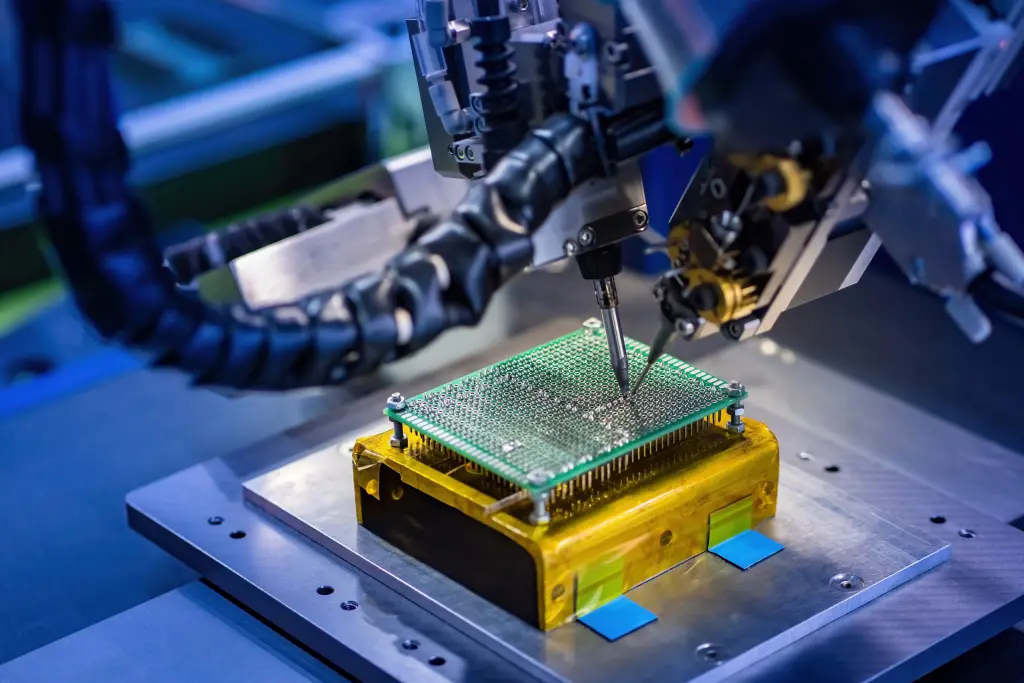
Photo credit: FOTOGRIN / Shutterstock
The semiconductor value chain is complex, but the industry is worth US$520 billion globally and powers everything from televisions to smartphones. As for Malaysia, the semiconductor sector contributes an estimated 25% of the country’s gross domestic product.
There are more than 200 companies, both local and foreign, across the country doing some kind of chip work. Malaysia even has a sole semiconductor firm in Kelantan by way of Japanese firm ROHM. Most companies, however, are based in Penang, particularly on the mainland.
The country built its reputation on so-called back-end or lower-value jobs. Many of the companies in Malaysia make billions in revenue. But most of these players support larger foreign semiconductor firms.
See also: Malaysia gets in its own way on path to tech success
If Malaysia wants to truly focus on higher-value activities, the country has to consider a few things.
Starting line
If one’s start determines their end, then Malaysia’s beginnings may naturally cap how far the country advances along the value chain.
Malaysia’s involvement in the sector stemmed from political and economic challenges. In the early 1970s, Penang faced rising unemployment after losing its free-port status. The local political party, Gerakan, which initially opposed the state government, later joined the national ruling coalition as part of an effort to build a broader political alliance following the country’s social unrest in 1969.
The year Gerakan switched political allegiances was the same year Penang’s semiconductor scene took off. Lim Chong Eu, who was Penang’s chief minister at the time, was able to push for the state’s free-trade zone status and go on a world tour with the backing of the federal government, seeking investors.
Eight foreign companies including Intel, Robert Bosch, and Hitachi took up the call to set up operations in Penang.
The right foundation
Better policies
“Global competitiveness”
Stay ahead in Asia’s tech landscape
This is premium content. Subscribe to read the full story.
Policies need reworking if the country were to move up the value chain, say industry chiefs.
We know this is not ideal. ⌛ Sign up in 20 seconds. Cancel anytime.
Our subscriber community includes professionals from these companies:





Stay updated on the go with our mobile app.
Get latest insights with smoother, more personalized experience through TIA mobile app.










📅 Upcoming Events
22 October 2026
Payoneer x CSPN Summit 2026