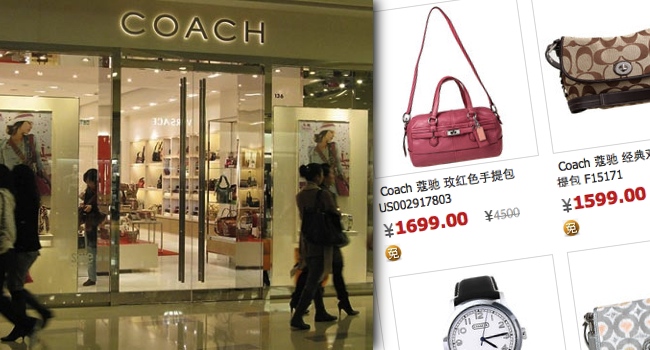
To go online, or not to go online, that is the dilemma. (Photo element of image from wantchinatimes.com)
China’s online space is home to over 500 million netizens, homegrown social networks and a thriving e-commerce market. While companies similar to eBay, Amazon, and Groupon exist, e-commerce has emerged as an unlikely channel for some of the world’s most prestigious luxury companies like Coach, Armani and LVMH. In fact, the increase in China’s online luxury market is dramatic. According to internet research company iResearch [1], the transaction volume of China’s online luxury shopping market reached an unprecedented 10.73 billion yuan in 2011, a 68.8 percent increase from 6.36 billion yuan in 2010. With the online channel growing at such a rapid pace, it seems as though luxury retailers should jump at the opportunity to create online storefronts on Tmall and other online platforms. However, many luxury brands do not yet wish to associate luxury with e-commerce, as the online channel contradicts the traditional luxury shopping experience.
Since luxury culture can be summed up as “owned by few, dreamed of by the masses,” selling their exclusive products online is the last thing luxury brands would like to see. However, willing or not, as more and more young Chinese luxury consumers are accustomed to viewing and purchasing luxury products online, the combination of e-commerce and luxury will online grow in importance in the coming years.
Due to China’s exorbitant tariffs, the price of luxury goods in mainland China is on average one third higher than the price of the same products in the US or Europe. Many Chinese internet entrepreneurs view this price difference as a tremendous business opportunity. They make bulk purchases of luxury goods such as bags and watches overseas and then sell their products online in China.
Since 2010, dozens of vertical B2C luxury shopping sites have emerged, and many have even become household names in China such as 5lux.com, Xiu.com, and Shangpin.com. A number of startups like IhaveU and The Luxury Club have entered the fray and received venture funding. The country’s second-largest online mall, 360Buy, opened its couture-oriented 360Top site. On these kinds of sites, shoppers are able to find products from brands such as LV, Hermes, Coach, Prada, Gucci and many others. Yet, this is just the B2C segment of online luxury shopping in China.
As early as 2005, groups of Chinese individual sellers started small stores on Taobao.com. They purchased luxury products overseas for their shoppers and acted as a distribution agent. This C2C market – amateur retailers, essentially – is still thriving today. While researching for this article I searched the term “Coach” on Taobao, and the search engine returned 10,439 results listing Taobao shops which all sell Coach products. But consumers need to be very wary of fake items being sold on such C2C sites.
The vertical B2C sites, and myriad C2C Taobao agents, sell luxury products at much lower prices than official luxury branded stores. Therefore, they attract large numbers of Chinese consumers. One online luxury shopper wrote on a message board:
Coach’s domestic price is much higher than the U.S. – obviously, it’s much smarter to purchase via an online agent than the branded store.
Take one of Coach’s latest handbags for example – the handbag’s price in Coach’s store is RMB 6200, while the price of the same bag on most online stores on Taobao is less than RMB 2700.
The Dilemma
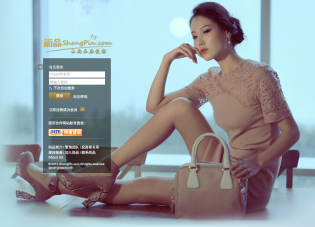
The front page of Shangpin.com
Luxury retailers have their fair number of concerns – by making their products available online they have less control over the channel. Additionally they are unable to provide a traditional luxury shopping experience offering shoppers first-class service and treatment. Furthermore, the overall idea that their goods can be purchased online takes away from the prestige of their brands.





Stay updated on the go with our mobile app.
Get latest insights with smoother, more personalized experience through TIA mobile app.












📅 Upcoming Events
22 October 2026
Payoneer x CSPN Summit 2026