 Leighton Cosseboom · · 3 min read
This startup bets that its kiosks can take Indonesian ecommerce to the next level
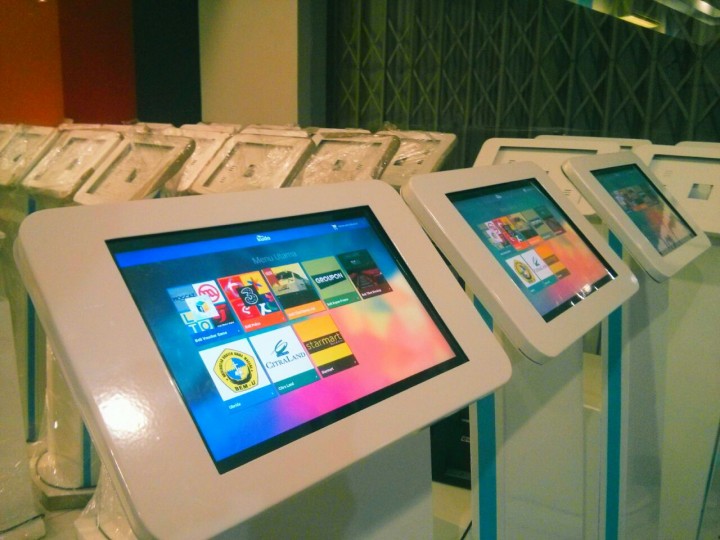
Kudo’s kiosks awaiting deployment.
Most technopreneurs in Indonesia have a positive outlook on the archipelago’s potential for new ecommerce enterprises. This much is evident as SoftBank and Sequoia Capital are handing out checks for US$100 million. But according to Albert Lucius, co-founder of Kudo, Indonesia’s ecommerce sector is hampered because less than 6 percent of locals actually own credit cards.
Lucius describes his company as a tech firm that offers a new way to shop online through physical point-of-sale kiosks in public places around Jakarta. Essentially, Kudo is a hardware startup with an online component – the team builds the machines, but also curates the content within the collective marketplace.
Last Friday, Lucius and his partner Agung Nugroho announced seed funding of an undisclosed amount from local venture capital firm East Ventures (Disclosure: East Ventures also invests in Tech in Asia. See our ethics page).

From left: Albert Lucius, Willson Cuaca, Agung Nugroho.
Ecommerce is growing fast, but not fast enough
With Kudo, Lucius explains, customers no longer have to wait in line at the mall or supermarket to make their daily purchases. He believes Indonesia’s low number of credit card owners coupled with an internet penetration that is still only 20 percent makes his business model more relevant to the archipelago’s majority population. He says:
We believe we have just the right solution to address the lack of internet penetration and the lack of access to online payment systems that Indonesians need […] On top of that, we accept all methods of payments, including – and most importantly – cash.
Kudo offers all kinds of services, including things like buying tickets, refilling cellphone balances, and buying ecommerce products. Lucius says Kudo’s direct competitors are similar machines that exist in local convenience stores like Alfamart, Indomaret, and 7-Eleven.
See: Indonesian mPOS startup Moka gets funding from East Ventures
Kudo runs on an Android-based system as opposed to Windows, which its competitors use. Lucius cites this as one of Kudo’s competitive advantages. Additionally, Kudo is not bound by the types of locations where it can place its machines. Provided that Lucius and Nugroho get permission from space providers, Kudo kiosks are free to appear anywhere. In theory, this could include coffee shops, office buildings, gyms, bus stops, hospitals, schools, and more.
New in Indonesia, but not a novel concept





Stay updated on the go with our mobile app.
Get latest insights with smoother, more personalized experience through TIA mobile app.











📅 Upcoming Events
22 October 2026
Payoneer x CSPN Summit 2026