Malavika Velayanikal · · 5 min read
Their one-month-old startup brings logistics tech out of the stone age, bags funding
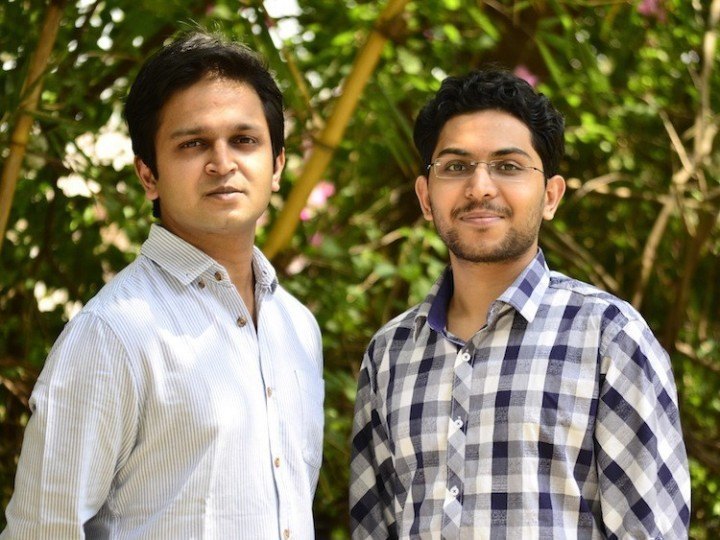
Nishith Rastogi and Geet Garg, co-founders of Locus
Ask any hyperlocal delivery startup, on-demand “Uber for X” business, or ecommerce titan to name its three big bottlenecks. Logistics will, more often than not, be one of them.
A dozen things could go wrong from the point where an order is ready for dispatch to the point where it lands in a waiting customer’s hands. The supervisor could pick a delivery boy who already has a long task list; the delivery boy could pick the wrong route to travel; orders could get mixed up; and so on. Each one of them is a costly mistake. Yet, logistics is more of a necessary evil to tame for these companies. After all, they have to focus on their core business.
This is where Bangalore-based Locus comes in. Its tech tools automate the entire delivery process.
Take a food delivery startup for instance. In real time, Locus’s algorithms can slice and dice the incoming orders, group some if possible, figure out where best to position the delivery fleet, which delivery boy to assign what order, plan the route he should take, stay connected with him on a mobile app, alert the company if there are any deviations or delays, and close the delivery when the customer receives her food without cause for complaint.
Locus offers the full stack of its tools as a platform, including a mobile app for on-field workforce, which can be integrated into any startup’s delivery process. Even logistics companies can use the tech to power their operations. “We will focus on the logistics tech part for these companies while they focus on what matters the most to them – their customers,” says Nishith Rastogi, who founded Locus with his friend, Geet Garg. They are from two of India’s best tech colleges – Rastogi from Birla Institute of Technology & Science (BITS) Pilani, and Garg from Indian Institute of Technology (IIT) Kharagpur. Both of them worked on machine learning technologies at Amazon before turning entrepreneurs.
Strangely, it all began when an Uber driver was arrested in Delhi after a woman passenger alleged that he raped her.

A rape that bust a security myth
Anybody who takes a taxi or an auto-rickshaw after dark in India would think twice, especially a woman alone. With the advent of ride-hailing apps like Uber with GPS-tracking, many lowered their guard. But the alleged rape in Delhi shattered this false sense of security.
The incident took place in December last year. Its aftershocks were felt across the country for weeks. Uber, Ola, and a few other ride-hailing apps were banned in several states; customers who were by then hooked to the convenience of on-demand cabs were forced to go back to old ways; transport officials rummaged through dusty rule books to script new laws.
Around then, Rastogi’s sister was flying into Bangalore late one night. The trip from the airport to the city was a long one. “I was so worried that I called and messaged her several times to make sure she was safe,” Rastogi recalls. That sense of vulnerability led him to explore tech solutions to the problem.
Rastogi and Garg were then running a location-based mobile chat app called PinChat. They tried out all the women safety apps available. “Frankly, they were all useless. When you are being attacked, you won’t be thinking of fishing out the mobile to send out alerts,” Rastogi says.
Can your mobile phone automatically figure out if you are in trouble? They approached the problem from multiple angles, and finally came up with a “route deviation engine” and built an app on top of it – RideSafe. Before you take a cab or an auto-rickshaw, you enter your destination in the app, and if the driver deviates from the intended route, the app will start beeping aloud. It will first alert you and if you don’t respond within five minutes, it will alert your friends and family.
One-month-old with paying customers





Stay updated on the go with our mobile app.
Get latest insights with smoother, more personalized experience through TIA mobile app.