Martin Lindstrom · · 9 min read
Lego engineered a remarkable turnaround of its business. How’d that happen?
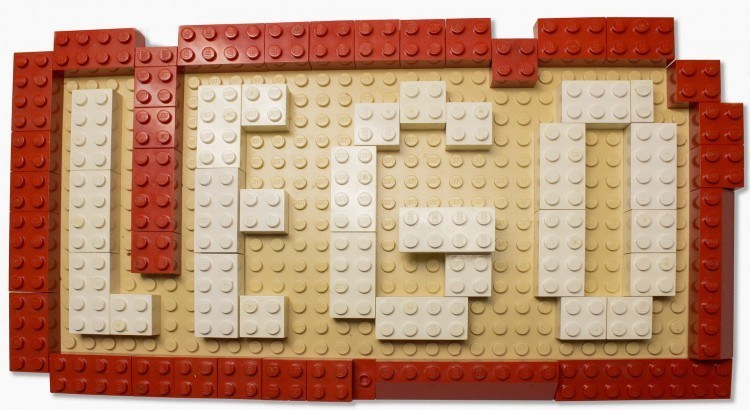
Photo credit: Simonprodl
Last week, the Danish toymaker Lego posted a 25 percent jump in revenues and a 31 percent rise in net profits for 2015, a far cry from 2003 when the company was in deep trouble, having lost 30 percent of its turnover over the past year.
In 2004, another 10 percent vanished. As Jørgen Vig Knudstorp, Lego’s CEO, put it then, “We are on a burning platform, losing money with negative cash flow, and a real risk of debt default which could lead to a breakup of the company.” How had the Danish toymaker fallen so far so fast then and jumped so high this week?
Where problems began
Arguably, the company’s problems could be traced back to 1981, when the world’s first handheld game, Donkey Kong, came to market, inspiring a debate within the pages of Lego’s internal magazine, Klodshans, about what so-called “side-scrolling platform games” meant for the future of construction toys. The consensus: platforms like Atari and Nintendo were fads – which turned out to be true, at least until the advent of computer games for PCs launched their wildly successful second wind.
I began advising Lego in 2004, years after the company first hired me as an adolescent, when the company asked me to develop its overall branding strategy. I didn’t want the company to move away from what it had been doing well for so long, but no one could deny the increasing everywhere-ness of all things digital.
From the mid-1990s on, Lego began moving away from its core product of building blocks, and focusing instead on its loosely knit empire of theme parks, children’s clothing lines, video games, books, magazines, television programs and retail stores. Somewhere during this same period, management decided that considering how impatient, impulsive and fidgety millennials were, Lego should begin manufacturing bigger bricks.
Every big data study Lego commissioned drew the exact same conclusions: future generations would lose interest in Lego. Legos would go the way of jackstraws, stickball, blindman’s bluff. So-called Digital Natives – men and women born after 1980, who’d come of age in the Information Era – lacked the time, and the patience, for Legos, and would quickly run out of ideas and storylines to build around.
Digital Natives would lose their capacity for fantasy and creativity, if they hadn’t already, since computer games were doing most of the work for them. Each Lego study showed that the generational need for instant gratification was more potent than any building block could ever hope to overcome.
In the face of such a prognosis, it seemed impossible for Lego to turn things around – but, in fact, the company did. It sold off its theme parks. It continued successful brand alliances with the Harry Potter, Star Wars and Bob the Builder franchises. It reduced the number of products while entering new and underserved global markets.
A pair of old Adidas sneakers
Still, probably the biggest turnaround in Lego’s thinking came as the result of an ethnographic visit Lego marketers paid in early 2004 to the home of an 11-year-old boy in a mid-sized German city. Their mission? To figure out what really made Lego stand out. What executives found out that day was that everything they thought they knew, or had been told, about late twentieth- and early twenty-first-century children and their new digital behaviors – including the need for time compression and instantaneous results – was wrong.
In addition to being a Lego aficionado, the 11-year-old German boy was also a passionate skateboarder. Asked at one point which of his possessions he was the most proud of, he pointed to a pair of beat-up Adidas sneakers with ridges and nooks along one side. Those sneakers were his trophy, he said. They were his gold medal. They were his masterpiece.
More than that, they were evidence. Holding them up so everyone in the room could see and admire them, he explained that one side was worn down and abraded at precisely the right ankle. The heels were scuffed and planed in an unmistakable way. The entire look of the sneakers, and the impression they conveyed to the world, was perfect: it signalled to him, to his friends and to the rest of the world that he was one of the best skateboarders in the city.
At that moment, it all came together for the Lego team. Those theories about time compression and instant gratification? They seemed to be off base. Inspired by what an 11-year-old German boy had told them about an old pair of Adidas sneakers, the team realized that children attain social currency among their peers by playing and achieving a high level of mastery at their chosen skill, whatever that skill happens to be.
If the skill is valuable, and worthwhile, they will stick with it until they get it right, never mind how long it takes. For kids, it was all about paying your dues and having something tangible to show for it in the end – in this case, a pair of tumbledown Adidas that most adults would never look at twice.
Ten years later
What big data doesn’t tell you





Stay updated on the go with our mobile app.
Get latest insights with smoother, more personalized experience through TIA mobile app.