Malavika Velayanikal · · 6 min read
How tax query to Amazon opens a Pandora’s box for ecommerce in India

Tax authorities in Bangalore, the capital of Karnataka state, are looking into why Amazon India does not pay value-added taxes – as required under the VAT Act, 2003 – on goods stored in its warehouses. The investigation was first reported by Deccan Herald late last month. Now the matter has escalated. The Enforcement Directorate has issued notices to a number of vendors and stopped the sale of their products from Amazon’s warehouses, Mint reports.
VAT, or value-added tax, is a multi-point, destination based system of taxation. At each stage of transaction in the production/distribution chain, taxes will be levied on the value addition – ie the increase in the value of goods and services at each stage of production or transfer of goods and services. According to Indian law, state governments, through their taxation departments, levy and collect VAT in their states. The central government is only a facilitator in the process.
Seems like the effects of slapping VAT on Amazon are surfacing. A book I ordered on August 30 has been long delayed, and I got an email from Amazon about its inability to deliver another book ordered on September 4 – this had never happened earlier.
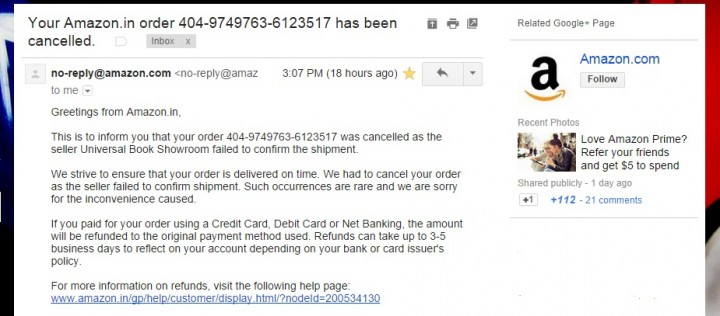
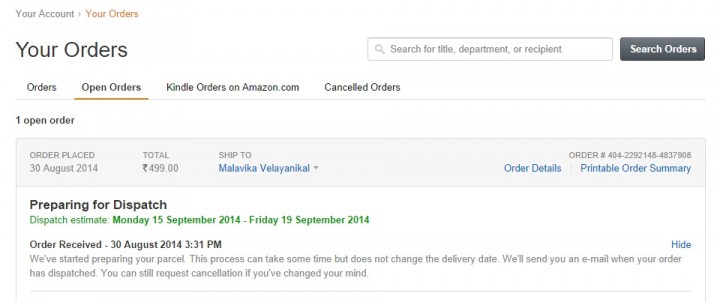


Double trouble
Indian restrictions on foreign direct investment (FDI) in ecommerce prevents companies like Amazon from owning inventory in India and selling it directly. To get around this, Amazon adopted a marketplace model in India. Instead of selling its own products, it lets third-party vendors sell their products through Amazon and collects a commission from them. This proved to be a huge success for the company, and all the major Indian ecommerce sites like Flipkart, Snapdeal, and Jabong have also been doing the same ever since Amazon entered India last year.
In Karnataka, the taxman maintains that Amazon is liable to pay value-added tax on sales ‘Fulfilled by Amazon’, because it acts as a brick-and-mortar retailer by storing products from various producers and merchants in its warehouses. Amazon’s position is that it should only pay a service tax on the commissions because it is a channel, as it does not buy and sell the products.
Amazon expansion put on hold
Ecommerce needs fresh guidelines





Stay updated on the go with our mobile app.
Get latest insights with smoother, more personalized experience through TIA mobile app.