 Josh Horwitz · · 5 min read
Taiwan’s government is finally getting serious about startups

It’s easy for entrepreneurs to roll their eyes when the government trumpets support for startups.
But when Taiwan’s Executive Yuan approved the HeadStart Taiwan Project last August, the startup community praised it uniformly.
Architected by Prof. Kuan Chung-Ming during his stint as minister of the National Development Council (NDC) the full proposal reiterated what many of the island’s startup advocates had been saying for years. Growth in Taiwan’s manufacturing sector would continue to sputter due to competition from China and Southeast Asia. One remedy for Taiwan’s economy includes supporting internet companies – by loosening regulatory barriers, providing easier access to international capital, and building a bureaucratic bridge between the government and startup community.
HeadStart delivered on these calls, and eight months after its approval, its promises are being implemented at a respectable pace.
With regards to regulation, HeadStart aims to lower the barriers necessary to start an internet business in Taiwan. As part of the proposal, businesses that receive NT$2 million (about US$65,800) in capital, register for a patent in Taiwan, win a startup competition, or join Taiwan’s startup cluster (more on that later) will be eligible to register as a business in Taiwan like any other.
It also aims to reduce restrictions on foreign labor. This part is moving quite quickly. As of January, it’s no longer necessary for foreigners to have two years of related work experience in order to work at a startup. Starting in July, foreigners can soon apply for entrepreneurial visas lasting one year (this is technically not part of HeadStart).
With regards to access to international capital, HeadStart proposes that the National Development Fund (NDF), a government-affiliated investment body, will invest in global VC firms in hopes of indirectly spurring more funding for the island. To date, the fund has placed US$15 million into 500 Startups.
“We want to use the NDF as an incentive to tell [international VC firms] that if you work with us, you are entitled to better profit sharing,” says Prof. Kuan. “We aren’t telling them what to invest in, we just want to use the government’s resources to attract international money to Taiwan.”
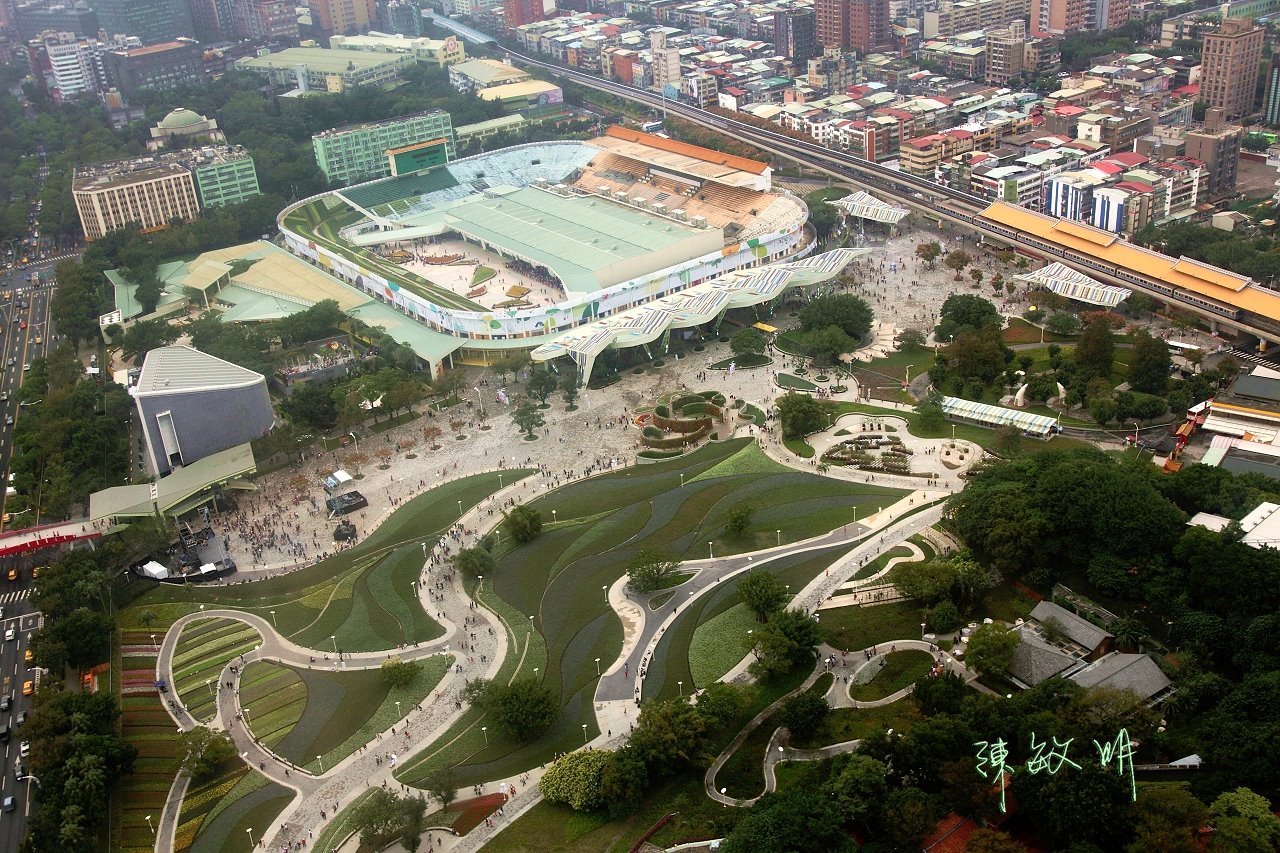
An aerial view of the Zhongshan Soccer Stadium (Photo credit: Dr. Min-Ming Chen)
Finally, HeadStart called for the establishment of an “international startup cluster,” where domestic and international teams can co-work and attend events. Modeled after programs like Singapore’s Block 71, the plan mandates renovation of the 20,260 square meter Zhongshan Soccer Stadium – a building with a history that dates back to Japanese colonial rule. While funded by the NDF, the space will be managed by an independent team with prior experience in the internet industry.
“We’re not just providing a space with nice chairs and desks. The management team will provide legal, accounting, and events services, and will bring international groups to Taiwan for workshops.”
Kuan’s catalyst
A large part of the excitement surrounding HeadStart stems from the personalities driving it.
Stepping up to the plate





Stay updated on the go with our mobile app.
Get latest insights with smoother, more personalized experience through TIA mobile app.










📅 Upcoming Events
22 October 2026
Payoneer x CSPN Summit 2026