Osman Husain · · 4 min read
Cash is king in Pakistan. But digital alternatives are finally emerging

The vast majority of Pakistan’s economy is based on cash. Consumers pay cash when eating at restaurants, buying groceries, purchasing clothes, and even with large business transactions.
This may sound peculiar to some, but the reasons behind this predisposition are manifold. Firstly, almost all private sector banks have been slow to promote alternative payment methods as they see little return-on-investment and are content to reap their profits in more traditional sectors of retail, consumer and corporate lending.
As a result, Pakistan’s independent retailers are put off adopting modern point-of-sales (POS) systems – which accept debit and credit cards – by transaction fees as high as 3.5 percent. In turn, that inhibits retailers from modernizing their inventory systems using technology, which might prevent them from scaling the business.
Current POS technology available in Pakistan is many years behind the rest of the world. POS machines that support mobile data networks, like 2G or GPRS, are almost non-existent – which means only those merchants that have access to fixed line internet can adopt such tech. Given the aging and precarious state of Pakistan’s web infrastructure, fixed line network outages are far too common.
Slow to evolve
Such factors have combined to prevent mass acceptance of plastic money amongst Pakistanis. It is estimated that there are only 3 million credit cards and around 15 million debit cards in circulation, says Ali Rahman, head of secured assets at Habib Bank – and that’s in a nation of 180 million people. The reluctance to use debit and credit cards is further exemplified when one considers the fact that most debit cards are mainly used to withdraw money through ATM machines, and not much else.
But 2015 might be the year all that changes.
At the start of the year, a collaboration between Habib Bank and Monet resulted in the launch of the first mobile point-of-sale (mPOS) system in the country. It allows retailers of all sizes to take payments using a mobile phone and can run on a slow GPRS connections. While it doesn’t sound ground-breaking – and it’s something commonplace in other countries, using gizmos made by companies like Square – it’s a breakthrough moment for Pakistan. Simply, it’s a card-swiping gadget that plugs into smartphones; it looks like this:
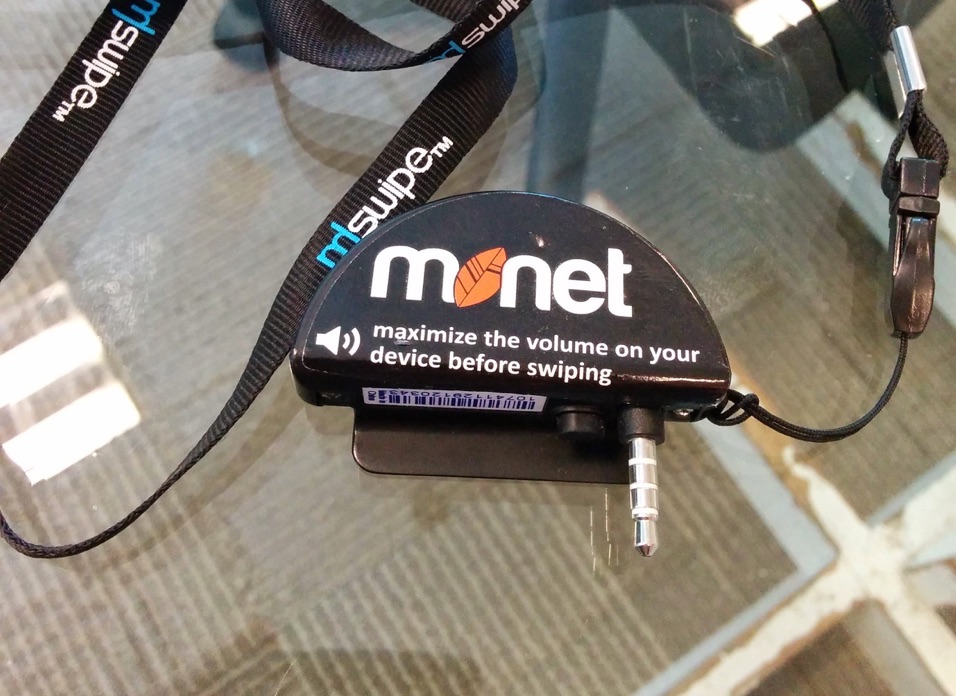
This could finally disrupt the cash-only culture and local payments industry. It could even chart a course that emerging and future startups can take.
Ahson Saeed, head of marketing and business development at Monet, says the aim is to change the way both consumers and retailers focus on cash payments in Pakistan. “Complete digitization is our end goal,” Saeed says. This can give retailers “a data-centric system that is absolutely free from error,” he adds.
Useful for startup services





Stay updated on the go with our mobile app.
Get latest insights with smoother, more personalized experience through TIA mobile app.