C. Custer · · 5 min read
LeTV’s Hitler tweet and weird anti-Apple PR strategy might work better than you think

As it ramps up to launching its new smartphone line, LeTV has made some strange PR moves. First, founder Jia Yueting posted the image above to his Weibo page, which features Hitler wearing an Apple logo where his swastika ought to be. Then the company threw a press event for its smartphone launch in the US (despite the fact that the phone won’t be available there until later this year) that failed to impress Western tech critics.
It may seem like a series of bizarre PR missteps, but actually LeTV is following pretty closely in the footsteps of another fledgling Chinese smartphone company before it launched its first phone: Xiaomi.
Now that Xiaomi is a global hit, most people probably don’t remember it, but Xiaomi made some equally strange and Apple-focused PR moves prior to the launch of its first phone. First there was this article by Lei Jun in Entrepreneur, in which he wrote (shortly before Jobs’s death) that he and other tech entrepreneurs were “just waiting for [Jobs] to kick the bucket.” Xiaomi ultimately claimed that the article had been edited unfairly by Entrepreneur‘s editors, but that didn’t do much to explain the bizarre image that accompanied it:
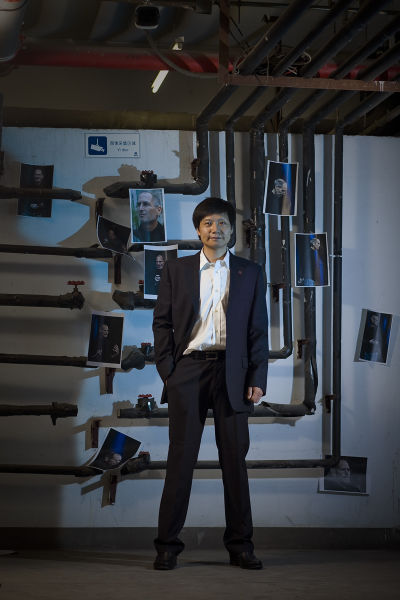
Lei Jun, standing creepily in someone’s basement in front of numerous photos of Steve Jobs.
When Jobs died just a couple months later, Xiaomi’s official Weibo account responded by tweeting “iDead.” (Xiaomi apologized and Lei Jun, who had been abroad on business, said he was “shocked” by the tweet.)
At the time, many people – myself included – thought it was both tasteless and unfathomably arrogant for Xiaomi to be attacking Apple in that way given Apple’s obviously superior market position. It seemed like delusion from a relatively-unknown startup that seemed destined to be crushed by the Apple machine. But just a few years later, Xiaomi was beating out Apple (and everyone else) to grab the top spot in China’s smartphone market.
This is not to say that LeTV’s anti-Apple approach and arrogance will result in the same kind of success Xiaomi has enjoyed. There are a lot of differences between the two companies. Chief among them: Xiaomi was already a known and respected mobile company by the time it was launching its first phone, since its MIUI OS had already been available for a while at that point. LeTV has no such track record. Nor am I convinced it has the same level of technical talent and executive experience that Xiaomi had prior to its first smartphone launch.
But LeTV’s Hitler image, tasteless as it is, and its anti-Apple arrogance aren’t insane, they’re calculated. Just as Xiaomi got people talking about Xiaomi (intentionally or not) by going after Steve Jobs, LeTV is getting people talking about LeTV by comparing Apple to Hitler. Is it a ridiculous comparison? Yes. Is it deeply offensive? Sure. But here we are, talking about it. LeTV is simply embracing the old adage: “There’s no such thing as bad press.”
It’s also probably worth pointing out that in China the Hitler image isn’t as controversial as it is in the West. China had little direct experience with the Nazis during World War 2, and the most well-known Nazi in China might be John Rabe, a German Nazi party member who helped save and protect civilians in Nanjing during the Nanjing massacre. Young Chinese have even been known to dress up in Nazi costumes for their wedding photos. That’s not to say comparing Apple to Hitler will play well in China; most Chinese will still recognize that it’s a ridiculous and offensive comparison. But it likely doesn’t have the same punch that it does in the West.
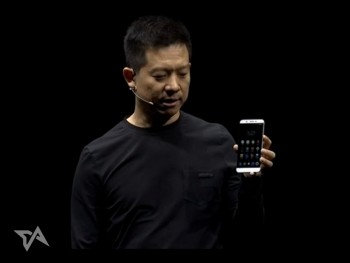 And although LeTV held a launch event in the US and plans to bring its phones there sometime this year, make no mistake: its real market is China. The Verge writer who covered the US press event expressed skepticism about LeTV’s prospects in the US, but although the company is singing a different tune I doubt it even really cares how its phones do there. Chinese tech companies virtually always try to get a strong foothold in their home market before launching serious efforts abroad. My guess is that the US launch of LeTV’s phones will essentially be a marketing event designed to help push sales in China, and increase the Chinese perception that LeTV is a global brand. Whether or not Americans actually buy the devices is likely to be an afterthought.
If you need evidence of this approach, look no further than the timing of LeTV’s American press event. It was held the same day LeTV’s new phones went on sale in China. LeTV held an American launch event for its phones even though they don’t have an American launch date. It seems clear to me that America wasn’t the real audience for that event.





Stay updated on the go with our mobile app.
Get latest insights with smoother, more personalized experience through TIA mobile app.