Vhalerie Lee · · 5 min read
Opinion: Facebook is looking into mind reading, but it doesn’t mean what you think
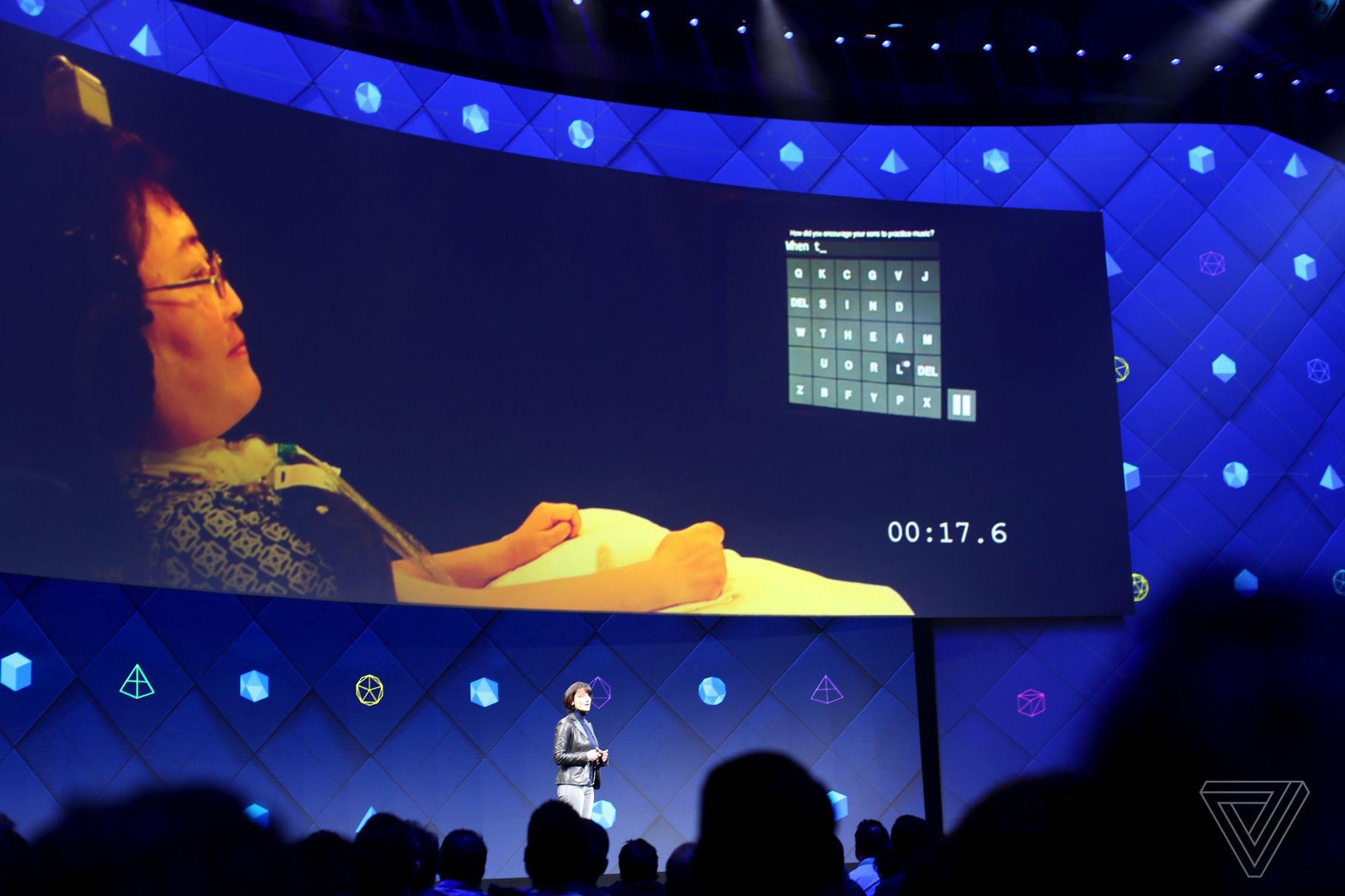
Regina Dugan at Facebook’s F8 Ddeveloper Conference. Photo credit: Nick Statt.
At the recent Facebook F8 Developer Conference, one of the most sought-after conferences to attend for technologists, Mark Zuckerberg confirmed everyone’s wild speculations about what the social media giant was up to. “One day, I believe we’ll be able to send rich, full thoughts to each other directly using technology,” the 33-year-old CEO revealed. “You’ll just be able to think of something and your friends will immediately be able to experience it too.”
The science fiction ambition might sound light years away, but looking closely at Building 8, the mysterious Facebook agency pioneering adventurous innovations, it doesn’t sound too far away.
Working with Zuckerberg is famed technologist Regina Dugan, who made her mark in the early days of the internet for being the director of the Defense Advanced Research Projects Agency (DARPA).
As Facebook’s own DARPA, Building 8 is tasked to drive innovation in “augmented reality, virtual reality, artificial intelligence, connectivity, and other important breakthrough areas.”
It’s no surprise that Facebook wants to become the augmented reality leader. But as augmented reality technology still needs rapid development and lags behind virtual reality, for Dugan, it all comes back to the brain as a natural interface in executing commands.
Dugan revealed at the F8 Developer Conference that Building 8 has been working on an important project designed to let people type using their thoughts. In collaboration with Stanford University’s research team, the “brain click” is designed to let people complete tasks using their brain signals.
This could remove the need for people to pull the status bar whenever they want to post a message and dismissing notifications from their smartphones. Through “brain click,” the brain, acting as the input device, removes the barrier for people with disabilities and creates an equal interface that everyone can participate in.
Beyond the brain click, Dugan is taking the natural interface idea further by using human skin as a communications tool, as it conveys vibrations that could correspond to words and phrases. Together, these techniques create a powerful tandem that takes communication beyond what people are accustomed to.
To a lay person, these technologies sound far fetched and only exist in science fiction. But to Katherine Hayles, author of How We Became Posthuman, she believes these technologies are shaped by literature and not the other way around. “We become posthuman because we think like posthumans,” Hayles wrote.
Did we only become posthuman after the advent of such technologies, where we can effectively channel our emotions and thoughts into communication apps, without as much as saying a word?
According to Dugan, “I think that thing that is so interesting to me is how inherently wired we are to language and communication […] We’re just wired for it.”
It tells us that we no longer need technology. Technology as a barrier would cease to exist.
This bold declaration is an admission that we are, since the beginning of time, already posthuman. Establishing this statement that we are already wired to hear or feel each other’s thoughts through our skin and brain signals is an astounding discovery. It tells us that we no longer need technology. Technology as a barrier would cease to exist.
Everyone can read minds





Stay updated on the go with our mobile app.
Get latest insights with smoother, more personalized experience through TIA mobile app.