
Yesterday Tech in Asia invited Blake Larson, board advisor to Lalamove, to join us at a meetup event in Taipei. In front of an audience of various people in the local startup scene, Larson discussed the premise of Lalamove, its impact on urban logistics in Asia, and the broader challenges of running a transportation network company.
Larson described how while Lalamove is most easily understood as an app that helps you move your mattress, the true potential of the company lies in its relationship with other businesses. While consumers make up the majority of Lalamove’s app downloads, most of its bookings come from small businesses that move goods regularly, or logistics providers that are don’t have enough vehicles or manpower to fulfill orders as efficiently as possible.
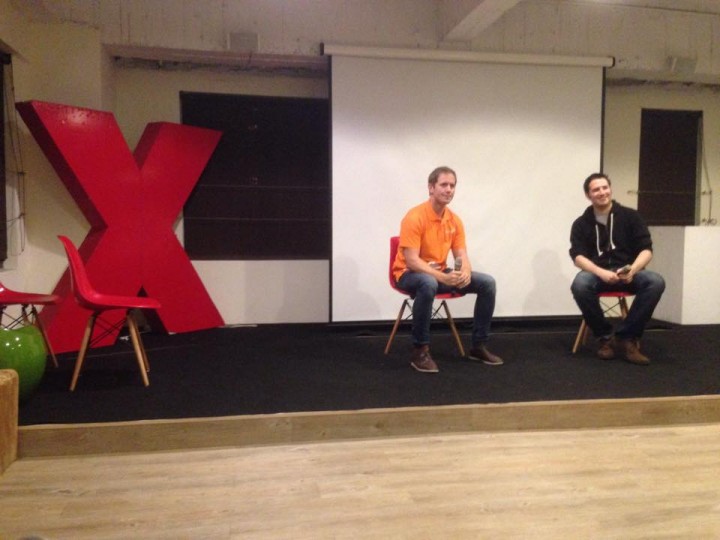
“Most logistics providers already use third-party vehicles to deliver. They might paint them to look like they belong to the company, but really they’re outsourced,” says Larson. Lalamove, in his view, is best understood as a powerful complement to that standard practice.
Larson also discussed the differences between working at a passenger TNC and a logistics TNC. At EasyTaxi, where Larson once worked as a general manager in Asia, the launch process and operations hustle was similar to what Lalamove now does when it enters a new city. But Larson believes that passenger TNCs involve far less complexity than logistics TNCs. On the passenger side, one only has to worry about taking someone from A to B. On the logistics side, one have to optimize for multiple destinations, and a range of order types.
With Uber hot in the news this week, we closed the session with some freewheeling talk about the world’s most high-profile TNC. Larson came out as a proud admirer of the company, praising it for its execution and doggedness. Its insistence on only permitting credit card payments, for example, ensures it captures the wealthiest and most loyal users in Asia. Allowing cash payments and chasing taxi fleets instead of limos might help the company gain market share in the short term, but at the expense of differentiation among its competitors.
When asked to respond to Uber’s alleged commitment to entering the logistics industry, Larson said he wasn’t worried. “They’re just capturing the tip of the iceberg in the passenger market, and we’re just capturing the tip of the iceberg in the delivery market,” he said.
A huge thank you to our awesome sponsors:
Corporate sponsors







VC sponsor

Startup sponsors


Venue

Stay updated on the go with our mobile app.
Get latest insights with smoother, more personalized experience through TIA mobile app.
Recommended reads
 Life’s a game, and AI agents are Animoca’s new play
 Indonesian AI startup goes global
 Forrest Li on scaling Sea, building smarter bots, and founder grit
 An AI assistant that joins sales calls and scores team skills
 Beyond the check: Why VCs need more than capital
 SGX’s CEO says it doesn’t need a unicorn to win
 SMEs want AI too, but not the kind Big Tech is selling
 Oatside’s alt-milk rise hits a profitable gear
 Alibaba’s financial health in 12 charts
 Asia’s telcos bundle AI into mobile plans. Will it pay off?