- Premium Content It takes our newsroom weeks - if not months - to investigate and produce stories for our premium content. You can’t find them anywhere else.
 Putra Muskita · · 5 min read
How Laku6 is powering Indonesia’s used-phone market
Years ago, if you wanted to buy a secondhand phone in Indonesia, you’d have to visit small shops at IT-focused shopping centers or seek individual sellers on Kaskus, OLX, Carousell, and other customer-to-customer marketplaces.
Then in 2015, Laku6 came into the picture as an online platform that linked sellers and buyers of used phones in one place.
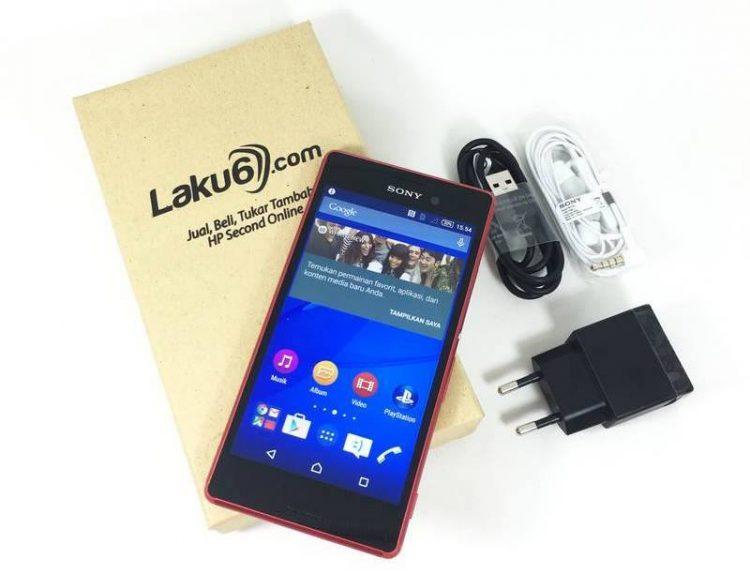
Photo credit: Laku6
“Going through a platform like Carousell takes a few days, and involves a meeting in a mini-market where you can do the transaction safely,” says Laku6 founder and CEO Alvin Yap tells Tech in Asia.
Laku6’s platform, on the other hand, provides users with services like phone appraisal to determine its value, standardized pricing, and a 30-day post-purchase warranty period for new customers. It also supports trade-ins.
Yap claims that today, between 300,000 and 400,000 used phones are processed through Laku6 annually. Earlier this year, the company secured US$5 million from undisclosed investors. Previously, it raised its seed round from the likes of Golden Gate Ventures and Convergence Ventures.
Why used phones are big in Indonesia
Yap says that he and his team learn from reverse commerce or recommerce markets in countries like China and India, while also incorporating some “local flavor” into Laku6’s strategy. One important consideration is that in Indonesia, telecommunication companies don’t sell phones as part of a postpaid plan.
“In markets where telcos sell the phones like Malaysia or Singapore, the phone price is subsidized by 30% to 40%,” Yap explains. “Because you have a lower cash outlay in the beginning, you’re more willing to trade the phone at a lower value. This doesn’t work in Indonesia.”
And because Indonesian consumers pay full price for their phones, Yap continues, they tend to become more value-sensitive and motivated to get the best price for their used devices.
This has also led Laku6 to develop technology that supports a “multiprice model” based on the phone’s condition, as opposed to standard pricing based on the phone model. When sellers visit an offline retailer affiliated with Laku6 to sell their phone, the retailer can take a picture of the gadget, after which Laku6’s AI and machine learning technology assesses the phone’s physical and software condition. That can result in a better price.
“Because we were the first to do this, we have a large database of used-phone images,” Yap says. The company also culls pricing data from individual sellers as well as business-to-business buyers to find market demand and accurately assess the price of a particular phone.
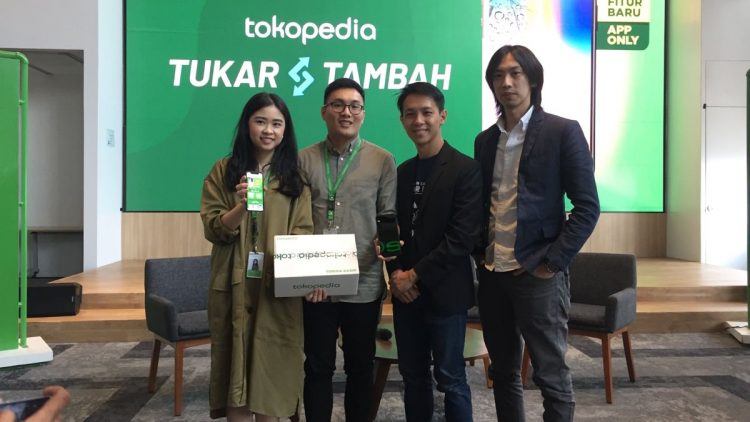
That technology has caught the attention of Tokopedia, sparking rumors of a possible acquisition. However, both Yap and Tokopedia declined to comment about this idea. The Indonesian ecommerce giant announced earlier this year that it is partnering with Laku6 and local phone retailer Erafone to launch a phone trade-in feature.
“It is a seamless integration,” Yap says. If customers see a new phone on Tokopedia that they like and want to trade in their old one, they can instantly get a price quote through the Tokopedia app.
Growing the used phone market





Stay updated on the go with our mobile app.
Get latest insights with smoother, more personalized experience through TIA mobile app.











📅 Upcoming Events
22 October 2026
Payoneer x CSPN Summit 2026