Nadine Freischlad · · 2 min read
In Indonesia, homegrown phone makers are losing out to foreign brands
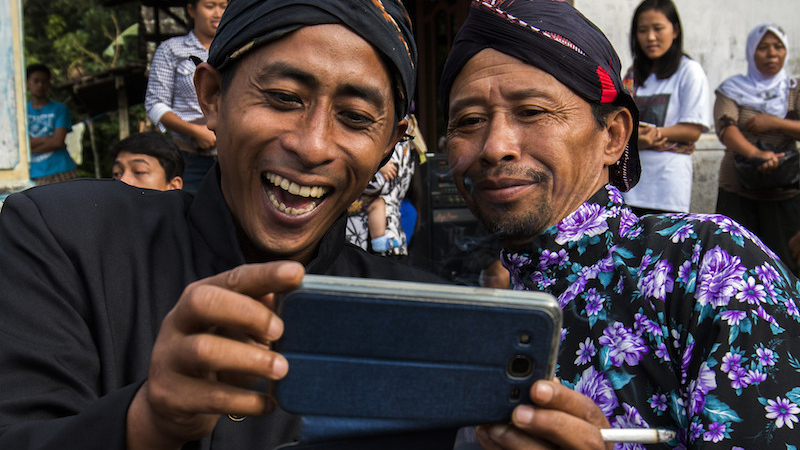
Photo credit: Eko Susanto.
Indonesia’s homegrown phone makers aren’t seeing much rise in demand for their hardware despite the nation’s boom in smartphone ownership. Instead, Chinese and Taiwanese brands are gaining strength.
This shows in IDC data for the first quarter of the year, as reported today by Digital News Asia. The top five brands in terms of smartphone shipments in Indonesia are Samsung, Oppo, Asus, Advan, and Evercoss.
The losers are Advan and Evercoss – both Indonesian brands. They saw smartphone shipments drop in the past 12 months while the three leaders experienced growing demand.
Evercoss, a strong player in flip phones, had the ambition to convert its basic phone buyers into Evercoss’ entry-level smartphone owners. This doesn’t seem to be working out.
Samsung has always been strong in the archipelago, but Oppo is a surprise winner this quarter. The Chinese company more than doubled its shipments in the past 12 months, according to IDC’s data. Its newest phone, the F1, dubbed a “selfie expert” phone with a strong front-facing camera, proved to be an excellent fit for Indonesia’s consumers.
Seasonal dip
Indonesia saw smartphone shipments to stores rise 2.7 percent from the same quarter of 2015, but dipped 22.2 percent from the last quarter of 2015. That’s partly because January to March is traditionally bad for sales, with no major festive period to spur shopping. But it t seems there was a more general slowdown in consumer demand.
“[The] relatively lower sell-out performance in Q4 2015 resulted in a stock carry-over into Q1 2016,” says Reza Haryo, a senior market analyst at IDC Indonesia, speaking with Digital News Asia.
It’s not that Indonesia has hit “peak smartphone” the way China has, where an estimated 90 percent of the population already owns one. What’s more likely is that large parts of Indonesia’s consumer class need to improve their disposable income levels to consider making the investment.
Indonesia’s GDP per capita is still below US$4,000, according to World Bank data, which is on the lower part of the global spectrum.
New regulations not helping
When Indonesia last year introduced a new law related to smartphone manufacturing, it seemed like homegrown hardware makers could gain an edge over foreign competitors – but that’s not happening.
The regulation requires imported 4G phones to contain 30 percent locally sourced components. That would have made it impossible for Apple to bring its recent models into the country. Apple does not have factories in the country.
But over international pressure, the government watered down the “local content rule” to the point where it now allows phone makers to invest in app development and R&D instead of assembling and sourcing hardware in Indonesia.





Stay updated on the go with our mobile app.
Get latest insights with smoother, more personalized experience through TIA mobile app.