- Insights This article was written by a TIA community member. Insights pieces undergo the same rigorous editorial process that newsroom-produced articles have.
 Jay Kim · · 5 min read
He wrote his resignation letter on a plane, sent it, and never looked back
This article is part of Tech in Asia’s partnership with The Jay Kim Show where we publish the revised transcripts from the show’s podcast interviews with top entrepreneurs. This is heavily revised from the original show transcripts. For the full interview, go here.
Chris Ducker is a serial entrepreneur, keynote speaker, and author of the bestselling book Virtual Freedom. Chris is originally from the UK. He’s lived in the Philippines for over 15 years and has a number of businesses.
His story is about how he became an entrepreneur and how he literally made the decision on a flight back to Asia from the US. As soon as he landed in Hong Kong for his layover, he emailed in his resignation letter and has never looked back since.
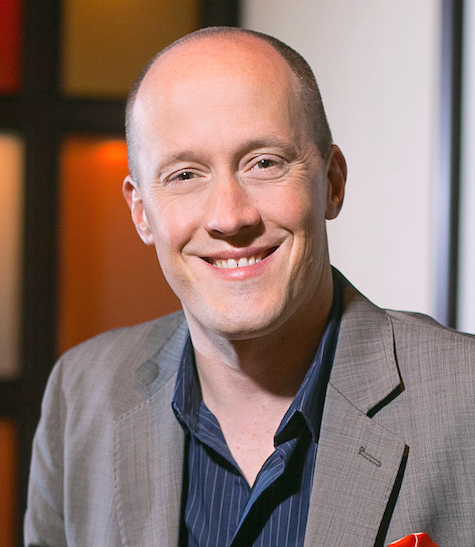
A photo of Chris.
What’s your background and how did you become who you are today?
“I often say [that] all I really am at the very core today is just a sales and marketing guy. That’s honestly what I truly am. I dropped out of college in London and started working as a telemarketer in the publishing space in the UK, which then obviously spilled over to other sales [positions]: display ad sales and events sales. You name it, I’ve pretty much sold it at some point in my career, I think. That is still at the very core of what I do. I’m a problem solver.
“That’s what I believe every good entrepreneur or every good salesperson is. They’re just a problem solver. […] If I do it well enough, I’m then blessed as an entrepreneur to put a price tag on it and make money in the process of making people’s lives easier.
“[…] I’ve only been an entrepreneur for 12 years. […] I’ve had a few problems in those years as well. […] In the latter part of my career before I started working for myself, I was in managerial roles, managing teams from eight to 10 people right up to 400 people.”
What happened along the way that made you say, ‘I don’t want to work for someone else anymore.’
“My last job was with a guy that was based out of Miami in Florida. He was actually a very, very pleasant person and a super nice, cool dude […]. [But] he was an utter nightmare as a boss, like a complete nightmare to the point where he had me […] BCCing him into every single email I sent out.
“[…] He was always in that micromanaging role with me. I learned a lot from him in regard to the power of branding. […] I also learned a lot from him in regard to how not to work with people and how not to build a business.
“Basically, what happened was he had me over in Miami for 4 weeks. […] I was working on everything from product placement, distribution, script writing, I even did voiceovers for him, casting, you name it. […] It was a complete and utter nightmare.
“At 37,000 feet on a Cathay Pacific flight from Miami to Hong Kong, I wrote my resignation letter. When I landed in Hong Kong airport, I connected to their brilliant, super-fast free airport wifi, hit send, and I’ve never looked back.”
What’s the first thing I should do to start an online business or start my entrepreneurial journey?
“[…] Knowing entrepreneurs and knowing the people that I work with particularly online nowadays, the chances are that before you hit that send button on the resignation letter, […] you’ve already been an entrepreneur for a while. Almost everyone that I come into contact with nowadays has got some kind of […] a side hustle. They’re building a blog, they’re recording a podcast, they’re doing YouTube videos on a regular basis, they’re active on social media, or they’re running a Facebook community. Whatever it is, they’re doing something to ultimately try and build an audience and build a community.
“That right there is where the money is. […] When it comes to online business, it’s not just about solving a problem. It’s not just about creating a product or service and then getting it out there into the world. It’s actually about building an audience. It’s building a community because your audience will ultimately shape the way that your business grows in the future.
“I have pivoted several times with my online brand […] [and that came about] because of my audience’s requirements and their needs. Not what I think they want from me or need from me, but what I know from listening to them, from talking to them, and from surveying them.
If you had one piece of advice for young aspiring entrepreneurs, what would it be?





Stay updated on the go with our mobile app.
Get latest insights with smoother, more personalized experience through TIA mobile app.












📅 Upcoming Events
22 October 2026
Payoneer x CSPN Summit 2026