- Premium Content It takes our newsroom weeks - if not months - to investigate and produce stories for our premium content. You can’t find them anywhere else.
 Putra Muskita · · 6 min read
Debunking the myth of Indonesia’s series B gap
Is the next wave of Indonesian startups having issues raising series B rounds?
There’s quite a bit of murmuring around this topic recently. It’s cited as one reason behind the development of NextICorn, a program spearheaded by the Indonesian government.
A report recently published by VC firm Monk’s Hill Ventures referred to a late-stage funding gap in several Southeast Asian countries, including Indonesia. YC Ng, a partner in the venture arm of Indonesian conglomerate Sinar Mas, also weighed in on the subject.
According to investors, one thing is for sure: there’s plenty of cash lying around and waiting for the right startup.
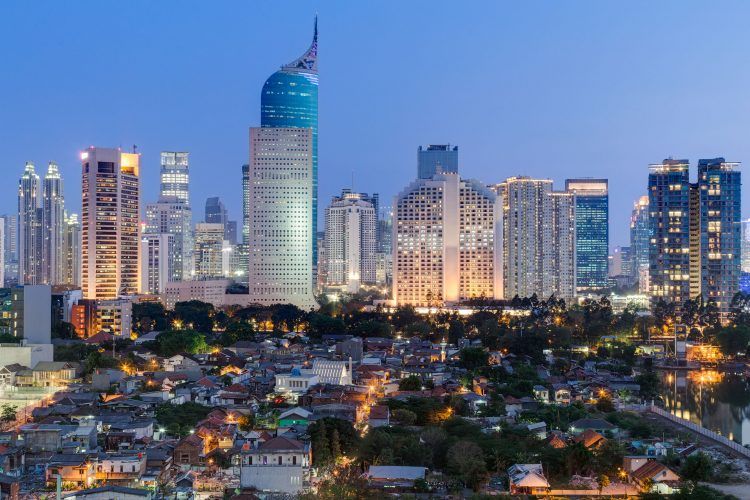
Downtown Jakarta / Photo credit: amadeustx.
Willson Cuaca, the managing partner at East Ventures, said he’s never come to the conclusion that there’s a series B gap despite being “involved in the ecosystem since day zero.”
“History keeps repeating itself,” he says. “In the early days of Indonesia’s digital ecosystem, everyone said there was a lack of funding for early-stage companies. Some claimed that there was a series A crunch too, so they were cautious about investing in early-stage startups.”
According to Cuaca, 70 percent of East Ventures’ active portfolio companies – which includes unicorns Traveloka and Tokopedia – reached product/market fit, and were able to raise series A and beyond. The remaining 30 percent, he said, are recent investments.
Jefrey Joe, managing partner at Jakarta-based fund Alpha JWC Ventures, also doesn’t see a gap. “Our companies who were raising series B this year all have [done so] successfully,” he said.
Tech in Asia data appears to confirm this. We’ve logged nine series B funding rounds in Indonesia so far this year – a 50 percent increase compared to 2017, and the highest it has been in three years.
What we’re seeing, however, is that this year’s seed and series A investments have gone down by 41 and 25 percent, respectively. So, while fewer early-stage startups are being funded, they appear to be of higher quality, judging by the high percentage of companies that made it through to series B.
Let’s look at neighboring Singapore for comparison. Both Singapore and Indonesia have generally similar funnel shapes. About 11 percent of investments in both countries are for series B rounds, while seed investments are in the low 60 percents and series A is in the mid-to-high 20s.
While less early-stage startups are being funded, they appear to be of higher quality.
Nonetheless, when you look at raw numbers, Singapore continues to lead this year, with 14 series B investments compared with Indonesia’s nine; it also led Indonesia in each of the last two years.
The unicorn factor
The next wave
Stay ahead in Asia’s tech landscape
This is premium content. Subscribe to read the full story.
The issue is not money, but the startups themselves.
We know this is not ideal. ⌛ Sign up in 20 seconds. Cancel anytime.
Our subscriber community includes professionals from these companies:





Stay updated on the go with our mobile app.
Get latest insights with smoother, more personalized experience through TIA mobile app.