Enricko Lukman · · 4 min read
Keynote: The state of e-commerce in Indonesia (LIVE BLOG)
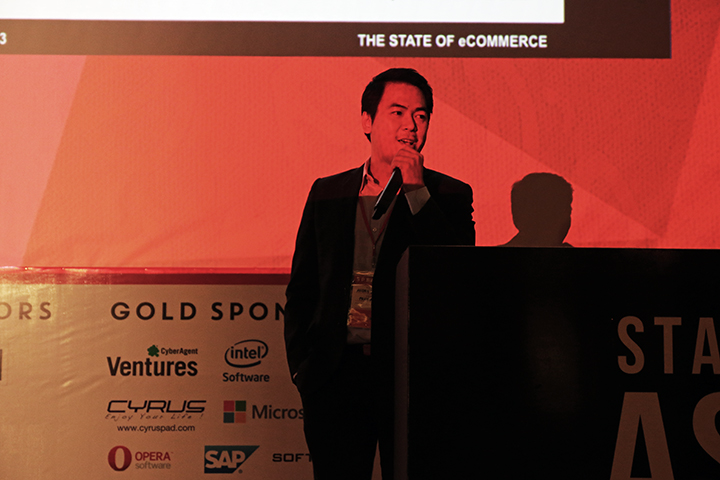
The e-commerce battle in Indonesia is heating up with major listing, B2C, and C2C sites like Berniaga, Kakus, Tokobagus, Tokopedia, Rakuten, Blibli, and Rocket Internet all into the game. Then there’s vertical commerce like Bilna, Saqina, and BerryBenka involved. With all the chaos, we have invited price comparison site PriceArea‘s CEO and founder Andry Suhaili to share his thoughts on the state of Indonesia’s e-commerce. Interviewing Andry will be Enricko Lukman, writer for Tech in Asia.
#11:25: Suhaili steps up to the stage and starts his presentation.
#11:27: PriceArea lets you compare prices, and that’s what he does. Suhaili admits that he’s a bit nervous. It’s all good though!
#11:29: He will cover four topics: current state of e-commerce in Indonesia, government and regulations, the rise of SMB and marketplaces, and the role of e-commerce search engines like PriceArea.
#11:30: There are 74 million internet users in Indonesia. The country is indeed the most populated country in Southeast Asia and has the most internet users. But its internet penetration is low, so room for growth is huge. About 4.6 million people shopped online in 2013. that number will grow to 8.7 million in 2016. Regarding the value spent on e-commerce, this year is $1.8 billion and will increase to $4.49 billion in 2016.
#11:32: Growth is driven by middle class spending, cheap smartphones, and affordable internet. There’s so many local smartphone brands with cheap prices. A lot of people will skip the PC and laptop phase and go straight to mobile internet. Mobile devices are more affordable. Next month, one telco in Indonesia will offer a one-month unlimited data plan for free for Indonesia, but it will come with ads.
#11:35: Fashion are the top product and females are the top buyers. 77.1 percent of females buy clothing online, while 11.1 percent buy bags.
#11:36: When it comes to obstacles to e-commerce, trust is the number one issue in online shopping in Indonesia. 34.6 percent people are afraid of online fraud, while 21.5 percent want to feel and touch the items first before buying.
#11:38: For payment methods, 57 percent use bank transfers, 28 percent cash-on-delivery, and 7 percent use credit cards.
#11:40: Indonesia is facing two regulations which could affect the country’s e-commerce. First is how almost all electronic activities are categorized as e-commerce by the government. Second is about the negative investment list. There are three main clauses to look out for: E-commerce businesses must have a .co.id domain to have a data center in Indonesia, and you need to get certified if you want to run an e-commerce business in Indonesia. Few people know how the latter is actually done.
#11:42: Foreign investors are required to have a 2,000 square meter store or warehouse to make an investment, or they need to have local partner. This requirement is still in talks.
#11:43: There are two business models in e-commerce: marketplace as a platform and direct sales.
#11:44: Suhaili highlights three biggest direct selling players: Lazada, Bhinneka, and Blibli. All three have warehouses, payment systems, and logistics done in-house. Lazada uses a pricing bot that crawls on competitors’ sites every day to make sure Lazada sells at lower prices. They also send people to compare prices with modern offline retail markets. Bhinneka combines both offline and online strategies to acquire customers with offline stores popping up here and there.
#11:44: The total number of visitors and customers coming to e-commerce sites rely on partnerships, such as with banks.
#11:45: Marketplaces are key players in shaping the e-commerce scene in Indonesia. Competition is heating up with eBay’s Blanja, SK Planet’s Elevenua, and Rocket Internet’s Lamido joining the battlefield.
#11:45: Marketplaces are key players in shaping the e-commerce scene in Indonesia. Competition is heating up with eBay’s Blanja, SK Planet’s Elevenua, and Rocket Internet’s Lamido joining the battlefield.
#11:46: Suhaili hopes that these marketplaces won’t need to compete with each other. This is because marketplaces that differentiate themselves by market segmentation will win, like Qoo10, which targets housewives. Even offline malls differentiate themselves with different market segments.
#11:49: A lot of people sell online on Facebook. It’s very popular and one of the biggest players in Indonesia’s e-commerce business. The marketplaces will all compete to get their hands on Indonesia’s 40 million SMEs.
For live blog readers: hit refresh for the latest updates!
This is a part of our coverage of Startup Asia Jakarta 2013, our event running on November 21 and 22. For the rest of our Startup Arena pitches, see here. You can follow along on Twitter at @TechinAsia, and on our Facebook page.
(Editing by Paul Bischoff)
Stay updated on the go with our mobile app.
Get latest insights with smoother, more personalized experience through TIA mobile app.
Recommended reads
 Indonesian AI startup goes global
 Forrest Li on scaling Sea, building smarter bots, and founder grit
 An AI assistant that joins sales calls and scores team skills
 Beyond the check: Why VCs need more than capital
 SGX’s CEO says it doesn’t need a unicorn to win
 SMEs want AI too, but not the kind Big Tech is selling
 Oatside’s alt-milk rise hits a profitable gear
 Alibaba’s financial health in 12 charts
 Asia’s telcos bundle AI into mobile plans. Will it pay off?
 M-Daq chases bigger clients as revenue falls, losses grow