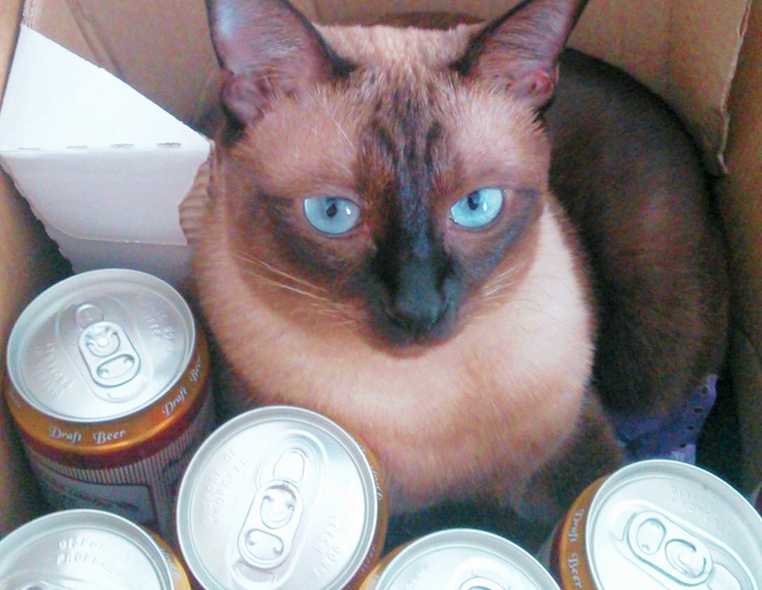
You know who else loves ecommerce? Cats. Photo credit: Steven Millward.
Online shopping is a US$670 billion business in China. And that’s just last year’s tally. Chinese shoppers are set to spend US$911 billion on the web this year – and then they’ll cross a massive new milestone in 2017 by coughing up US$1.2 trillion. Trillllllllllion.
It’s not just ecommerce marketplaces like Alibaba or arch-rival JD that are benefitting from all that.
“The growth in overall parcel volume in China has mainly been driven by the ecommerce boom over the past few years,” says Guo Jianmin, the chief financial officer of ZTO Express, a huge logistics company with sorting warehouses all over China and a fleet of well over 3,000 trucks. Last year, it handled 2.9 billion packages.
The firm has seen its number of carried parcels go up an average 80 percent each year from 2011 to 2015 as China’s consumers adopted online shopping in their everyday lives.
“We can’t precisely say how much of our growth has been due to ecommerce, but currently 75 percent of our parcel volume is ecommerce-related, so it’s obviously a huge part of our business,” explains Jianmin to Tech in Asia.
Robots grab your package
Jianmin is speaking from New York City, where he’s watching ZTO go public on the New York Stock Exchange. It’s the biggest market debut of the year in the States – and the largest for a Chinese company since Alibaba’s blockbuster IPO in September 2014.
ZTO’s IPO Thursday raised US$1.4 billion for the Shanghai-based firm, which is now worth about US$12 billion.

A ZTO courier does the final leg of the delivery with an electric trike. Photo credit: ZTO.
It’s one of the delivery partners in Alibaba’s logistics network, known as Cainiao.
“Ecommerce will continue to grow moderately over the next few years,” says Jianmin of the already mature Chinese market – where ecommerce accounts for a greater ratio of overall retail than in the US.
75 percent of our parcel volume is ecommerce-related.
Although China’s web spending will slow, the sheer number of parcels will still rise strongly, he adds. “For example, we think there could be a big upswing in small merchants who sell their products through social networking platforms such as WeChat.” That’s the messaging app run by Tencent which has just over 800 million active users.





Stay updated on the go with our mobile app.
Get latest insights with smoother, more personalized experience through TIA mobile app.