Michael Tegos · · 6 min read
SoftBank’s $10b investment in Uber could end the war with Grab in Southeast Asia
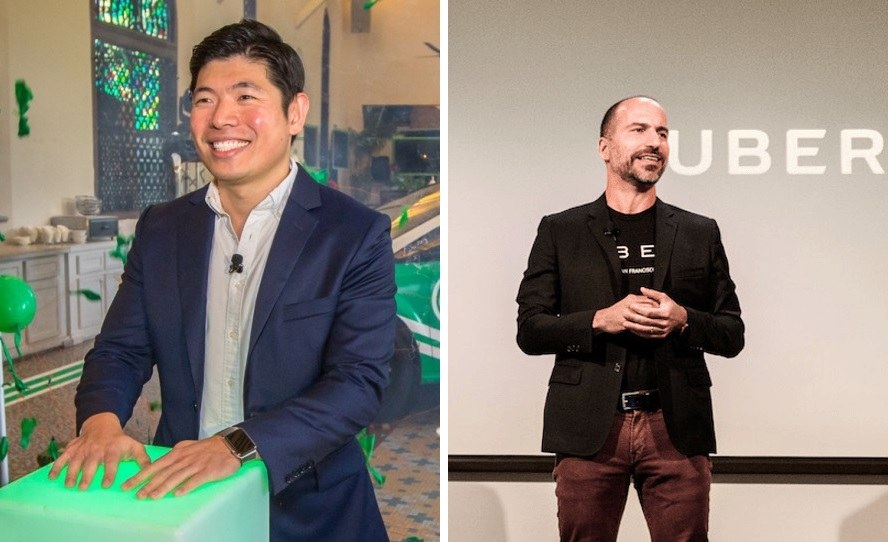
Grab CEO Anthony Tan (L) and Uber CEO Dara Khosrowshahi. Image credit: Grab, Uber, Tech in Asia.
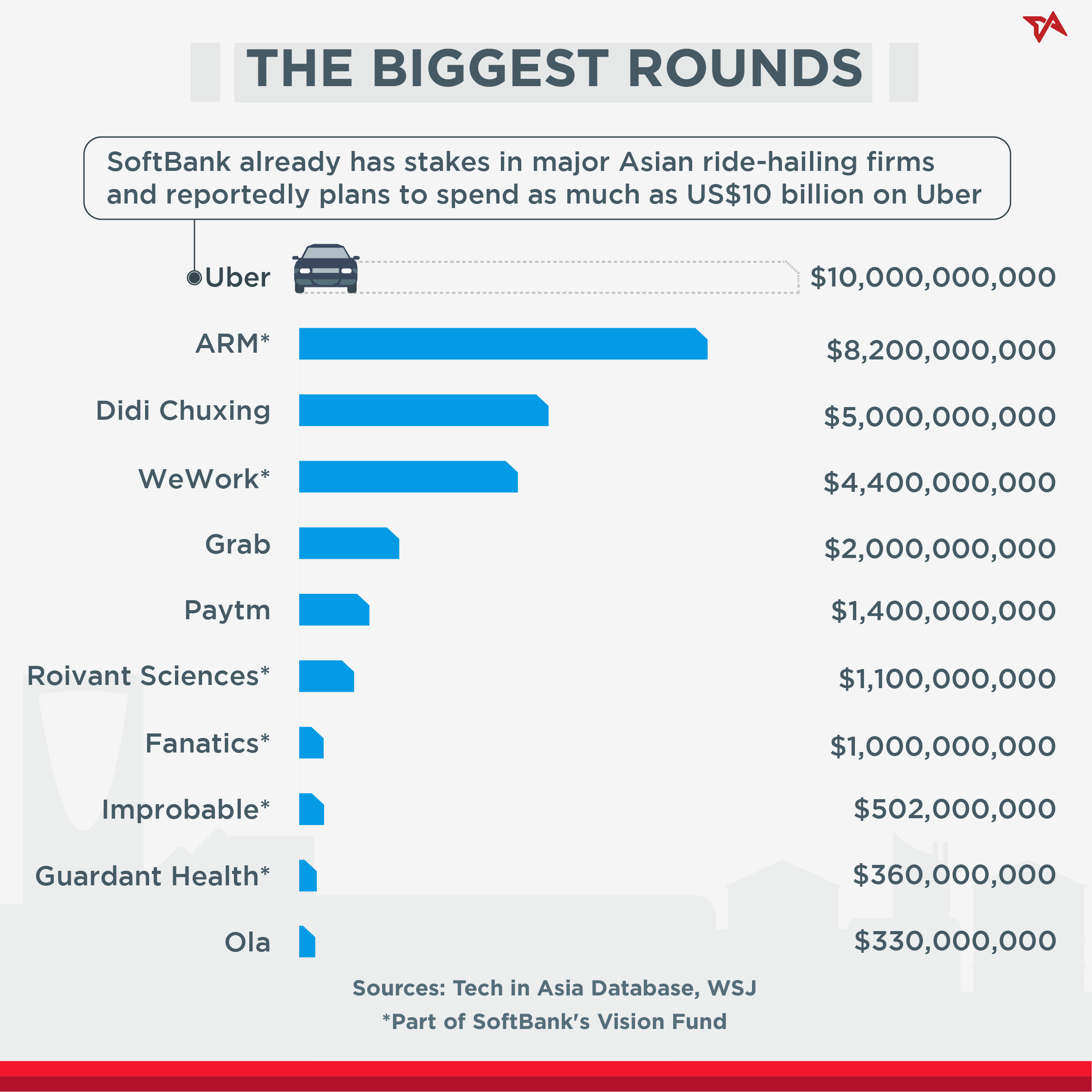
As Uber’s board gives the green light to what could be a US$10 billion investment deal with SoftBank, all eyes in our region turn to the ride-hailer’s local competitors, most notably Ola in India and Grab in Southeast Asia.
Assuming the deal goes through, Uber and Grab will once again find themselves sharing a major investor – Chinese ride-hailing giant Didi Chuxing is already an investor in both, and SoftBank (which has also invested in Didi) will be one more.
What does this mean in the long run for Uber’s fortunes in Southeast Asia? Not everyone agrees on that. Grab and Uber are neck and neck in the countries they share, including Singapore, with Grab pulling ahead of its US rival in several of them. Riding on both cars, SoftBank wins regardless in this scenario, but there’s another possibility everyone is thinking about – Grab and Uber putting aside their differences and merging under the SoftBank roof.
All in the family
Monk’s Hill managing partner Peng T. Ong believes the planned investment could bring the two companies closer together. “It is a possible friendly way to work towards consolidation,” he notes.
It is possible that SotfBank would bring the two operations together in the future.
Elizabeth Lim, editor at M&A research firm Mergermarket, shares the same view. “SoftBank will probably continue to invest in both startups in the region, and it is possible that they would bring the two operations together in the future,” she says.
Lawrence Cheok, senior research manager for market intelligence firm IDC, feels that the consolidation of SoftBank’s ride-hailing assets would be a “win” for the fund – yet there are other ways for everyone to win too.
“What would create a win-win-win scenario for all firms involved is to avoid price competition and collaborate on technology sharing to create a global ecosystem,” he explains. He uses the Uber-Didi deal as an example of how this could work. The deal basically resolved the unhealthy price war between them and left Uber with at least a foot in the Chinese market through its stake in Didi.
“Instead of straight-out mergers, a similar approach may be taken by [SoftBank] to encourage collaborations between firms under its portfolio. Doing so seems in line with their investment strategy to build up a global ecosystem of technology disruptors,” Cheok says.
Malaysia-born, Singapore-based Grab claims to have over 1 million drivers and recently announced a milestone of 1 billion rides across Southeast Asia. Having raised over US$4 billion in disclosed funding, its pockets are not as deep as Uber’s but it has cemented its presence in the region as a force to be reckoned with.
In Singapore, Uber celebrated its four-year anniversary earlier this year, announcing it hit 1 million active riders in the city-state with “tens of thousands” of drivers. It crossed the 5-billion-ride mark worldwide in June.
Cheok cautions a possible consolidation might not end up being such good news for consumers – the price wars might end, but that could result in increased costs for users that could sometimes be inscrutable, like the dynamic surge pricing system. “Under a monopolistic market structure, there needs to be more transparency how these changing prices are generated or calculated,” he notes.
Spring cleaning
Head to head
Not going anywhere





Stay updated on the go with our mobile app.
Get latest insights with smoother, more personalized experience through TIA mobile app.