- Insights This article was written by a TIA community member. Insights pieces undergo the same rigorous editorial process that newsroom-produced articles have.
 Hans Tung · · 5 min read
A glimpse into the future of retail in mom and pop shops
This article was co-authored by Rita Yang, GGV Capital’s marketing manager, with inputs from Madhu Yalamarthi, Dimitra Taslim, Erica Yu, and Lidong Wang.
Shopping, as we busy city dwellers know it, has never been easier. Whether it is Amazon’s “1-Click” buy button or Alibaba’s 30-minute delivery, it is no longer something that needs planning.
The shift of our collective shopping behavior has fueled the double-digit ecommerce growth worldwide, going against the stagnating department stores and big-box retailers.
Rapid urbanization and the fast adoption of smartphones in emerging markets would make us believe that the next billion internet users already shop in similar ways or are going to. A close look at the data, however, will tell us something different.
Offline is David, online is Goliath
As Amazon turns 25 years old this year, it’s easy to overlook the fact that ecommerce is still in a nascent stage.
Global online sales in 2017 totaled US$2.3 trillion, 10.2% of total retail sales. The sales are heavily concentrated in travel, entertainment (books, music, and events), and durable goods (fashion, IT/mobile, and electronics).
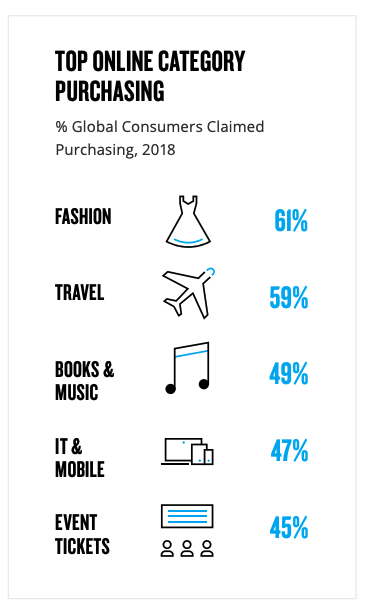
Image credit: Nielsen
With consumers becoming more accustomed to shopping online, many have predicted that the fast-moving consumer goods (FMCG) segment will be the next to rise because of the high frequency of purchases. In the FMCG market, however, ecommerce only holds 5.1% of the value.
Even in Asia, the most developed market for ecommerce, online FMCG sales are less than 10%. Somehow, the fast-growing online consumers have yet to be converted into business value.
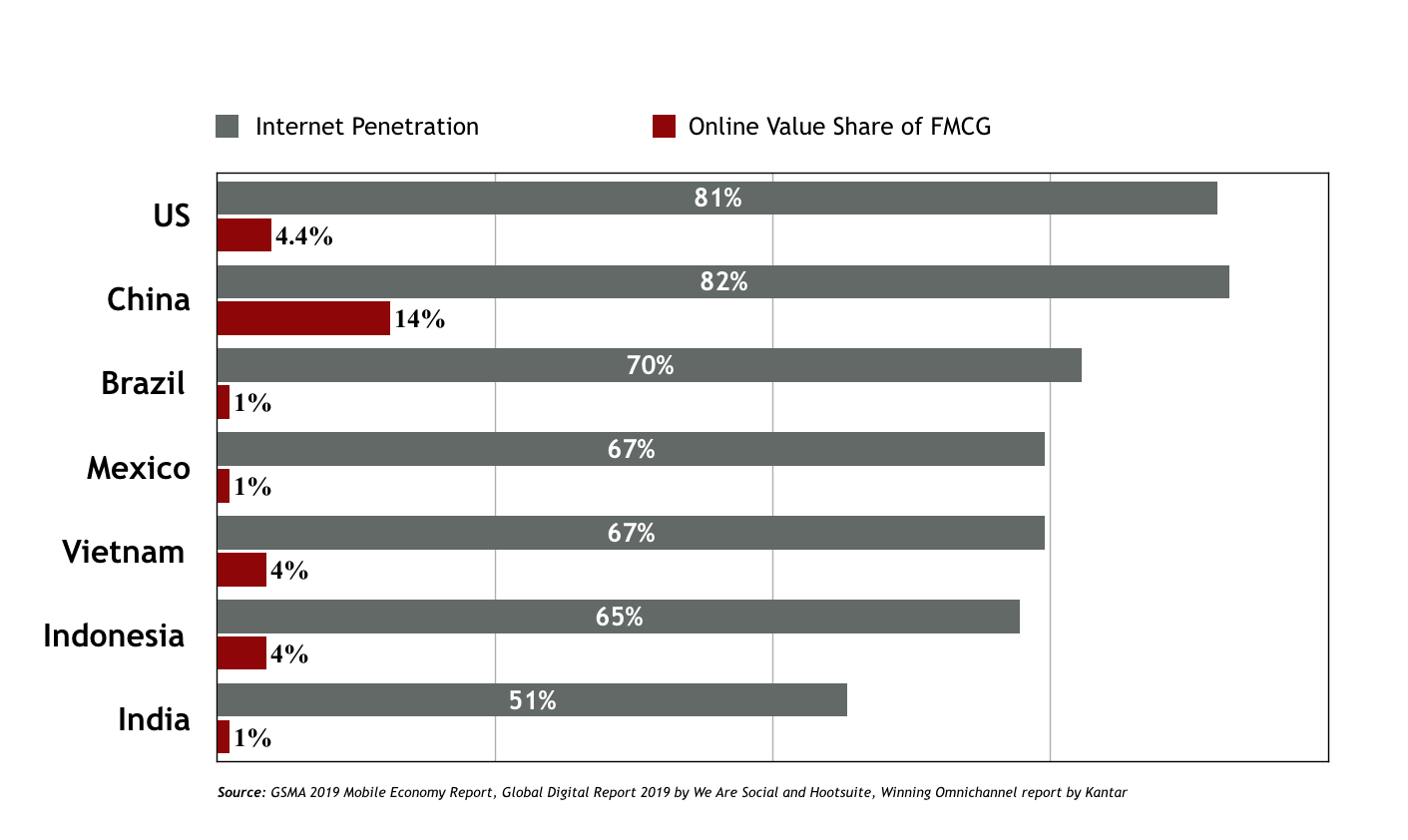
In the US, the total ecommerce value of FMCG products accounts for 4.4%. The same rate in China is 14%, where ecommerce giant Alibaba (a GGV Capital portfolio company) managed to leapfrog ahead because of China’s lack of retail, logistics, and data infrastructure.
Will history repeat itself in other emerging markets like India, Indonesia, Vietnam, Brazil, or Mexico? Will startups leverage the less developed retail infrastructure and build the next billion-dollar companies for the region?
We believe the answer is yes. But these companies will be vastly different from Alibaba’s customer-to-customer model. Rather than replacing offline shopping with online, the companies that we bet will rise with these markets are the ones that use technology to enable the oldest form of retail: mom and pop shops.
The mom and pop shop pie
The game of the giants
Where we bet





Stay updated on the go with our mobile app.
Get latest insights with smoother, more personalized experience through TIA mobile app.