 Michael Tegos · · 4 min read
JFDI quits accelerator program, raises questions about the model in Singapore

Photo credit: JFDI.
Singapore-based accelerator and incubator JFDI’s road has come to a rest stop. Here, the company that has been steadily putting one foot in front of the other since its inception six years ago will put some of its baggage down, according to a post on JFDI’s blog by CEO Hugh Mason.
On the other side of the rest stop, the road is wide open – but it’s going to be a different JFDI that starts walking again.
The company’s startup accelerator program, which has been going on since 2012, comes to an end. Its last cohort, including businesses like Fynd and RoomFilla, graduated in December 2015.
It’s not clear what JFDI’s new form will look like.
“We are now building in new directions on what we learned nurturing thousands of entrepreneurs and investing in 70 startups,” Hugh writes. “So this post brings the first phase of our experiment to an end. With it Meng [Wong, JFDI co-founder] and I pass the baton on to others.”
It’s not clear what JFDI’s new form will look like (Hugh mentions there are a lot of things still wrapped up in non-disclosure agreements). The team has “restructured” and is now “exploring new models for startups to create new ventures in partnership with corporations.” A joint venture with Bosch and a partnership with Mediacorp are mentioned.
It’s been a long road
Through its program, JFDI accelerated and invested in 70 startups like Tradegecko and BoxGreen.
To anyone who’s worked within Singapore’s startup ecosystem, it has been an almost constant presence. It was the first company to kick off the wave of accelerators that now operate in the city state.
“Back then words like ‘lean startup methodology’ and ‘accelerator’ were unknown on this side of the planet,” Hugh recalls. The One North area, Singapore’s current startup and innovation hub, wasn’t even connected to the city’s subway system.
Looking back on JFDI’s performance, Hugh places the accelerator’s rate of success, meaning startups that went on to grow and secure additional funding, at about 10 percent of the companies it backed, a “typical” result for an early-stage portfolio.
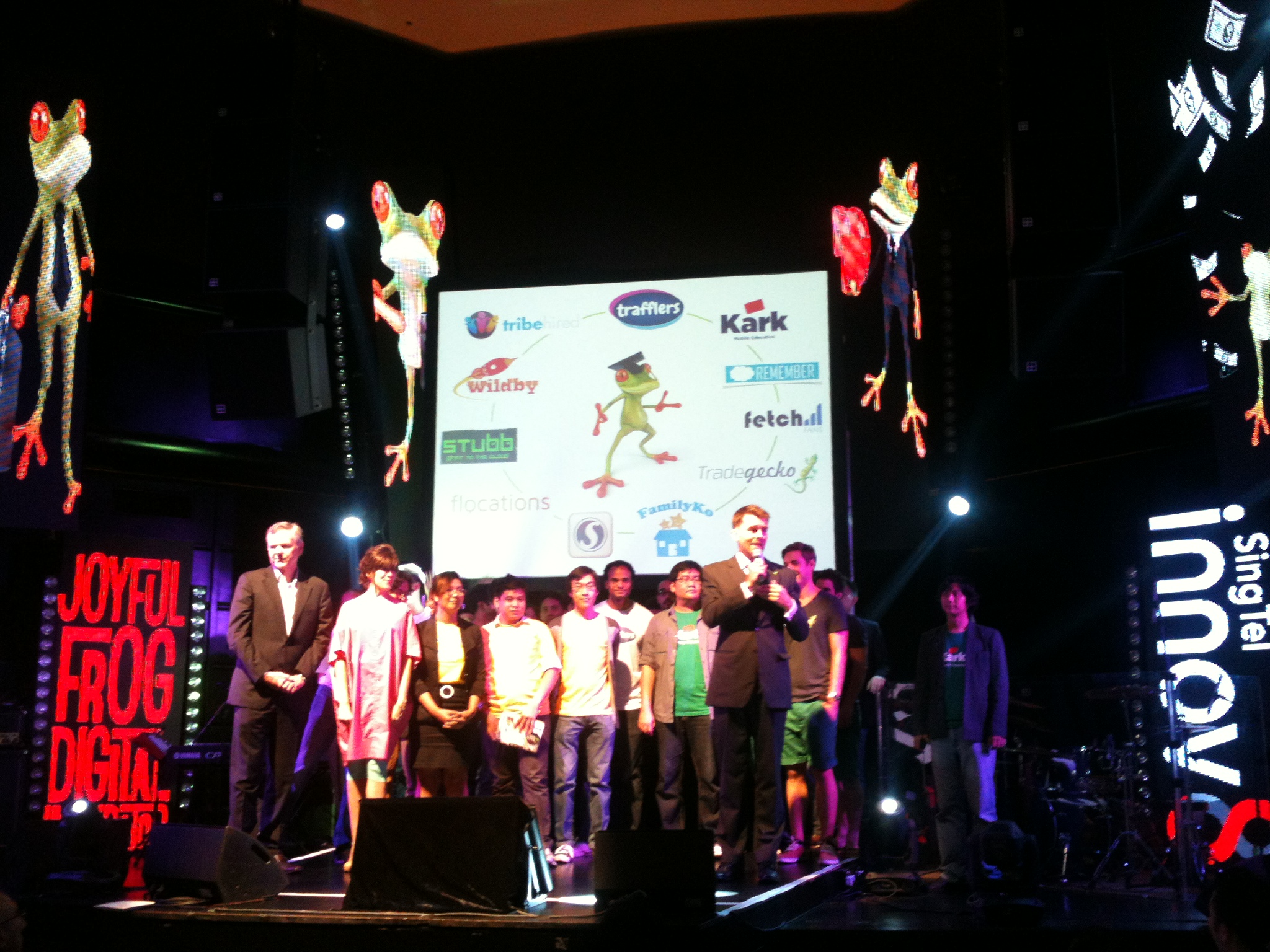
JFDI’s inaugural startup cohort in 2012. Photo credit: JFDI.
The accelerator slowdown
Most importantly, Hugh shares some key lessons the team learned in the journey so far:





Stay updated on the go with our mobile app.
Get latest insights with smoother, more personalized experience through TIA mobile app.











📅 Upcoming Events
22 October 2026
Payoneer x CSPN Summit 2026