Adinda Pryanka · · 3 min read
AI tools for India’s growing wave of unsecured debt
This article is a part of Startup Spotlight, a series that features young, up-and-coming startups.

Photo credit: Credfix
A laid-off IT worker in Mysore faced aggressive recovery calls after missing loan payments. He wanted to repay his debt but lacked clear guidance on his options. This inspired the creation of Credfix, an AI-powered debt resolution platform.
😟 Problem
Indian household debt reached 45.5% of GDP by September 2025. Unsecured personal loans grew by over 20% annually leading up to FY24.
When borrowers face unexpected crises, they often lack adequate support systems. They frequently encounter aggressive recovery agents and confusing legal notices.
💡 Solution
Credfix supports borrowers throughout the debt resolution process with three AI tools:
- Financial assistants. Evaluate debt to help borrowers prioritize loans and explore settlement or restructuring options.
- Call shield. Manages recovery-related communications with lenders on behalf of borrowers.
- Legal assistant. Translates complex legal notices into simple terms and suggests next steps.
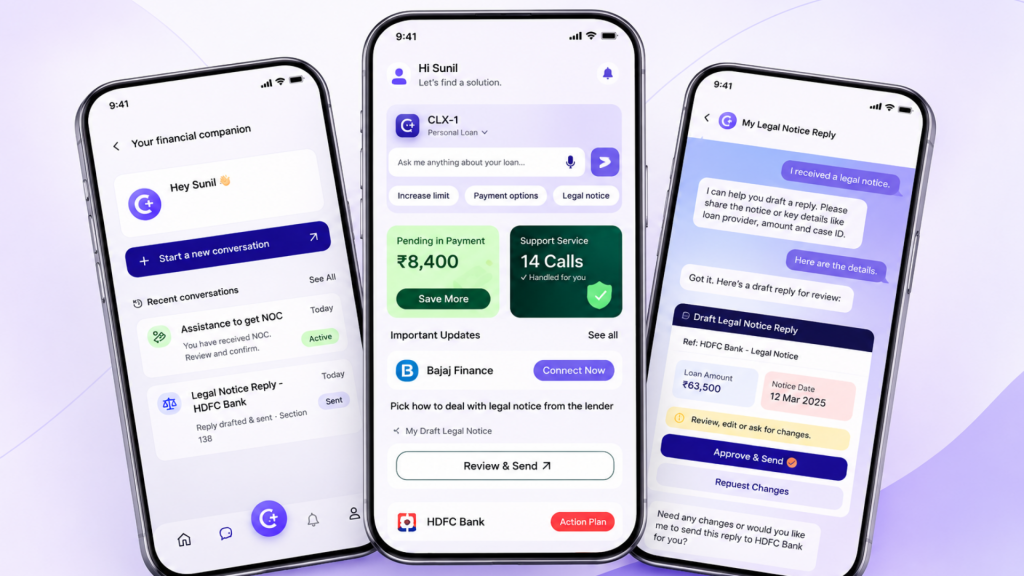
Image credit: Credfix
📊 Market size
Debt relief is an established US$50 billion industry in Western markets. India is just beginning to formalize this category.
Around 40 million to 45 million Indians currently struggle with unsecured debt. The startup targets a core segment of 10 million to 15 million borrowers.
🤝 Team
- Ranjan Agarwal. CEO. He brings leadership experience from Udaan and Lenskart.
- Neeraj Kulkarni. COO. He has a decade of product experience from Capillary Technologies.
- Ayush Kedia. CTO. He draws on technology experience at Salesforce and Goldman Sachs.
🚀 Traction
- Reached over 200,000 borrowers within five months of its May 2026 launch.
- Manages an aggregate outstanding debt exceeding US$476 million.
- Draws 40% of its user base from Tier 2 and Tier 3 cities.
- Partners with more than 10 lenders and collection agencies.
🏆 Competition
Most debt resolution in India relies on offline settlement agents, local lawyers, and call centers. These unregulated operations require large human teams and can be unreliable for borrowers.
💰 Financials
🚩 Risks











📅 Upcoming Events
30-31 March 2027
Upskill Fest