 Zen Soo · · 8 min read
How Huawei went from small-time trader to the world’s biggest telecoms equipment supplier
Before 2004, few mobile network operators in Europe had heard of Huawei Technologies, much less considered it as a potential supplier. But that changed after Richard Yu Chengdong, who now heads Huawei’s consumer business, proved to a small Dutch operator the lengths to which the Chinese company was willing to go to serve its customers.
Back then, Telfort was the smallest of four cellular communications providers in the Netherlands. Daunted by the prevailing market prices to deploy a 3G network, the company entered into talks with Huawei, then a scrappy upstart with just a handful of employees in Europe. Telfort also had another potentially bigger problem – it did not have the space to house the necessary equipment at its base stations.
Huawei, which was desperate to break into the European market, sprang into action. Yu, who was vice-president of wireless networks then, canceled all of his appointments and worked with Huawei’s small team in Europe and engineers back in China to devise a solution. Within a week, they came up with one – a base station that could be deployed in two parts, required little space to install and was cheaper to run.
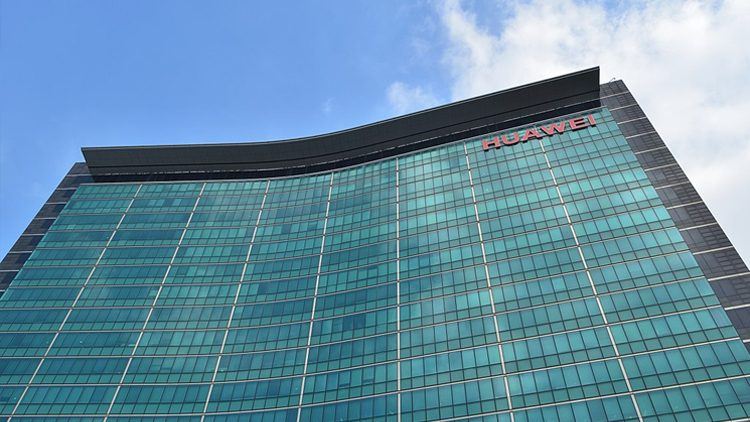
Huawei office building in Shenzen, China / Photo credit: Raysonho via Wikimedia
“Huawei was not dominant in China at the time. They were well-positioned with customers like China Mobile, but they said that if you want more business in China, then you need to show us you’re an international company,” Stefan Scheuerle, a former Huawei sales executive who worked on the Telfort deal, said in an interview.
“Telfort was the door-opener, and after we signed BT and Vodafone as customers, that was then finally the point when Huawei was accepted all over Europe,” said Scheuerle, now chief revenue officer at Sensorberg, a German startup.
Today, Huawei is the world’s largest telecommunications equipment maker and gets almost half of its more than US$100 billion in annual revenue from overseas markets. But its acceptance in Europe, where it has an estimated 30 percent of the market, is under threat. The US is pressuring European countries to block Huawei, citing national security concerns that the company has strenuously and repeatedly denied.
The US wants to ensure that the backbone of 5G networks, which promise to deliver data speeds up to 100 times faster than existing 4G systems, are provided by friendly nations, arguing that the infrastructure also supports military uses. China’s shrill promotion in recent years of an industrial modernization plan had caught the attention of hawks in US circles, who viewed it as a threat to America.
While China has hit back at the US, accusing it of hypocrisy in using state power to suppress Huawei, damage has already been done. Vodafone said it was suspending the deployment of Huawei equipment in its core networks across Europe until the political uncertainty surrounding the firm is resolved. BT is removing Huawei gear from the core of its mobile network. Other carriers are weighing the risks of using Huawei only to have to rip out the equipment should governments later ban the company.
However, a senior company official at Huawei last week said that markets closer to home will likely provide most of the 5G revenue in the near future.
Xu Zhijun, who takes turns with two other executives to chair Huawei, said at a briefing at the company’s Shenzhen headquarters that the biggest demand for the company’s next-generation mobile broadband hardware is in the Middle East and Asia.
But as one of the handful of Chinese technology companies with a global footprint, Huawei now finds itself caught in the broader contest between the US and China. At stake is the dominance of technologies like artificial intelligence, autonomous vehicles, and internet of things. And the 5G data network is the circulatory system that will carry the lifeblood of these new technologies.
“We would encourage all governments to take an objective look at the evidence and maintain an open, engaged approach to 5G and other network developments,” a Huawei spokesman said in response to a request for comment. Ren Zhengfei, the septuagenarian president and founder, has previously said that he would rather shut down Huawei than do anything to harm the interests of its customers.





Stay updated on the go with our mobile app.
Get latest insights with smoother, more personalized experience through TIA mobile app.










📅 Upcoming Events
22 October 2026
Payoneer x CSPN Summit 2026