Leighton Cosseboom · · 4 min read
This startup gives rural entrepreneurs the tech to operate their own mobile networks
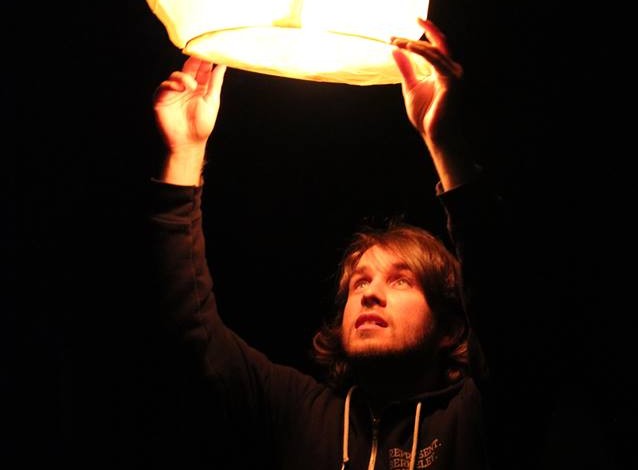
Kurtis Heimerl, co-founder and CEO of Endaga
Although the northernmost American state of Alaska is the largest US territory by size, its population is less than 732,000. With rugged wilderness, sub-zero temperatures for half the year, and a lack of telecommunications infrastructure in the majority of its areas, Alaska fits the very definition of the word remote. 30-year-old Dr. Kurtis Heimerl grew up in Alaska. For this reason, he understands the value of communication in remote areas. To say Heimerl is smart is an understatement. In the past, the long-haired techie held internships at Amazon and Google before finding his true calling as a postdoctoral student in UC Berkeley’s Technology and Infrastructure for Emerging Regions program. With a specialization in telecommunications, it wasn’t long before Heimerl discovered OpenBTS programming, a type of coding that bridges internet and mobile service networks. Still in his post-doc studies today, Heimerl also runs a startup called Endaga, a company that focuses on bringing telecommunications to the nearly one billion people on Earth who are not yet covered. Endaga aims to empower rural entrepreneurs to own and operate their own telco networks. It’s starting with Indonesia.
Here’s how it works
Heimerl’s invention is called the Village Base Station (PDF link), and fits into into a small grey cube the size of a toolbox. On the outside, solar panels power communications equipment on the inside. The internal software allows for management functions like billing and analytics for the party operating it. Locals need only to set up the box somewhere in town and link it via satellite to a voice-over-IP network, a relatively simple process once the equipment is obtained.
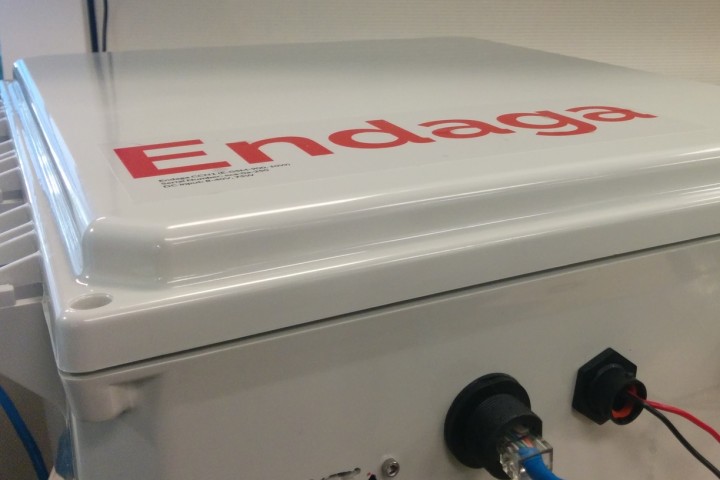
Endaga hardware
At this point, locals may now become entrepreneurs, as the person in control of the box can act as the area’s mobile service provider. All villagers need now are the phones, which aren’t terribly hard to come by in Indonesia, as even the least fortunate families seem to be able to get their hands on a Blackberry these days.
Bypassing telco giants
“We built a full ‘telco-in-a-box’ solution and deployed in rural Indonesia” Heimerl says. The Endaga team has successfully tested the Village Base Station already in two separate towns of the archipelago’s eastern Papua province. He adds, “Telecom is built off of the idea that only nation-scale firms can operate this kind of equipment. Allowing individuals to do it changes the dynamic entirely and is extremely disruptive to existing business models.”

Endaga hardware pole installation in Papua, Indonesia.
See: Indonesia’s Telkom eyes expansion to seven more countries
Heimerl says that Endaga’s primary goal is to bring the benefits of communications to as many people as possible, but part of that is doing it in a financially sustainable way. As such, he says Endaga is structured as a for-profit institution. He explains, “Our plan is to monetize by selling equipment and also with a profit share with the local operators.” MIT Technology Review named Heimerl as one of its top 35 innovators under 35 in a 2014 list. According to author Ted Greenwald, Endaga sells the Village Base Station for US$10,000 and promises a return on investment within five years. Perhaps the overarching challenge in Endaga’s pricing strategy is finding local residents with enough vested interest in Indonesia’s rural communities who actually have US$10,000 to spare. After its debut in a Papua village last year – a community that struggles to keep doctors and teachers as they must journey to the nearest city to make any kind of phone call – Heimerl’s system brought coverage to 350 subscribers and generated US$1,000 per month in revenue for the local operator. 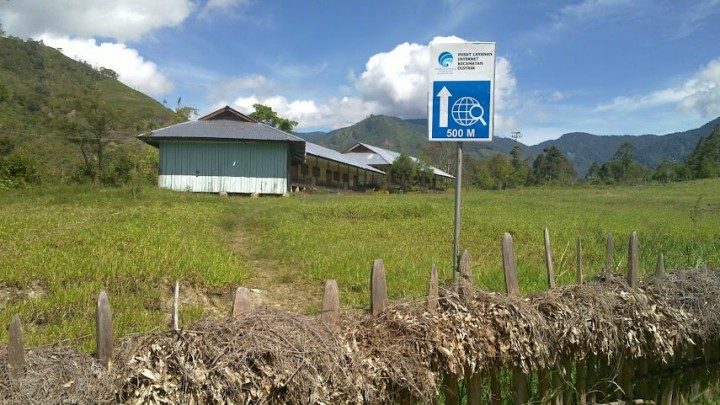 “There are two sites in Indonesia using our gear,” explains Heimerl. “We’re working on more sites internationally, but they have yet to start. The potential is enormous; the only way things ever get done in these communities is by locals stepping up and doing it themselves. That’s how internet comes, cars, electricity, and so on. ” He adds: “I believe communications are a fundamental human need and so the impact of our technology and model on the communities themselves is hard to overstate.”
Editing by Steven Millward
(And yes, we’re serious about ethics and transparency. More information here.)





Stay updated on the go with our mobile app.
Get latest insights with smoother, more personalized experience through TIA mobile app.