J.T. Quigley · · 8 min read
The death and digital resurrection of Japan’s used panty vending machine
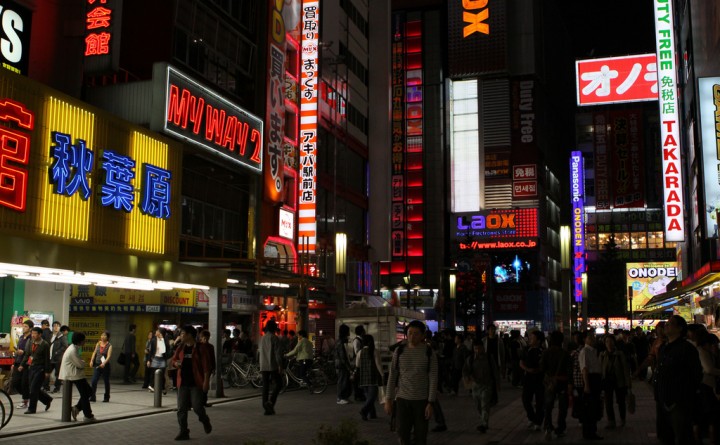
I’m standing on a street corner in Tokyo’s Akihabara district, half blinded by the neon glow radiating from three tall buildings directly in front of me – a sex shop, an arcade, and a big-box electronics retailer. Not far down the road, a group of three foreign guys is chatting about something. It’s Akihabara – ground zero for otaku culture – so I can only imagine that they’re discussing J-pop idols or anime. I stroll up to them and ask if they mind answering what might be, anywhere else on the planet, a very strange question:
“Have you ever heard about the used panty vending machines?”
Instead of shaking their heads in disgust or trying to flag down a police officer, the trio lets out a chuckle. The guy to my right points a finger over my head, back at the sprawling sex shop that’s now behind me. “There’s one right up there, on the sixth floor,” he says in a thick German accent, beaming like a kid on Christmas morning. Then he pauses for a moment of contemplation, slides his wire-framed glasses higher up on his face, and adds: “But I don’t know if they’re really used or not.”
The guy on my left also raises a finger above my head, pointing to a decrepit building under the train tracks. “I know they used to sell them over there, but just hanging on the wall – not sure if they have a vending machine.”
The guy in the middle, who’s gone from giggling to looking a bit uneasy at this point, chimes in: “I’ve still never seen one in person, but panty vending machines are one of the first things I heard about Japan.”
Vending machines everywhere
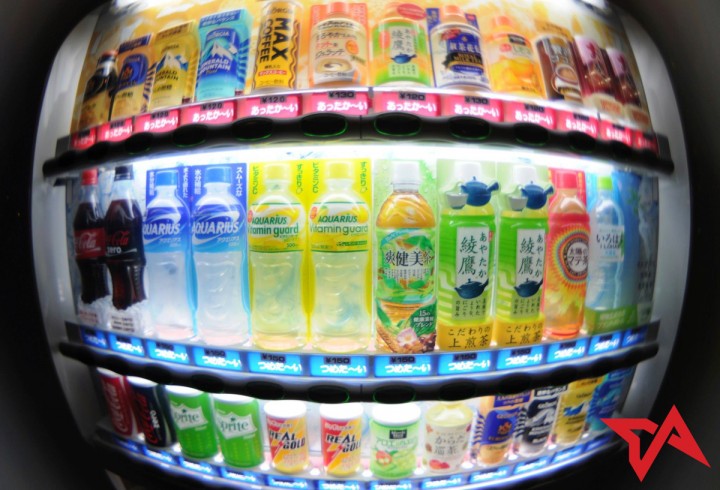
It’s not difficult to figure out how the Japanese panty vending machine became a cultural phenomenon. The legend exists at the intersection of sex and technology in a country known in the west for weird pornography and Sony.
“Similarly with ‘tentacle rape,’ [westerners] seem to have this concept of ‘Japan has the most perverse, crazy imagination, and this is proof of it,’” La Carmina, Japanese pop culture expert, TV host, and blogger, tells Tech in Asia . “The idea of dirty panty machines is something so over-the-top, you wouldn’t find it in any other country, not even Las Vegas.”
While the humble vending machine might not be the finest example of high-tech Japan, it’s certainly one of the most visible. According to the latest figures from the Japan Vending Machine Manufacturers Association (JVMA), there are more than 3.8 million “automatic sales” machines across the country (not including “automatic service” machines, like change dispensers and coin lockers).
That’s roughly one vending machine for every 33 citizens. In a year, these machines earn about 5 trillion yen – an astronomical US$46 billion. That’s slightly less than what Google makes in a year.
The vast majority of these machines, about 2.6 million, spit out beverages: everything from green tea and canned coffee to beer and sake. In the “other” category, JVMA counts 141,000 vending machines that offer “newspapers, hygiene products, toys, etc.”
Super used kakou
Not counted in the above figure are Japan’s equally ubiquitous gachapon machines – the kind that dispense toys in plastic capsules after turning a crank. The term, like so many others in the Japanese language, comes from the combination of two onomatopoeic words: gacha, the sound the crank makes, and pon, the sound the capsule makes when it lands at the bottom of the machine. Gashapon, spelled with an “s,” is actually trademarked by Japanese toy maker Bandai.
Down in the basement
Child abuse?
Dirty ecommerce





Stay updated on the go with our mobile app.
Get latest insights with smoother, more personalized experience through TIA mobile app.