Peter Rothenberg · · 4 min read
Airbnb eyes the prize as Japan opens up to the sharing economy
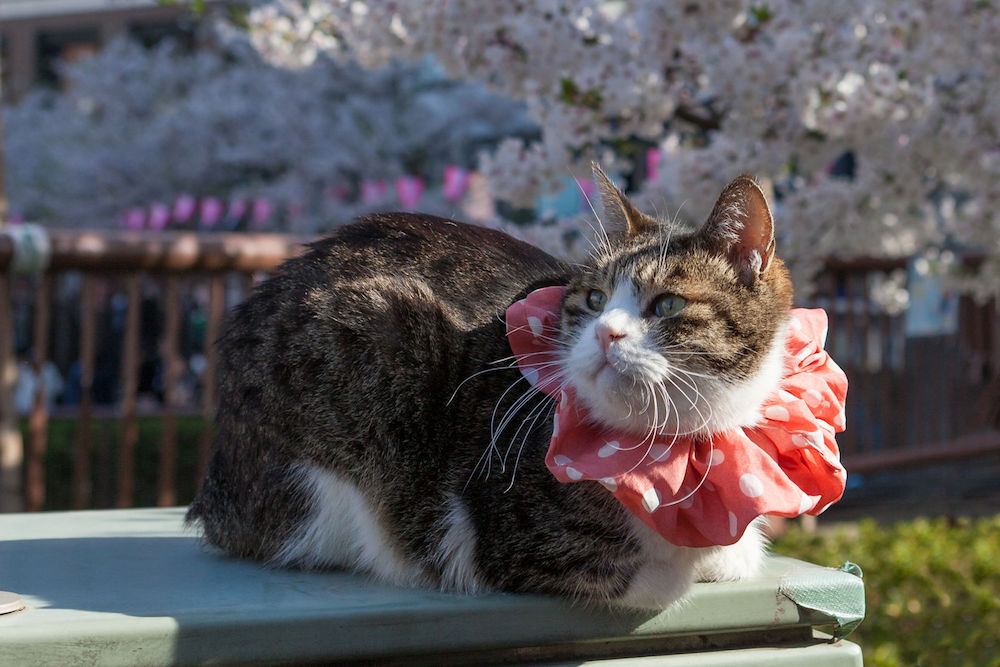
The cat at Meguro river, a popular cherry-blossom viewing spot in Tokyo. Photo credit: Copyright: pitisirisriro / 123RF.
In Japan, the “sharing economy” is still in its infancy. Roughly 75 percent of people are not interested in Uber, Airbnb, and other such apps, according to a study by the government – with around 60 percent voicing concerns over how accidents or other problems would be handled.
“Japan does kind of stay away from grey areas. As the government we need to remain on the conservative side,” explains Takuo Imagawa from the Ministry of Internal Affairs and Communications.
For billion-dollar services like Uber and Airbnb, it’s less about asking for forgiveness or permission, and more about waiting to see what happens.
Takuya Hirai, a member of the House of Representatives and head of the Liberal Democratic Party’s special committee on information technology, admits that many of Japan’s regulations need to be updated to better allow for modern businesses. For example, many of the laws for the hotel industry were created in the late 1940s, setting strict rules on the size of check-in desks, requiring soap dishes for bathrooms, and not allowing western style beds in Japanese style rooms.
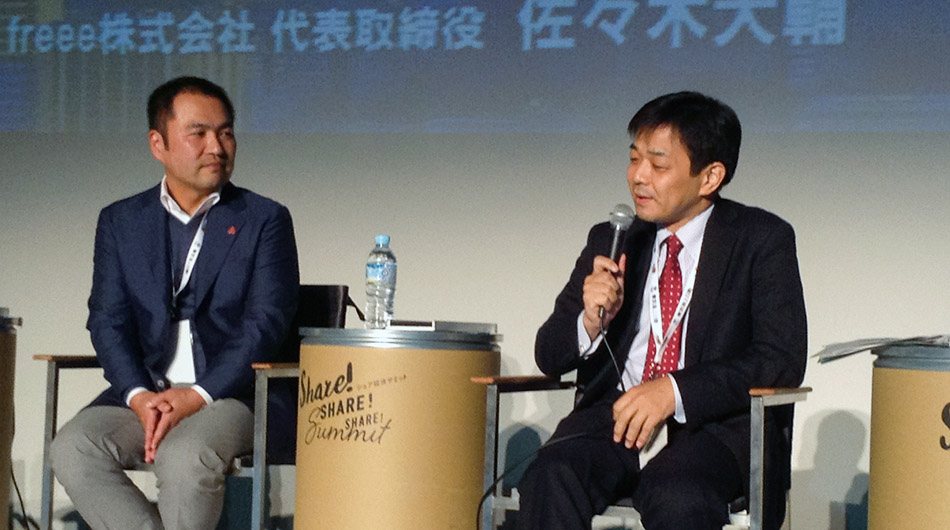
Takuo Imagawa (right) from the Ministry of Internal Affairs and Communications.
Takuya wants startups to approach the government, saying it is open to new ideas. “If you’re doing something that seems fun, or if you’re doing something that is good for society, you should appeal to that point,” he suggests.
Takuo and Takuya were talking onstage at Share Summit, attended by Uber, Airbnb, and an array of prominent startups in the industry.
Filling the gap
Japan’s government has been quick to support sharing economy services when doing so provides obvious benefits. AsMama and Space Market have found success by addressing Japanese problems with a lack of daycare facilities and unused spaces, respectively.
Although Uber’s test program in Fukuoka last year was shut down for paying drivers without a taxi license, a pilot program by the company was started this year in conjunction with local governments to assist elderly passengers in places that lack public transportation.
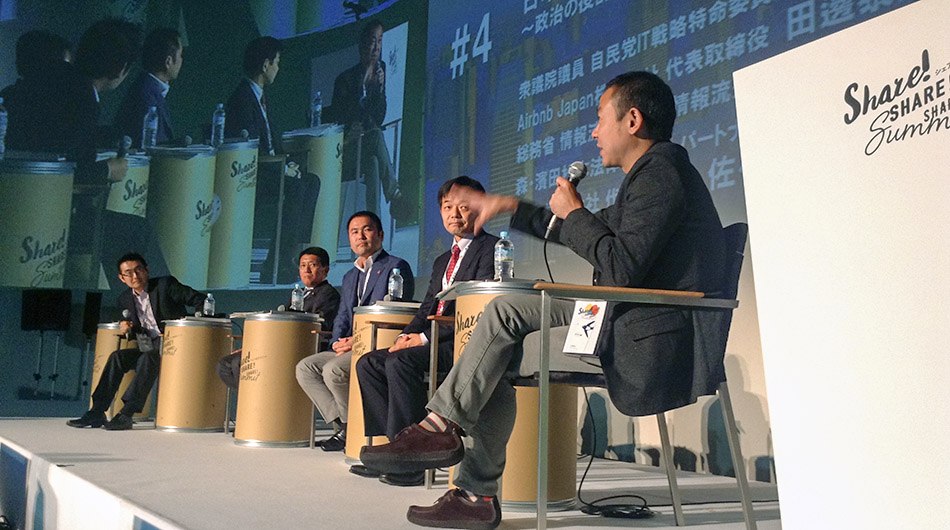
Panel discussion on the future of the sharing economy in Japan.
Airbnb can also help the government out of a real jam. By 2020, the year of the Tokyo Olympics, Japan is expecting 40 million tourists annually, double the original target of 20 million surpassed in October of this year (PDF). Japan needs an extra 41,319 hotel rooms (PDF) at a cost of US$4.8 billion to accommodate the huge influx of travelers. And that was based off the 2014 calculation of 25 million yearly visitors in 2020.
The challenge





Stay updated on the go with our mobile app.
Get latest insights with smoother, more personalized experience through TIA mobile app.