- Insights This article was written by a TIA community member. Insights pieces undergo the same rigorous editorial process that newsroom-produced articles have.
 Khalifa Manaa · · 9 min read
How to frame your MVP so you don’t waste time and money
Founders Supporting Founders: Iterative is accepting applications for the Summer 2021 (S21) batch that takes place from July to September 2021.
A minimum viable product (MVP) is used to validate your value proposition. In other words, you need an MVP to see if people would buy whatever you’re thinking of building before you actually spend time and money building it.
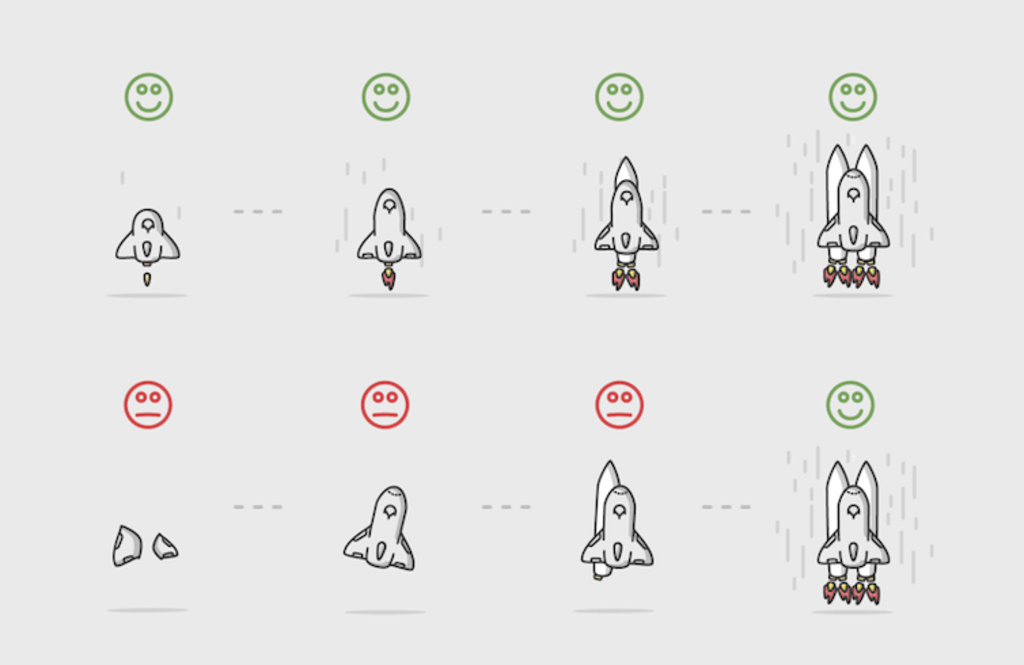
Image credit: Maciej Nowak
There are tons of good posts and YouTube clips explaining what an MVP is, so we won’t go into detail here. But what should be pointed out is that an MVP is not the first crappy version of your real product. Instead, it is an experiment you use to make sure that people will buy your product when you actually build it.
In my experience, it’s best to build your MVP thinking it will end up in the trash after the experiment. It’s simply a tool for learning. But if that’s the case, then why not just build the real product? Why create something that will end up in the trash?
The reason is simple: You most likely don’t know yet what you should build. Yes, you have assumptions. But an assumption is just that: a guess without facts to back it up. Nine out of 10 startups fail, and out of the ones that don’t, 75% are reported to have significantly changed their plans along the way.
Which leads us to the famous quote, “Fail fast.” This is something I see happen all the time: People talk about building something small, just an MVP, and then end up wasting time and money building something way too big for an experiment.
Why does this happen? There are two main reasons:
1. You fall in love with the solution
You don’t care about the problem you are trying to solve for your customer and instead focus on pushing your solution down their throats.
This usually leads to a vicious cycle where your customers tell you to add just one more feature (which ends up being 10) and then they will buy it for sure (they won’t). By this point, you’ve already invested a lot of time and possibly money, and it feels impossible to turn around. So you keep adding features, hoping that the next one will make a difference (it won’t).
2. Outside pressure triggers your ego
When you’re in a startup, you might feel enormous pressure from your friends and family, and you want to make them proud. Or perhaps you left your day job, so now you feel the need to prove to your ex-colleagues that you made the right decision. Both of these can lead you into thinking that the first product has to be amazing in order to impress others.
The solution is to keep in mind that you are not yet building your product; you are just validating your value proposition. There’s time enough for glory later.
Identifying core value
What can we remove and still deliver the core value?
Plan how to deliver the core value with minimal resources
Resources





Stay updated on the go with our mobile app.
Get latest insights with smoother, more personalized experience through TIA mobile app.